Politics & Government
Hurricane Harvey: Trump's Aid Promises Don't Align With Hiring, Budget Plans
"We want to do it better than ever before. We want to be looked at five years, 10 years from now, as this is the way to do it," Trump said.

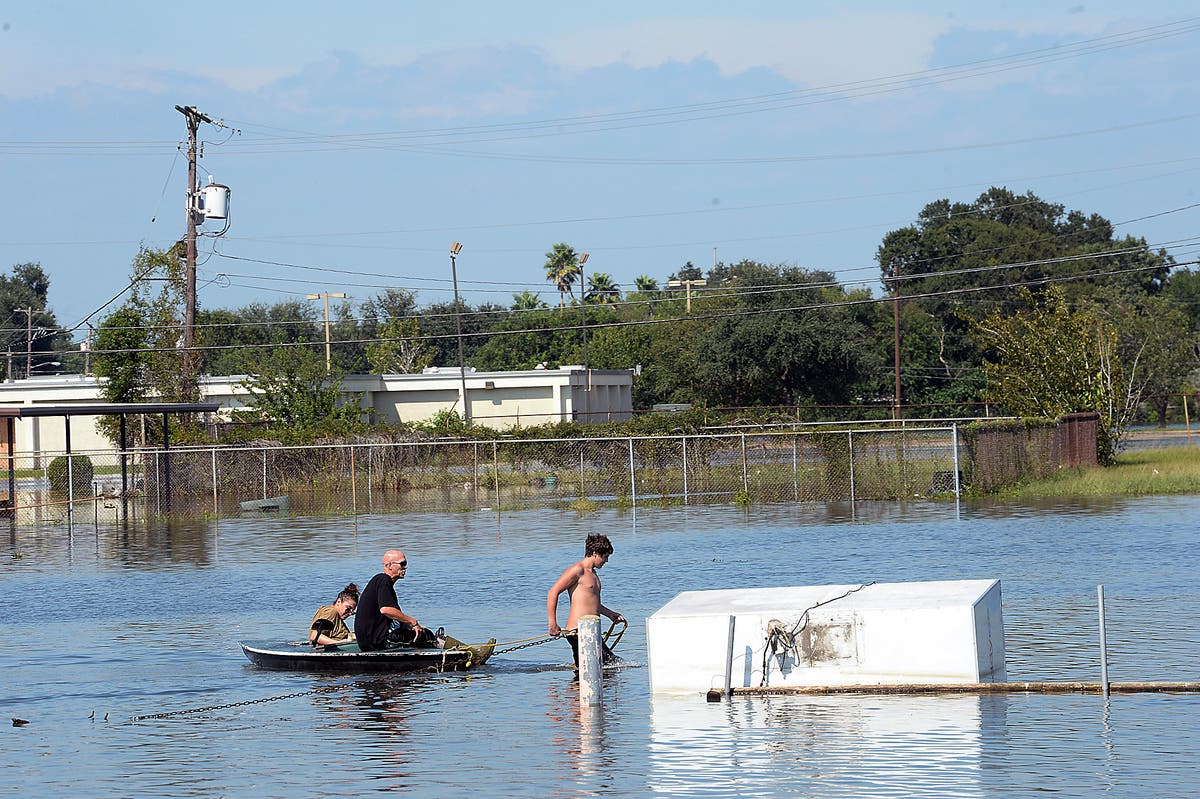
WASHINGTON, DC — President Donald Trump promised "better-than-ever" recovery after Hurricane Harvey decimated a wide swath of Texas and Louisiana, but his hiring and budget plans don't seem to align with his sentiments.
Trump proposed slashing the budget for disaster management agencies and leaving some of their leadership positions vacant. And GOP lawmakers in Congress have proposed spending some of the Federal Emergency Management Agency's disaster money to build a border wall between the U.S. and Mexico.
In the wake of Harvey's record rainfall and flooding though, experts see some bright spots. Among them: Trump's support for FEMA's coordination efforts and its administrator, Brock Long, a veteran of emergency management. The administration is preparing an emergency request for Congress for an initial $5.9 billion to replenish government reserves for relief aid. And that's likely to be followed by supplemental requests for as much federal cash as needed for a rebuilding and recovery expected to last years. (For more information on this and other White House stories, subscribe to Patch to receive daily newsletters and breaking news alerts. If you have an iPhone, click here to get the free Patch iPhone app.)
Find out what's happening in White Housefor free with the latest updates from Patch.
Texas is healing fast thanks to all of the great men & women who have been working so hard. But still so much to do. Will be back tomorrow!
— Donald J. Trump (@realDonaldTrump) September 1, 2017
But much of FEMA's widely-praised response is the product of laws and procedures that grew under Trump's predecessors after the government's botched response to Hurricane Katrina in 2005.
Taking a turn as comforter-in-chief this week in flooded Texas, Trump signaled concern for the victims — and an understanding of the potential for a smooth recovery to help steady his turbulent administration. He showered praise on the responders, and Long in particular, even as he warned that "the world is watching."
Find out what's happening in White Housefor free with the latest updates from Patch.
"We want to do it better than ever before. We want to be looked at five years, 10 years from now, as this is the way to do it," Trump said of the effort.
Trump's signals have been mixed. On one hand, he's promised quick federal aid to those hit by Harvey. White House homeland security adviser Tom Bossert on Thursday said he's "not worried at all" about having enough money to help the region recover. The president himself has pledged $1 million of his own money toward the effort.
As FEMA spent down its existing disaster aid reserves the administration was expected to ask top lawmakers Friday for permission to move additional money from other programs to ease the cash crunch. The White House on Friday was preparing a request to Congress for an initial $5.9 billion package in Harvey recovery aid, a first down payment to make sure recovery efforts over the next few weeks are adequately funded. House and Senate votes appear likely next week.
On the other, Trump isn't backing off his budget proposal to cut billions of dollars from those agency budgets, a plan Bossert Thursday said repeatedly is a "responsible" effort to make government more efficient. At FEMA, Trump has proposed cutting the disaster relief budget by $667 million, targeting grants that help state and local governments prepare for national disasters.
That's leading to questions about recovery staffing, oversight and just how much taxpayer money will be available. The recovery from Katrina cost $110 billion and was riddled with corruption.
"FEMA should continue to receive the budgetary support it needs to respond to disaster such as Harvey. It's important to note that cutting FEMA's budget would also cause significant harm to state and local first responders who receive preparedness grants" through the agency, said Samantha C. Phillips, director of National Center for Security & Preparedness and a professor at the State University of New York at Albany. She added in an email that Trump's support for his FEMA administrator puts Long "in a good position to lobby for the personnel he needs, not only to aid in the recovery from Harvey, but simultaneously be ready for future disasters."
Criticized by conservatives for leaving open hundreds of senior federal jobs, Trump tweeted this week that some of those posts will go unfilled because they are not needed. He did not specify which ones, and the White House did not respond to a request for more information.
All told, Trump has not nominated anyone to 366 of 591 positions requiring Senate confirmation, according to a count maintained by the Partnership for Public Service and The Washington Post. The open posts include the secretary of homeland security, assorted deputies at the housing department and the independent inspector general of the Department of Energy, led by former Texas Gov. Rick Perry.
"What I worry about over the long term is who's in charge of those upper levels — the political appointees — and if they're even committed to the agency missions?" said Bev Cigler, a Penn State University public policy professor who was co-chair of a task force after Katrina. Career civil servants tend to serve in posts requiring Senate confirmation, she said. But "they don't think they have the authority to make big policy decisions. Certainly it's not their job to be the long-term visionary on a problem like this that's going to take years."
At FEMA, Long's two deputies have been nominated but not confirmed. The agency, though, says the government has an effective footprint in storm-ravaged Texas and Louisiana, with 12,400 state and federal employees from 17 departments involved in the response. That includes about 3,200 FEMA employees, the agency said.
Much of the initial efficiency was dictated by a 2006 law that required the FEMA director to have certain credentials and set up national systems for communications across levels of government.
Almost as soon as the storm hit, Long was asked on CNN whether the lack of staffing at FEMA and DHS would affect the government's response. He said he doesn't have time to worry about that now.
By LAURIE KELLMAN, Associated Press
Photo credit: Kim Brent/The Beaumont Enterprise via AP