Politics & Government
Military Sales To Local Police Resuming After Trump Executive Order
The president's executive order undoes one signed by his predecessor after the police response to riots in Missouri three years ago.


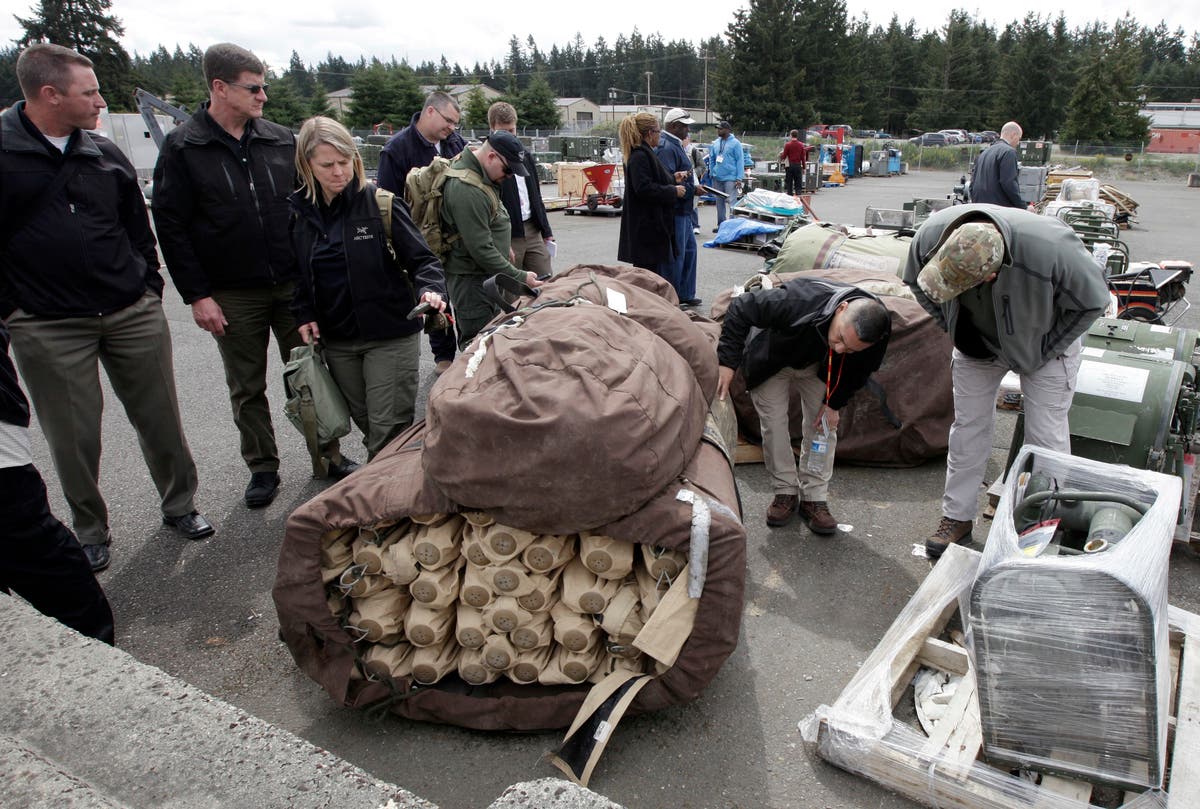
With the stroke of his pen, President Trump has undone another part of the legacy of his predecessor, ending a ban on selling surplus military equipment to local police departments. President Obama had signed an executive order instituting the ban after the police response to rioting in Ferguson, Missouri, three years ago.
The order rescinding the ban, first reported Sunday by USA Today, was announced by Attorney General Jeff Sessions on Monday in a speech to the Fraternal Order of Police, the largest law enforcement union in the United States. That move was a little unusual as the program had been — and will be — run by the Department of Defense.
At the same time, it was not a surprise, as Sessions had been pushing for the sales to resume.
Find out what's happening in White Housefor free with the latest updates from Patch.
"The executive order the President will sign today will ensure that you can get the lifesaving gear that you need to do your job," Sessions said Monday before the order was released by the White House.
Trump Rolls Back Ban On Giving Military Gear To Local Law Enforcement
Find out what's happening in White Housefor free with the latest updates from Patch.
"We will not allow criminal activity, violence, and lawlessness to become the new normal. And we will save taxpayer money in the meantime."
When Obama instituted the ban, he was reacting to the fact that the Ferguson Police had been so well-equipped that they were perceived as an occupying force as opposed to one there to restore order and protect citizens.
"We've seen how militarized gear can sometimes give people a feeling like they're an occupying force, as opposed to a force that's part of the community that's protecting them and serving them," Obama said when he announced the ban.
While Obama did ban the sale of surplus equipment such as grenade launchers and bayonets, he exempted the sale of things such as battering rams, riot gear and mobile command units.
At the time, the Associated Press investigation into the program found that while the intent of the program had been to help local law enforcement fight terrorism and drug trafficking, a disproportionate share of the property distributed since 1990 has been obtained by police departments and sheriff's offices in rural areas with few officers and little crime.
Not everyone welcomes the president's decision.
"It is both exceptionally dangerous and irresponsible for the Administration to lift the ban on the transfer of certain surplus military equipment to state and local law enforcement organizations," the NAACP Legal Defense and Education Fund said in a statement.
Photo - In this May 2, 2012 file photo, law enforcement and other officials examine surplus gear at Joint Base Lewis McChord in Washington state as they attend an information session for a program that distributes surplus military equipment to state law-enforcement agencies. (AP Photo/Ted S. Warren)
Get more local news delivered straight to your inbox. Sign up for free Patch newsletters and alerts.