Politics & Government
Net Neutrality Still Has A Slim Chance
Senate Minority Leader Chuck Schumer promises a vote on net neutrality as more than a dozen attorneys general plan lawsuits.


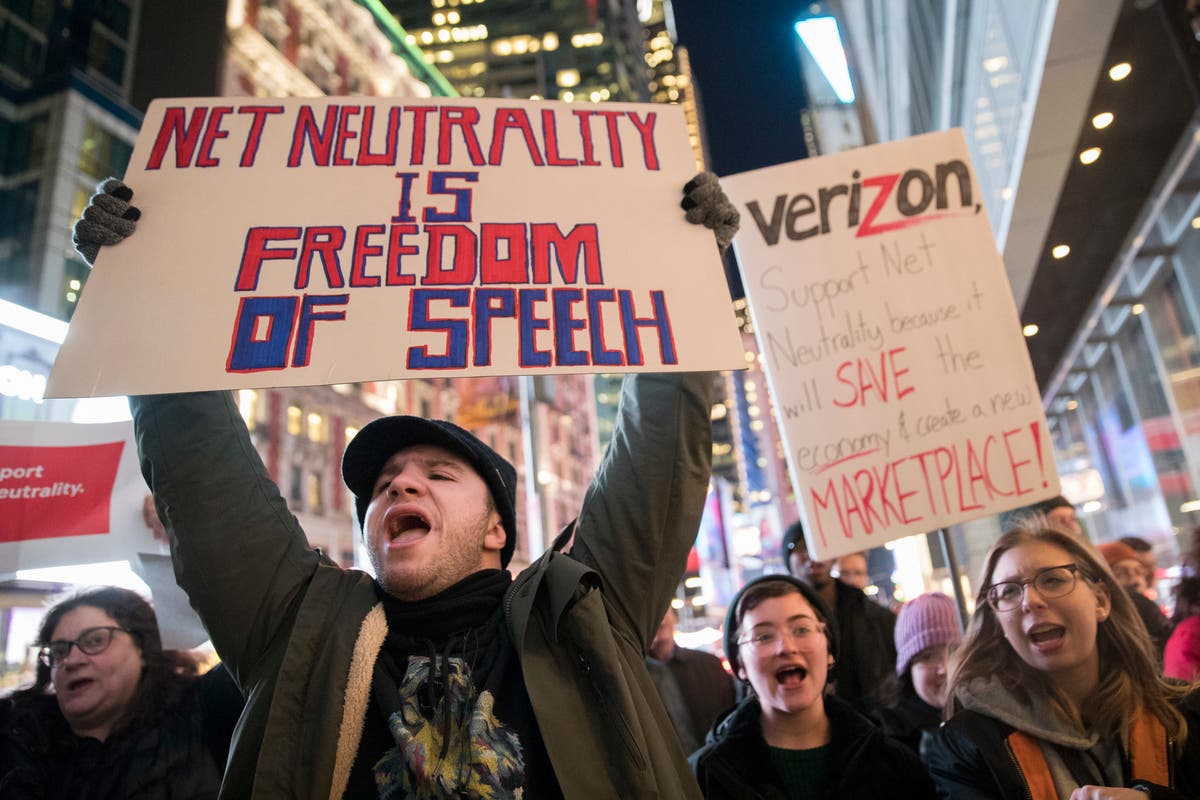
WASHINGTON, DC — Net neutrality may not be dead yet, though the chances are slim of resuscitating the Obama-era rules that prohibit high-speed internet service providers from blocking, throttling or discriminating against web content. Senate Minority Leader Chuck Schumer and his colleagues plan to use the Congressional Review Act in an attempt to overturn the Federal Communication Commission’s 3-2 decision last Thursday to dismantle the net neutrality rules.
Also, more than a dozen attorneys general plan to sue the FCC after a review of public comments revealed millions of comments that may be fake. The rules were implemented by former President Barack Obama in 2015.
In general, Republicans favoring the end of net neutrality have said the rules were a heavy-handed, Obama-led takeover of the internet and that repealing the rules allows for lighter-touch regulations that allowed the internet ecosystem to develop into a robust economic engine.
Find out what's happening in White Housefor free with the latest updates from Patch.
But Jessica Rosenworcel, one of the two Democrats on the FCC who voted against the repeal, says that given the increasing role of the internet in business and daily life, broadband companies get “extraordinary new powers” that give them “the right to discriminate and favor the internet traffic of those companies with whom they have a pay-for-play arrangement and the right to consign all others to a slow and bumpy road.”
Schumer, a New York Democrat, said at a news conference last week that Republicans used the Congressional Review Act, or CRA, repeatedly during the first six months of the year to unwind other rules passed in the final days of the Obama administration.
Find out what's happening in White Housefor free with the latest updates from Patch.
Bringing the matter to a vote doesn’t require the cooperation of Senate Majority Leader Mitch McConnell, a Kentucky Republican.
“We can bring it to the floor and force a vote,” Schumer said in a news conference Friday. “So there will be a vote to repeal the rule that the FCC passed.
“It’s in our power to do that and that’s the beauty of the CRA rule. Sometimes we don’t like them, when they used it to repeal some of the pro-environmental regulations, but now we can use the CRA to our benefit, and we intend to.”
Reinstating net neutrality only requires a simple majority votw, but critics of the FCC’s action face a steep uphill climb because Republicans control both chambers. With Alabama’s election of Doug Jones to fill the vacant seat held by Attorney General Jeff Sessions, Democrats closed the gap in the Senate to 49-51, but in the House, Republicans far outnumber Democrats, 241-194.
The chances are strongest in the Senate, where Maine’s two senators — Susan Collins, a Republican, and Angus S. King Jr., an independent who typically caucuses with Democrats — asked FCC Chairman Ajit Pai to delay last week’s vote.
Massachusetts Democratic Sen. Ed Markey will lead the effort in the Senate. In the House, Democratic Rep. Mike Doyle of Pennsylvania has promised to champion it.
“Our Republican colleagues have a choice — be on the right side of history and stand with American people who support net neutrality, or hold hands with big corporations who only want to to increase their profits at the expense of consumers and our economy,” Markey said.
Even if both chambers vote to override the FCC’s decision through the CRA rule, President Trump, who support's the FCC's action last week, could veto that action.
Republicans plan to submit a net neutrality bill this week that would enshrine the rules in law. It could address some of the concerns, including preventing internet service providers from blocking or throttling web traffic. In a video on her Twitter page, House Communications and Technology Subcommittee Chairman Marsha Blackburn, a Republican congresswoman from Tennessee, said: “We're for a free and open internet. It's time for Congress to do its job.”
Republicans Sen. John Thune of South Dakota and Rep. Mike Coffman of Colorado also want to codify the rules, though they would be weaker than those recently overturned by the FCC.
The repeal of net neutrality is wildly unpopular among both parties, according to a poll released last week by the nonpartisan Voice of the People. Conducted by by the Program for Public Consultation at the University of Maryland, the poll of 1,077 registered voters found 83 percent opposed the repeal, including 75 percent of Republicans, 89 percent of Democrats and 86 percent of independents.
Dead People Submit Comments
New York Attorney General Eric Schneiderman is leading the multistate challenge of FCC’s decision. He has said Pai allowed the deck to be stacked in favor of the net neutrality repeal by refusing to cooperate in an investigation of a suspected scheme to corrupt the public comment process.
Schneiderman’s office began investigating after an analysis of the suspect comments showed tens of thousands of residents of New York may have had their identities misused. It also showed that hundreds of thousands of Americans concentrated in California, Georgia, Missouri, Ohio, Pennsylvania and Texas may have been victimized, he said.
More than 22 million comments were received about the repeal of the rule. Schneiderman said in an open letter to the FCC that an “enormous numbers of fake comments” favoring the repeal were submitted, using either made-up names and fake email addresses, but also the “names of real people.” He compared it to “identity theft … on a massive scale.”
“In doing so,” he wrote, “the perpetrator or perpetrators attacked what is supposed to be an open public process by attempting to drown out and negate the views of real people, businesses, and others who honestly commented on this important issues.”
Last week, Schneiderman said as many as 2 million fake comments stole real Americans’ identities. He set up an online tool where people can check to see if comments have been submitted under their names or email addresses. To date, more than 5,000 people in New York have filed reports with Schneiderman’s office saying their identities were used to file comments favoring the repeal of net neutrality.
Among the suspicious comments is one supposedly filed by Barack Obama in May. The address listed is 1600 Pennsylvania Ave. NW in Washington, D.C. — which is not the White House, but a 77-unit apartment building about 3½ miles away. It does seem unlikely Obama would have made the comment, though:
“The unprecedented regulatory power the Obama Administration imposed on the internet is smothering innovation, damaging the American economy and obstructing job creation. I urge the Federal Communications Commission to end the bureaucratic regulatory overreach of the internet known as Title II and restore the bipartisan light-touch regulatory consensus that enabled the internet to flourish for more than 20 years. The plan currently under consideration at the FCC to repeal Obama's Title II power grab is a positive step forward and will help to promote a truly free and open internet for everyone.
Several other people have said in Twitter that dead relatives submitted comments, including actor Mackenzie Astin, who said in a tweet directed to Pai that three comments have been attributed to his late mother, Patty Duke, who died in March 2016.
“Can you please take the time to explain to me how she made three separate comments in support of ending #NetNeutrality more than a year after she died?” Astin asked.
A Pew Research Center analysis of the net neutrality comments found that 57 percent were submitted under either duplicate email addresses or temporary email addresses, and many individual names appeared thousands of times in the comments.
Pew also found “clear evidence of organized campaigns to flood the comments with repeated messages” on both sides of the issue. Of the 21.7 million comments, only 6 percent were unique, and the seven-most submitted comments, six of which argued against net neutrality, made up 38 percent of all submissions over the four-month comment period.
Attorneys general from the following states are joining in Schneiderman’s lawsuit: California, Delaware, District of Columbia, Hawaii, Illinois, Iowa, Kentucky, Maine, Maryland, North Carolina, Mississippi, Oregon, Pennsylvania, Vermont, Virginia and Washington.
(AP Photo/Mary Altaffer, File)
Get more local news delivered straight to your inbox. Sign up for free Patch newsletters and alerts.