Politics & Government
GOP Tax Bill: 5 Effects On Middle Class In House, Senate Versions
The Senate's version of the Republican "Tax Cut and Jobs Bill" restores some, but not all, deductions popular with middle-class Americans.


WASHINGTON, DC — As details of Republicans tax bills come out, middle-income Americans may want to put on hold any spending plans for the windfall they expected. One of two damning analyses released Wednesday, this one from the trusted nonpartisan Tax Policy Center, shows that under the House version, working class families with one child who earn $100,000 will, on net, pay more in taxes, not less as pledged in the campaign and run-up to the so-called "Tax Cuts and Jobs Bill."
Under the House version, the largest share — 21 percent — of the $5.5 trillion tax cut goes to tax filers in the top 1 percent. The analysis shows high-wage earners with $730,000 incomes will see a cut of $37,000, or 2.5 percent of their after-tax income, in tax year 2018, according to the Tax Policy Center analysis. And the very, very rich, those whose annual income is $5 million or more, the cut is almost $300,000 once the bill is fully phased in.
On the other end, the very poor, those who earn $25,000 or less, the cut is negligible, only 0.4 percent. Their tax cut will amount to about $10, enough to buy a couple of fast-food cheeseburger meals.
Find out what's happening in White Housefor free with the latest updates from Patch.
In fairness, some middle class Americans, especially the upper middle class, will come out OK under the House bill, depending on whether they deduct high medical bills and student loan debt, or use the popular mortgage interest deduction. All of those are either stripped or limited in the bill, but under the Senate version that's being announced Wednesdy, they're protected
The House plan meanders away from traditional Republican values of fiscal restraint, adding $74 billion more to 10-year deficits than allowed, according to the Congressional Budget Office, a nonpartisan arm of Congress. The budget law sets a $1.5 trillion cap on increases to the federal debt.
Find out what's happening in White Housefor free with the latest updates from Patch.
If that can’t be trimmed, the measure is vulnerable to a filibuster by Senate Democrats that GOP senators don’t have the strength in numbers to block. The Senate is drafting its own version of the bill and is aiming for a reconciliation of the two plans by Christmas.
One way to lessen the budget impact is to repeal the Affordable Care Act requirement that all Americans have health insurance or pay a penalty — something President Trump wants. That would reduce federal deficits by about $338 billion by 2027, but it would also reduce the number of people who don’t have insurance by 4 million in 2019 and 13 million in 2027.
To find money, the Senate also is delaying implementation of the huge corporate tax rate, cut to 20 percent from 35 percent, until 2019.
Here are five key differences in the tax plan that could affect average, middle-class Americans:
1. If they’re swimming in high medical bills not covered by their insurance, they won’t be able to deduct those costs under the House version, but that provision is restored in the Senate version announced Thursday. The deduction helps millions of taxpayers offset the costs of everything from nursing home care, where $100,000 monthly bills aren’t uncommon, to travel to a specialty hospital for treatment of a rare disease. Republicans are breaking ranks on the issue under lobbying pressure from groups representing the elderly, and the Senate bill takes their concerns into account.
2. Under the House version, they won’t be able to deduct interest payments on their kids’ student loans — a top-line deduction under which whatever amount of interest they pay is shaved dollar-for-dollar from taxable income, a deduction worth up to $2,500 for some tax filers under current rules. Student loan debt is the second-highest consumer debt category, behind mortgages, according to consumer debt studies, and being able to save even a few hundred dollars is important, especially for recent college graduates in entry level positions as they begin their professional careers. The Senate version restores that deduction.
3. And about those mortgages: Another popular deduction among middle-class families accustomed to writing off interest paid on loans will be able to do so only on homes of $500,000 or less, down from $1 million under current rules. That doesn’t hurt someone thinking of buying a house in the middle of Kansas or some other place where home values are low enough that a million-dollar-house is a mansion, but the devil really is in the details here. In many markets from Los Angeles to New York City, that’s not enough to buy a one-bedroom apartment, the National Association of Realtors has said. The provision wouldn’t apply to current homeowners, only those buying property after new tax laws take effect. The Senate version protects the mortgage-interest deduction as it currently stands.
4. Families will no longer able to take a deduction on the oftentimes tens of thousands of dollars in adoption costs under the House bill, a measure that could have a negative societal impact as well, according to adoption advocates who say it means more children will languish in foster homes. On the other hand, when it comes deductions on contributions to 529 college savings plans, embryos and fetuses at any stage of development are treated as born persons — an ideological twist in the bill that critics say fires an unnecessary shot on the abortion battlefront. Filers have always been able to establish these plans, then transfer it to the child once he or she is born. The Senate version restores the adoption credit, and the House has amended its plan to restore it as well.
5. Taxpayers could lose at least the full ability to deduct state income and sales taxes from their federal tax bill. The House version allows taxpayers to deduct up to $10,000 in property taxes, but doesn’t allow them to deduct income and local taxes. The Senate bill eliminates all deductions on property, income and sales taxes to free up money to devote to tax cuts.
Here are more details about the two versions of the bill:
Personal income tax rates: The House version condenses seven brackets to four at rates of 12 percent, 25 percent, 35 percent and 39.6 percent. The Senate version retains seven brackets, but changes them to 10 percent, 12 percent, 22.5 percent, 25 percent, 32.5 percent, 35 percent and 38.5 percent. Under current law, top bracket is 39.6 percent.
Standard deduction: Both versions would change the standard deduction to $12,000 for individuals and $24,000 for married couples, up from $6,350 for individuals and $12,700 for married couples in the current law
Tax credits: The House version raises the per child tax credit to $1,600, from $1,00o under current law, for families earning up to $230,000, and it creates a $300 tax credit for each adult in the family, which expires in 2023. The Senate version raises the child tax credit to $1,650 and raises the income limit of families who qualify.
Charitable deductions: The House bill reduces allowable charitable deductions. The Senate bill doesn't.
Alternative minimum tax: Both the House and Senate repeal the tax aimed at ensuring that higher-earning people pay at least some tax.
Inheritance tax: When someone dies, the person inheriting the estate currently must pay taxes on its value above $5.5 million for individuals, $11 million for couples. House bill initially doubles those limits and repeals the entire tax after 2023. Senate doubles the exemptions but does not repeal the tax.
Pass-through businesses: Millions of U.S. businesses "pass through" their income to individuals, who then pay personal income tax on those earnings, not corporate tax. The House bill would tax many of them at 25 percent. The Senate bill would let people deduct some of the earnings and then pay at their personal income tax rate on the remainder.
For more information on the implications of the House bill, go to the Tax Policy Center.
The Associated Press contributed to this report.
Also See: GOP Pushes Tax Bill, Dems Remain Skeptical
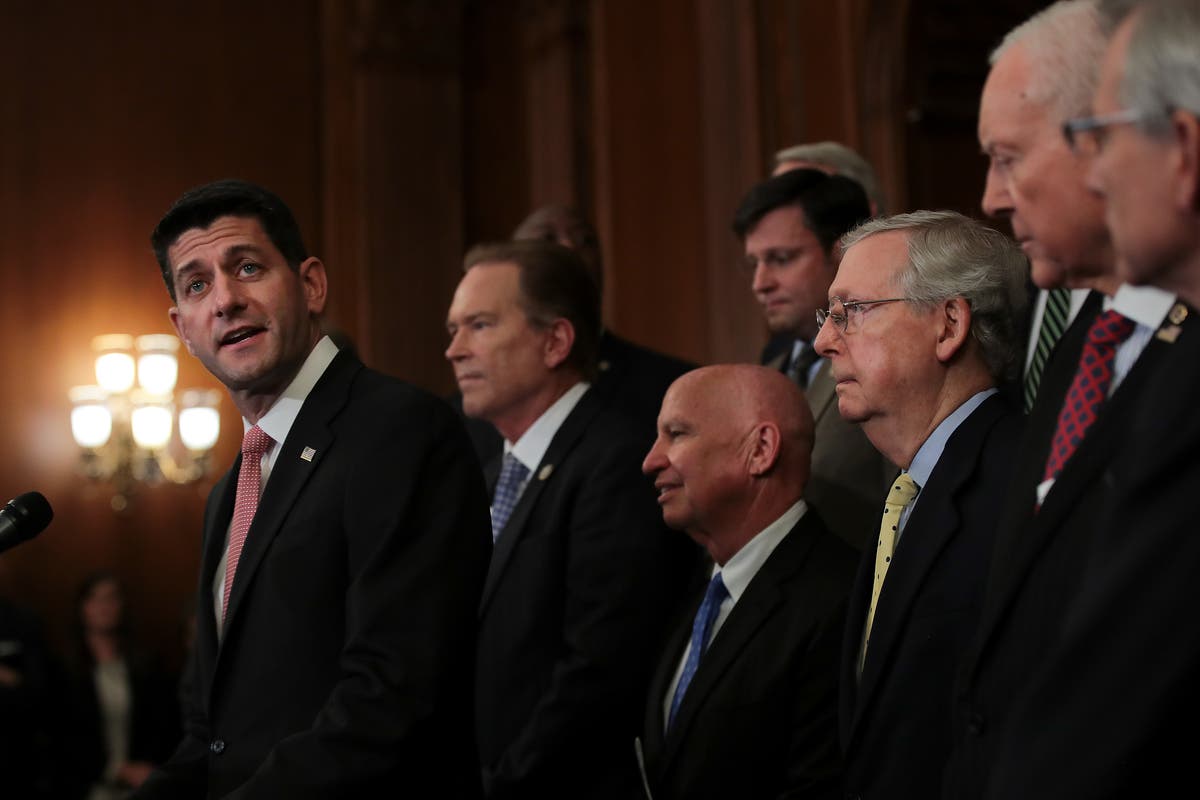
Speaker of the House Paul Ryan of Wiscnsin speaks during a press event to discuss Republicans’ plans for tax reform earlier this fall. (Photo by Drew Angerer/Getty Images)
Get more local news delivered straight to your inbox. Sign up for free Patch newsletters and alerts.