Community Corner
Charlottesville Violence: Mourning, Love, Fear Mix In Aftermath
Heather Heyer died when a reputed white nationalist drove into a crowd. Charlottesville residents grapple with race, hate and history.


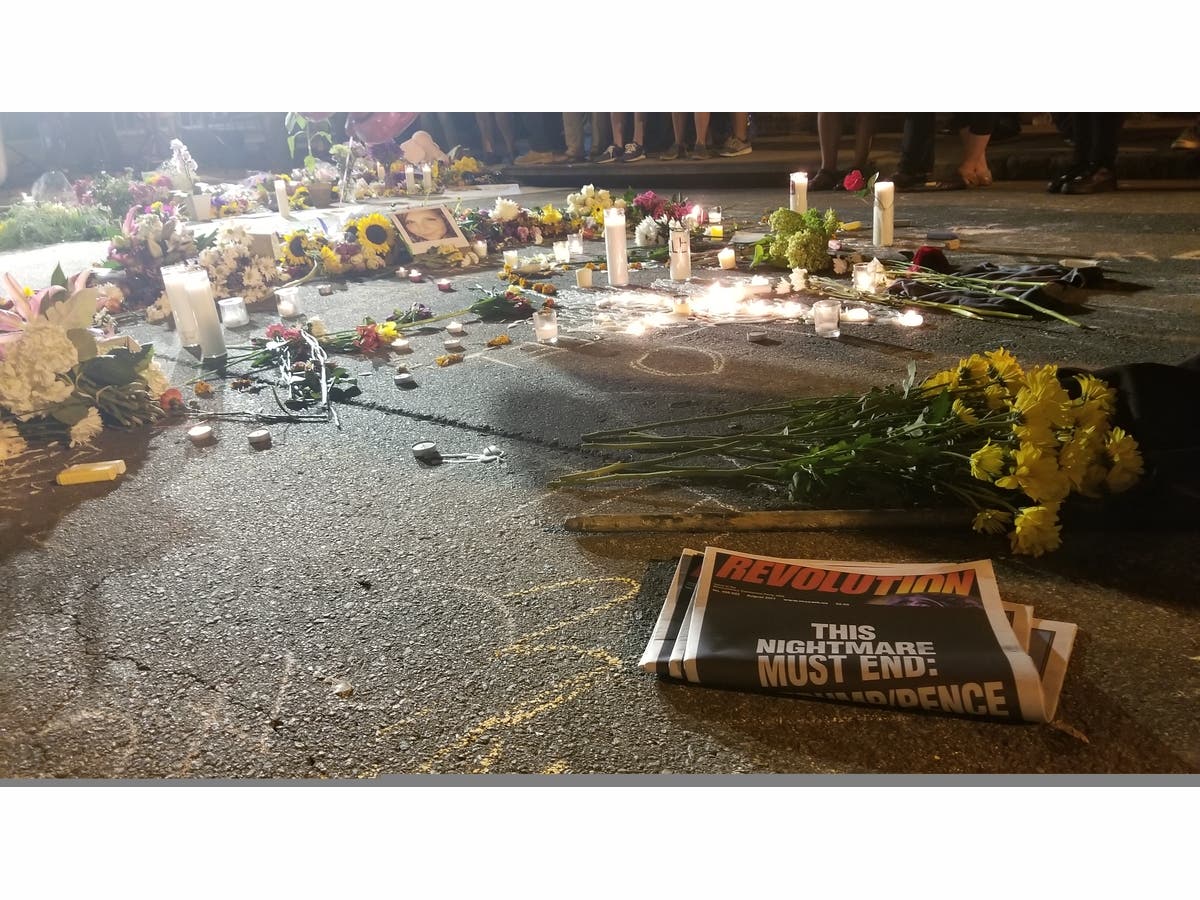


CHARLOTTESVILLE, VA — The hatred and racial strife that ultimately left three people dead in Charlottesville isn't the city that Octavius Boykin, 39, knows. He has lived in Charlottesville his whole life and sees Charlottesville as a safe town. “We’ve never had this violence before,” Boykin said Monday, two days after clashes at a white nationalist rally there to protest the city's intent to remove a statue of Confederate Gen. Robert E. Lee, a protest rally that ended in brawls with counter-protesters.
On Sunday, Charlottesville residents mourned Heather Heyer, a paralegal who was killed when a car plowed into a group of anti-Nazi and anti-KKK activists while "exercising her peaceful right to speech," Charlottesville Police Chief Al Thomas said in a press conference. Nineteen others were injured in the act described as domestic terrorism by some, including the U.S. attorney general, and Heyer's name became known nationwide.
On Monday afternoon, two days after the fatal attack, President Donald Trump mentioned Heyer's name for the first time in a speech from the White House. "Her death fills us with grief, and we send her family our thoughts, our prayers and our love," Trump said.
Find out what's happening in White Housefor free with the latest updates from Patch.
In the same statement, after two days of withering criticism for his failure to call out the hate groups by name, Trump also condemned the neo-Nazis, KKK members and white supremacists who perpetrated the violence. Attorney General Jeff Sessions said the Justice Department would pursue a civil rights investigation in the wake of Heyer's death.
Hundreds had gathered at the intersection of Water Street East and Fourth Street Southeast in Heyer's memory Sunday, passing candles and writing with chalk on the road at the spot where she lost her life. Two state troopers in a helicopter also died over the weekend when their chopper crashed while monitoring the fracas.
Find out what's happening in White Housefor free with the latest updates from Patch.
Lifelong Charlottesville resident Charles Johnson reflected Monday, and said,"Little ol' Charlottesville, it's got the eyes of the world on it. It's not a good feeling. The eyes are on you for nothing positive. That's going to be something that everybody remembers forever."
Scenes From The Vigil
"Heather did not give her life. Her life was taken from her," said 26-year-old Daniel O'Gallagher, of Charlottesville, as he addressed the gathering. He's a caregiver with Visiting Angels.
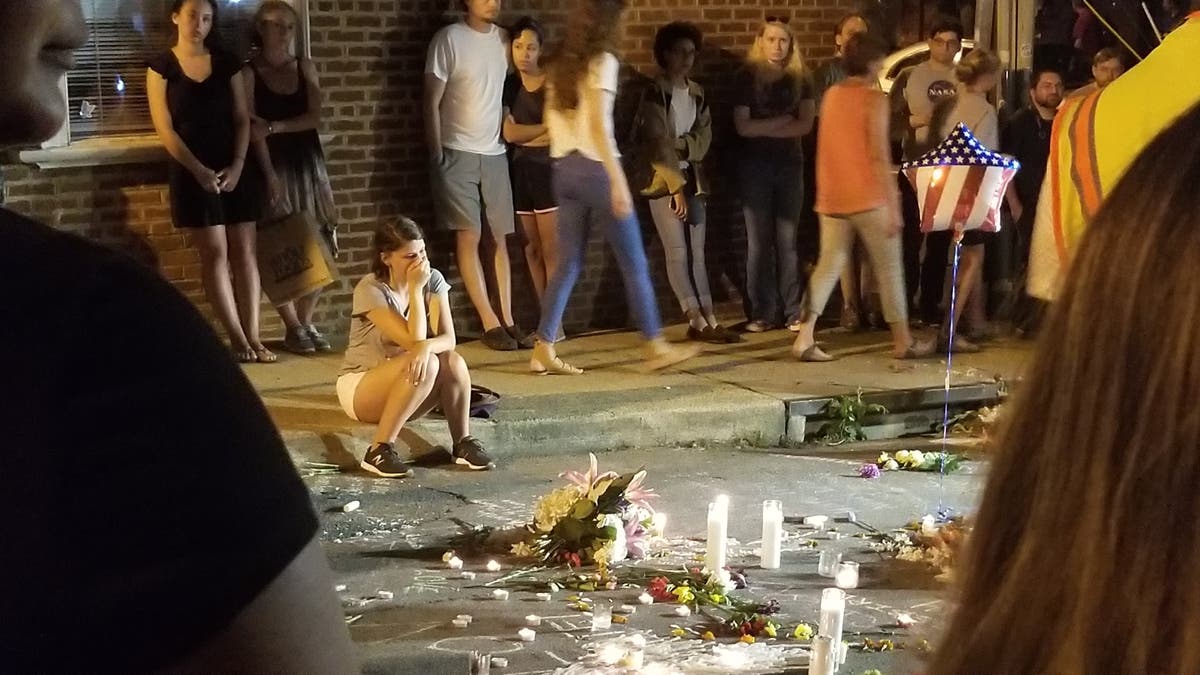
"I wanted to say something tonight because I think we get caught up in our current events and our differences... If you peel back the skin, no matter if you're white, Jew, gentile, if you're black, whatever skin tone you wear... you've got to remember that we're a race. We are family," O'Gallagher said in an interview with Patch.
The vigil pressed on despite an official cancelation amid threats of violence, O'Gallagher said.
Heyer's mother, Susan Bro, told a reporter that while she grieves for the loss of her only child, she will advocate that everyone join the movement her daughter stood for. And she wants it done peacefully, without anger and without retaliation.
"I miss her very much. … I woke up and thought, 'My baby is gone,'" Bro said.
Local Voices
“I’ve never had no problems. I’m black. We don’t go around looking for white guys to beat up,” Boykin said, adding that he hasn’t seen white people acting violently toward black people, either.
“I think the only conflict I’ve seen is when Wes Bellamy wanted the [Robert E. Lee] statue removed. That’s where it came from." The Ku Klux Klan “isn’t even around here.”
Boykin questioned the decision by Charlottesville leaders to let the KKK and others rally in the city.
Since the violence on Saturday, he said, “Things are going back to normal… just like I like it.” But a part of Boykin has reservations, noting the possibility of future violence. “If [the Ku Klux Klan] tries to make an anniversary out of it, it’s only going to get worse,” he said.
“If they come here next year and do it again, it’s just like they’re promoting the violence. Why bring it back?”
He thinks the city of Charlottesville should make an effort to ensure they don’t have another white supremacist rally. “Nothing good came out of it.”
Marine, History Buff Has Mixed Feelings
Martin Harkless, 49, originally moved to Charlottesville in 2000 as a Marine recruiter. He decided to move back to town after retiring from the military.
Harkless has something of a different perspective from many other locals. Standing in front of the statue of Robert E. Lee, he said, “As a jarhead (slang for a Marine), a military guy, I know the history of Robert E. Lee before the Civil War. The war separated families and households. Lots of people made the decision to fight for their side, for their state."
He doesn’t think it’s a racist statue. Supporters of the statue can be racist or not, as can opponents of the statue, he said, adding, “Obviously, if you’re here with swastikas and Nazi garb, you’re a racist. ... This statue has never been the problem. It’s us.”
Harkless, a black man, said, “I’m torn on the statue … To say ‘we’re just going to take this statue down and you have no say’ is the wrong way to go about it," noting that the historian in him wants to see the statue remain.
For the future, Harkless hopes that people will come together and have conversations. “I hope we heal … I hope we can figure out a way to make this work and do what’s right. I wish I could say I knew what’s right. I don’t,” he said, noting that simply tearing down the statue will not solve our racial tensions.
The only solution, Harkless thinks, is open communication. “You and I are here talking, a white guy and a black guy, just because we have the intelligence and the heart to communicate.”
Woman Shocked by Indiscriminate Violence
Sherry Wilson, 58, moved to Charlottesville six weeks ago. People seem to be blaming the town for the violence that took place Saturday, she said. "The first rally was peaceful," she said, referring to a July 8 rally that brought about 50 KKK members to town, faced by more than a thousand protesters, USA Today reported.
There should have been a stronger police presence ahead of Saturday's violence, she said. Now, Wilson feels scared every time she sees a vehicle swerve or sees somebody with a sidearm. "I heard people bought up all the ammo at Wal-Mart."
The deaths and dozens injured over the weekend shocked her. "I thought this was a great town to come to," she said. "It feels different emotionally. People are on edge."
Wilson doesn't know whether it would be best to remove the Robert E. Lee statue. "Everybody is going to be offended by something. I say live and let live."
She pointed out a somber irony in the death of Heather Heyer. "This guy was a white supremacist, and he just killed a white person. Why? What's the point?"
Johnson, 33, grew up in Charlottesville. A black man, he attended the July 8 counter-protest against the white supremacist rally. "It was more peaceful. I wouldn't call it reckless. One group of 20 people tried to follow another group back to their car, and they (the police) just let tear gas off," he said.
"But compare to what happened here this weekend — this weekend was total mayhem. I never thought in a million years I would have seen s--- like that happen here in Charlottesville. I've got two young kids, and I wonder if it's safe for them to be here when I'm out of town."
"I've never had a problem with a racial incident, never."
Johnson made the point that social discourse is more powerful when violence is avoided. "They're fighting for the statue ... You can get your message across and probably be a lot more clear when you don't use violence.
"You can tell there's tension in the air," he said. Johnson has been working in the mall, a pedestrian-only street lined with shops, bars and restaurants, for about six months. He said that people normally speak with a friendly tone. "But not today," he said.
"This is a loving town, but there's still that tension in the air," he said. He said it doesn't feel good.
Earlier on Sunday Jason Kessler, the organizer of the white nationalist "Unite the Right" rally that was marred with violence and death, was chased away by protesters as he tried to hold a press conference. On social media, Kessler said he had hoped to share his condolences on Heyer's death and then bashed the silencing of his freedom of speech.
"Shame, shame!" the protesters shouted in unison before Kessler began speaking. Robert K. Litzenberger, 47, of Charlottesville, was charged with misdemeanor assault and battery after a trooper saw him spit on Kessler, The Daily Progress reported.
SEE ALSO:
- Charlottesville 'Unite The Right' Rally: Feds Investigating Deadly Car Attack, Victim Identified
- Violence, Fury And Flames: Charlottesville Timeline
- Watch: Candlelight Vigil For Heather Heyer, Victim Of Charlottesville Violence
- Charlottesville Crash: 5 Things To Know About Fallen Virginia Troopers
Casey S., 26, grew up in Charlottesville. He stood silent at the vigil holding a sign with a cartoon depiction of Captain America punching Hitler and the phrase "Sic Semper Tyrannis," which translates to "thus always to tyrants."
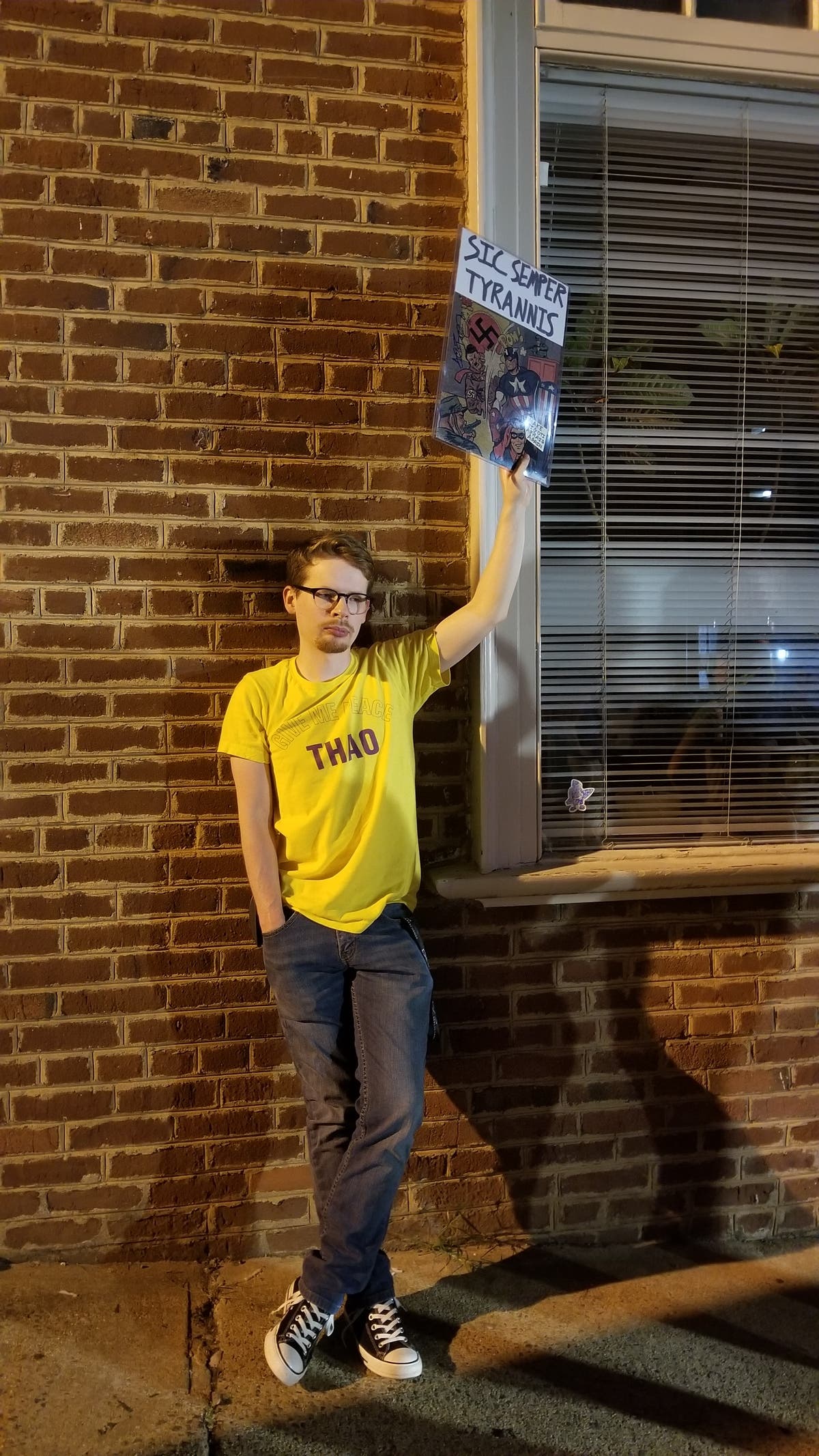
He lives in Richmond now but came to Charlottesville to pay his respects and participate in the vigil.
"It means a lot of things. It's hard to sum it all up. It's a unity thing. This community is clearly so passionate about everything we've discussed the past few days," he said.
"Even in spite of everything that's happened, there are still people out here tonight. Despite everything that's happened, people still find hope and strength together because we came out here. We'd rather be out here together than at home."
Charlottesville Police Were Ill Prepared For Violence
Charlottesville Police Chief Al Thomas spoke to reporters Monday about the weekend's violence, memorializing the dead and responding to reporters' questions. Authorities expected a peaceful protest and were equipped for one.
He paid homage to the two Virginia State Police troopers who died in a helicopter accident. The pilot, Lt. H. Jay Cullen, 48, of Midlothian, Virginia, and Trooper-Pilot Berke M.M. Bates of Quinton, Virginia, both died at the scene.
The two troopers who were helping monitor Saturday's events in Charlottesville were killed Saturday when their helicopter crashed in the woods in Albemarle County.
"We understand it was a traumatic weekend for everyone. We are still receiving reports of assaults," he said.
Outlining the police department's role in the weekend's events, Thomas said they received 250 calls for service on Saturday alone. Police medics gave care for 36 individuals who were injured amid the violence, noting that the offenders often disappeared back into the crowd.
Police separated opposing sides of the July 8 event, and when asked why police acted differently on Saturday, Thomas said, "This was a completely different event ... the entire action plan was different."
Members of the "Unite the Right" movement carried assault rifles. "We were certainly not intimidated by the firepower of the alt-right, however it was prudent to make sure officers were equipped ... we were hoping for a peaceful event."
(SIGN UP: Get Patch’s daily newsletter and real-time news alerts, or like us on Facebook. Or, if you have an iPhone, download the free Patch app.)
Kendall, 60, of Charlottesville, asked that Patch not use his last name. He was reminded of the Kent State shootings of May 4, 1970, when four student protesters were shot and killed by members of the Ohio National Guard.
He said back then, "We were very sure as young people that it was us against them, that they had just declared war on us.
"This feels the same way."
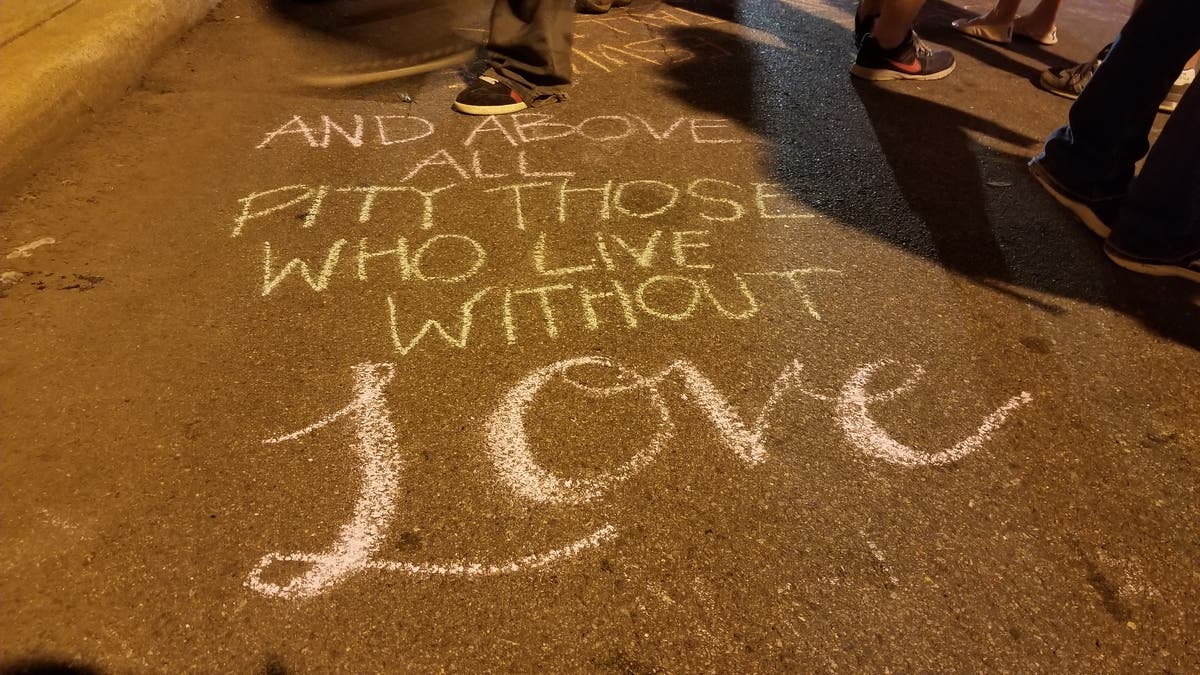
Kendall also saw Heather Heyer's death as a grim reminder of violent tides rising. "Hearts are mourning for Charlottesville, mourning for Heather today, mourning for the loss of civil discourse and for the innocence of this sweet, sweet town," he said.
Regardless of the brutal act of violence committed by James Fields, the 20-year-old driver of the car that killed Heyer, he believes that love holds more power than hate. If Kendall had a chance to speak to Fields, he would say, "I love you."
Photos and video by Patch Editor Geoff Dempsey
Get more local news delivered straight to your inbox. Sign up for free Patch newsletters and alerts.