Politics & Government
Tax Bill Opens Drilling, Cuts Obamacare, Courts Religious Right
Energy interests, Obamacare opponents and the religious right are winners in tax bill that hurts states with high taxes and property values.


WASHINGTON, DC — Tucked in Republicans’ massive tax cut bill are provisions that have little to do with taxes — one that opens more than 1 million acres of the frozen tundra of Alaska for oil and gas exploration, another that ends the Obama-era mandate that most Americans have health insurance or pay a tax penalty, and others that play well with the religious right.
And unless those provisions are cut as the House and Senate reconcile the Tax Cuts and Jobs Security Act, which the Senate passed early Saturday morning on a 41-49 vote, they’ll change policy without public debate. The first overhaul of the tax code in three decades, though wildly unpopular with the voting public, is expected to land on President Trump’s desk before Christmas.
Trump is expected to sign the tax bill, making it his first legislative victory since taking office in January.
Find out what's happening in White Housefor free with the latest updates from Patch.
Opposition to the tax bill is growing among Americans and now nearly half of voters oppose it, according to a new Reuters/Ipsos poll released last week. It showed 49 percent of people who were aware of the tax bill opposed it, up from 41 percent in October. More than half of the 1,257 adults surveyed who knew about the bill said it would primarily benefit the wealthy and large U.S. corporations, 14 percent said it would benefit “all Americans,” 6 percent said it would benefit the middle class and 2 percent said it would primarily benefit lower-income Americans. The poll found that 22 percent said they “don’t know” the bill’s provisions.
A Politico/Morning Consult tracking poll found that Republican support for the tax plan dropped to 59 percent from 66 percent; opposition grew to 12 percent from 9 percent; and those undecided increased to 28 percent from 25 percent.
Find out what's happening in White Housefor free with the latest updates from Patch.
Of course, no tax bill will satisfy everyone and “there are always winners and losers and people who will pay more and benefit less,” Scott Talan, an assistant professor of public and strategic communication at American University and former political reporter told Patch.
Though some in their states may suffer, “the one big thing Republicans tend to care about is doing something,” Talan said, explaining that absent a victory on top agenda items, Republicans with a majority in both chambers of Congress and the presidency could face scorn from voters in the 2018 midterm elections because “nothing got done.”
Even with a legislative win, Republicans are still vulnerable in the midterms among low- and middle-income Americans who voted for the first time in the 2016 election who may feel betrayed by the bill, Talan said.
Senate Majority Leader Mitch McConnell of Kentucky expects Americans to warm to the tax bill once they fully understand it.
“Can you think of any major legislation passed in the last 10 years that was popular? Remember how unpopular Obamacare was,” McConnell told Politico. “If [tax reform], in conjunction with regulatory relief, gets the country growing more rapidly and creates more jobs and opportunity, I think that will answer the skeptics.”
Those keeping a scorecard on who loses under the the the losers are Americans in high-tax states like California, New Jersey and New York would see little relief in the bill because of two popular deductions that aren’t as important in states with lower taxes and property values.
Both versions eliminate the deduction for state and local income or sales taxes. In California, for example, more than 6 million taxpayers take advantage of the deduction, reducing their tax bill by an average of $18,438 annually, according to an analysis by the Institute on Taxation and Economic Policy.
Among the the losers are Americans in high-tax states like California, New Jersey and New York would see little relief in the bill because of two popular deductions that aren’t as important in lower tax states.
Both versions eliminate the deduction for state and local income or sales taxes, and cap the deduction for property taxes at $10,000. In California, for example, more than 6 million taxpayers take advantage of those deductions, reducing their tax bill by an average of $18,438 annually, according to an analysis by the Institute on Taxation and Economic Policy.
The two versions differ on the mortgage interest deduction. The Senate version allows it on up to $1 million in debt, while the House version grandfathers current mortgages and limits new ones to $500,000 and removes the deduction for loans on second homes.
Here are some of the surprises tucked in the two versions of the bill:
OIL DRILLING IN ALASKA
Drilling in the pristine Arctic National Wildlife Refuge has been the topic of an acrimonious battle between energy advocates and environmentalists that has lasted almost as long as Alaska has been a state. Those who favor drilling say only a small part of the 19 million-acre would be affected, while environmentalists say any any drilling in the area would set up a precedent and make the clean waters of the area vulnerable to an ecologically disastrous spill.
Republican Sens. Susan Collins of Maine and John McCain of Arizona have previously opposed ANWR drilling, but both voted for the Senate bill that opens 1.5 million acres for oil and gas exploration.
THE SICK, ELDERLY, UNINSURED AND YOU
The Senate version of the tax bill kills the Obamacare mandate for health insurance, which is estimated to result in 13 million more uninsured Americans over the next decade, according to the independent Congressional Budget Office. Attempts to repeal and replace President Obama’s signature health-care bill have failed, and Trump has been chipping away at it through executive order.
The CBO also projected that Americans could pay 10 percent more for their health insurance if the mandate is repealed.
The House version leaves the mandate intact, but eliminates a key deduction for people with catastrophic medical expenses. The Senate version preserves medical expense deductibility, which AARP Executive Vice President Nancy LeaMond said in a statement is “especially important for middle-income senior.”
If the House provision prevails, it will be “a health tax for taxpayers who get sick or have chronic conditions,” LeaMond said.
The cost of medical care could also increase for all Americans, according to The National Academy of Science, which said those costs would be absorbed by practitioners and institutions; the federal, state and local governments that support the operations of hospitals and clinics, both through direct appropriations and subsidies like Medicare and Medicaid; and philanthropic donations.
Lack of insurance or affordable health care could cause lower income citizens to lose more time at work, according to Population Health Management, which said health-related work losses already cost U.S. employers more than $260 billion a year.
Also See: McConnell: Tax Cuts Won't Grow Deficit
COURTING THE RELIGIOUS RIGHT
The House version of the bill repels the Johnson Amendment that prohibits tax-exempt churches and charities from endorsing or opposing political candidates or issues, which Trump and many Republicans say restricts those organizations’ freedom of speech rights. In May, Trump took a step toward diluting the Johnson Amendment with a religious freedom executive order “to defend the freedom of religion and speech.”
Critics warn say most Americans want the ban , an overwhelming 90 percent majority of evangelical pastors don’t think they should endorse political candidates from the pulpit and the Johnson Amendment repeal would allow sham churches would be able to deduct contributions.
The Joint Committee on Taxation said churches and charities could cost the U.S. Treasury $2.1 billion over a decade.
The House gave another nod to the religious right with a provision that allows tax filers to designate unborn children as beneficiaries of tax-free 529 college savings accounts, defining them as children “at any stage of development.”
The Senate bill allows 529 savings plans for public, private and religious elementary and secondary schools, as well as for students who are home-schooled.
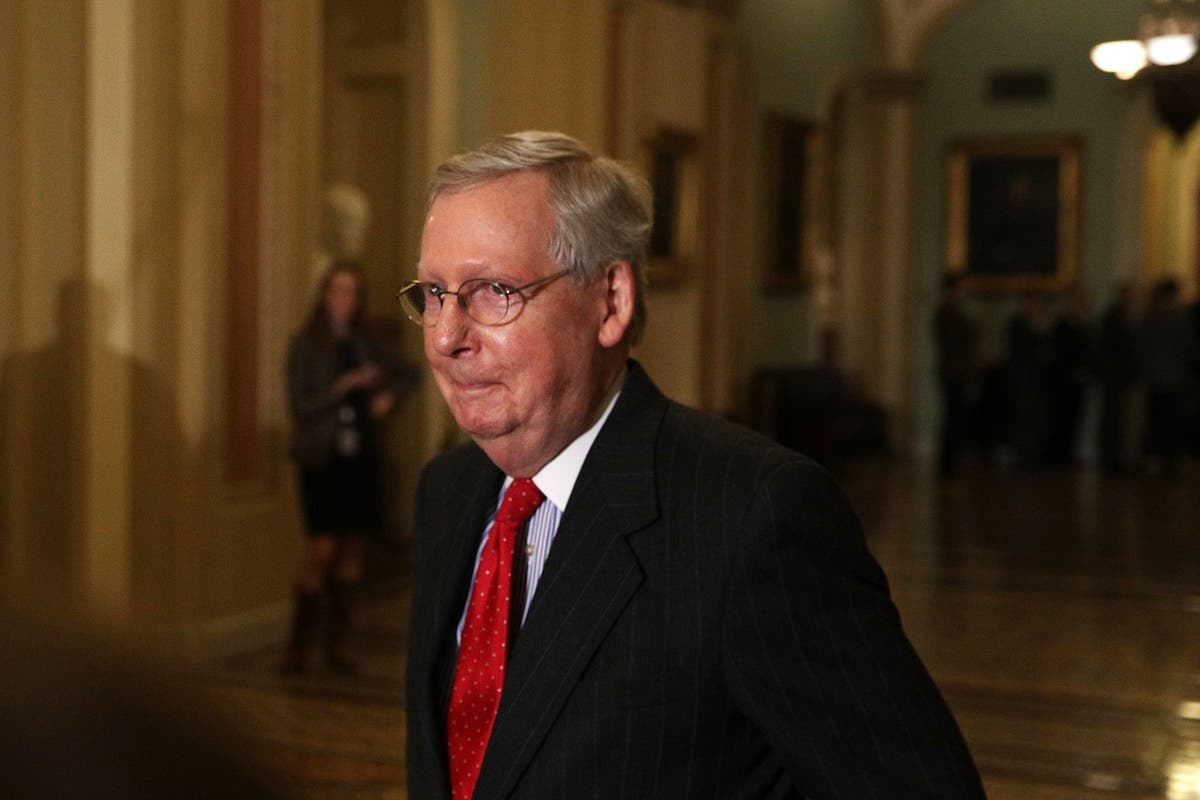
Photo of Senate Majority Leader Mitch McConnell of Kentucky by Alex Wong/Getty Images News/Getty Images
Get more local news delivered straight to your inbox. Sign up for free Patch newsletters and alerts.