Politics & Government
Trump Uncharacteristically Mum On Stock Market As It Tumbles
Trump has pointed to the stock market — when it surged — as evidence of his successes.

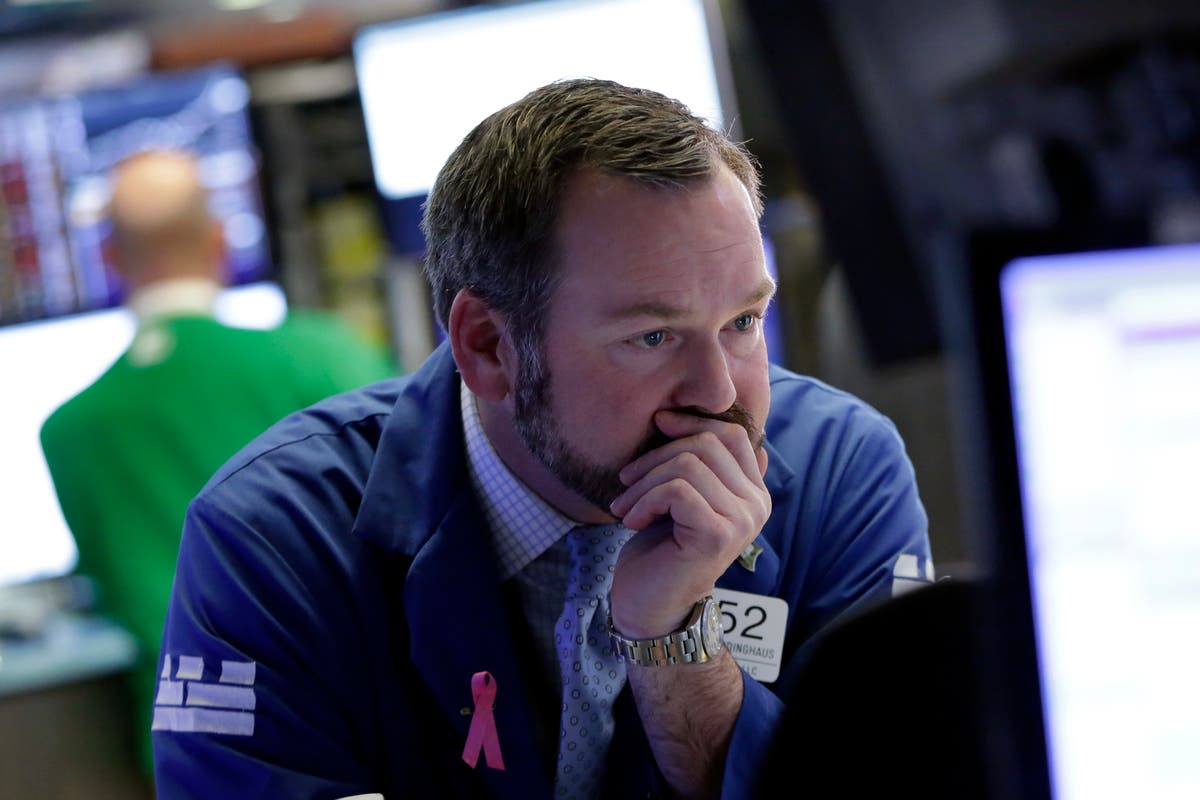
WASHINGTON, DC — President Donald Trump has routinely touted the stock market as evidence of his successes, but so far he as avoided talking about the market amid a recent free fall. The Dow Jones industrial average plunged nearly 1,200 points on Monday — down about 4.6 percent — and tumbled by more than 650 points on Friday.
Trump said nothing of the subject during his economic speech on Monday near Cincinnati and ignored questions shouted at him as he returned to the White House. On Tuesday morning, he found time to tweet about an NFL player who was hit and killed on the side of an interstate in Indiana and the results of poll that he says shows most Americans support an immigration reform package that "includes DACA, fully secures the border, ends chain migration & cancels the visa lottery."
But he did not mention the stock market's recent troubles. Instead, Trump let his chief spokesperson, Sarah Huckabee Sanders, do the talking for him.
Find out what's happening in White Housefor free with the latest updates from Patch.
"The President's focus is on our long-term economic fundamentals, which remain exceptionally strong, with strengthening U.S. economic growth, historically low unemployment, and increasing wages for American workers," Sanders said in a written statement issued in response. "The President's tax cuts and regulatory reforms will further enhance the U.S. economy and continue to increase prosperity for the American people."
Trump previously acknowledged there's risk in pointing to the markets as a sign of progress.
Find out what's happening in White Housefor free with the latest updates from Patch.
"You live by the sword, you die by the sword, to a certain extent," he said.
During his wide-ranging remarks on Monday, Trump criticized House Democratic leader Nancy Pelosi of California for describing as "crumbs" the bonuses of $1,000 or more that some companies, including where he spoke, are giving their workers as a result of the tax cuts.
He also accused congressional Democrats of being "un-American" for not clapping, even for positive news during his State of the Union address last week, in contrast to Republicans, who Trump said were "going totally crazy, wild" over everything.
On Tuesday, stock market trading was choppy early on. The Dow Jones industrial average fell as much as 567 points shortly after the opening bell, then jumped as much as 367 points in the first half-hour of trading.
The Dow was little changed at 24,334 as of 10:49 a.m. The Standard & Poor's 500 index, a broader market barometer that many index funds track, was down 6 points, or 0.3 percent, to 2,641. The Nasdaq composite was down 9 points, or 0.1 percent, to 6,966.
The steep drops Friday and Monday erased the gains the Dow and S&P 500 made since the beginning of the year, but both remain higher over the past 12 months. The Dow is still up 20 percent over that time, the S&P 500 15 percent.
After the sharp losses over the past three days, the S&P 500 is down 8.5 percent from the most recent record high it set on January 26. That's less than the 10 percent drop that is known on Wall Street as a "correction."
Corrections are seen as entirely normal during bull markets, and even helpful in removing speculative froth and allowing new investors to buy into the market at lower prices. The last time the market had a correction was two years ago, which is seen as an uncommonly long time.
In Tuesday's trading, high-dividend companies including utility and real estate companies fell, as bond yields increased after a sharp drop on Monday. Technology and industrial companies and retailers moved higher, a possible sign of confidence the U.S. economy will keep growing.
The market mood turned decidedly fearful on Monday when the Dow Jones industrial average posted its biggest percentage decline since August 2011, driven by fears the U.S. Federal Reserve will raise interest rates faster than expected due to a pick-up in wages. Those stemmed from the U.S. jobs report on Friday.
That has fed into widespread concerns that markets were stretched following a strong run over the past year that pushed many indexes to record highs. Some also question the possible role of computer-driven algorithmic trading in the precipitous declines or even the ramifications of the rise and fall in the value of virtual currencies, notably bitcoin.
"If investors look at underlying earnings growth and the fundamentals of the global economy, there is reason for optimism," said Neil Wilson, senior market analyst at ETX Capital.
"However once this kind of stampede starts it's hard to stop."
Photo credit: Evan Vucci/Associated Press