Politics & Government
Trump Wants To Brand Tax Bill ‘The Cut Cut Cut Act’
As House Republicans work out final details of tax bill, a kerfuffle erupts over what to name it.


WASHINGTON, DC — President Trump wants to call a still unsettled tax bill “The Cut Cut Cut Act,” according to news reports. The name is a curious choice, given that some of the cuts originally included in the yet-unnamed bill may not make it into the final version — including a massive cut that would give a break give the nation’s wealthiest earners.
The name choice will be decided by the House Ways and Means Committee. There was much infighting about naming the bill. House Speaker Paul Ryan of Wisconsin turned naming rights over to Trump because of his experience in branding in the private sector, and the president is insistent that it include the words “cut” because internal White House polling shows “tax cuts” resonates more strongly with Americans than “tax reform.”
House Republicans are working frantically to finalize the bill, which they said must be passed to keep their congressional majorities in the mid-term elections next year. Trump and other Republicans said during the 2016 campaign that revamping the tax code, which hasn’t been amended in three decades, would be a key priority.
Find out what's happening in White Housefor free with the latest updates from Patch.
ABC News reported that a senior Capitol Hill aide with direct knowledge of the dispute said that regardless of what the legislation is called, it will be known as the “Trump tax cuts” bill.
“The fact that [Trump] wanted to name the bill, that is hilarious and perfectly illustrates how — in things both large and small — the Hill can’t quite figure out Trump,” the person told ABC.
Find out what's happening in White Housefor free with the latest updates from Patch.
Watch: Trump Pushes Tax Overhaul Ahead Of Asia Trip
But regardless of what the bill is named — or if it is named — Trump is insistent that it include provisions to repeal the requirement that Americans buy a health insurance plan or face a tax penalty.
In a pair of tweets Wednesday, Trump said it would “be great” if the bill repealed “the very unfair and unpopular” Affordable Care Act requirement that every individual purchase health insurance or face a tax penalty. He said the savings could be used for further tax cuts for the middle class.
“The House and Senate should consider ASAP as the process of final approval moves along,” Trump tweeted. “Push Biggest Tax Cuts EVER.”
Though U.S. Sen. Tom Cotton, an Arkansas Republican, favors eliminating the insurance requirement, Republicans leaders in the House worry that could be politically complicated and jeopardize the chances of the bill passing in the House and Senate.
Rollout of the plan is now set for Thursday after House Republicans missed their self-imposed deadline for the public release of the plan. Trump wants Congress to approve the plan by Christmas under an ambitious timeline.
Despite the kerfuffle over naming the bill and the missed deadlin, Rep. Brady, the Texas Republican who chairs the House Ways and Means Committee, said leaders “are making excellent progress.’
“We are very close,” he said. "A lot of work remains with the drafters, they are continuing to work through the night. We are moving forward."
Under the current timeline, the Ways and Means committee will vote on the bill next week,
Details such as those applying to each tax bracket will be essential to evaluate how the tax plan will benefit average individuals and families.
The plan outline released last month by Trump and Republican leaders in Congress called for shrinking the number of tax brackets from seven to three or four, with respective tax rates of 12 percent, 25 percent, 35 percent and to be determined. The tax system would be simplified, and most people would be able to file their returns on a postcard-sized form.
The plan calls for nearly doubling the standard deduction used by most average Americans to $12,000 for individuals and $24,000 for families, and increasing the per-child tax credit. In addition to slashing the corporate tax rate, it also seeks to repeal inheritance taxes on multimillion-dollar estates, a big break for the wealthy.
Still to be worked out are concerns of lawmakers in states such as New York and New Jersey who oppose the proposed elimination of a federal deduction for state and local taxes, which they said amounts to double taxation and would hurt constituents in their states.
Also still at issue is how the tax bill will treat contributions to 401(k) retirement accounts. The financial industry and some Republican lawmakers insist that the GOP plan not change the tax benefits of the popular savings vehicles, as has been floated by GOP leaders.
"I am genuinely somebody who can get to yes. I would like to see us do tax reform but to get to yes, I have to conclude that this is fair to my constituents and my state," Rep. Tom MacArthur, a New Jersey Republican, said Wednesday. "There are enough of us standing together that they know they have to get this right if they want to have our votes."
The plan drew immediate criticism from Democrats, who complained it was too favorable to the wealthy and contradicted Trump's rhetoric of bringing relief and economic benefit to the stressed middle class.
This story includes reporting from The Associated Press
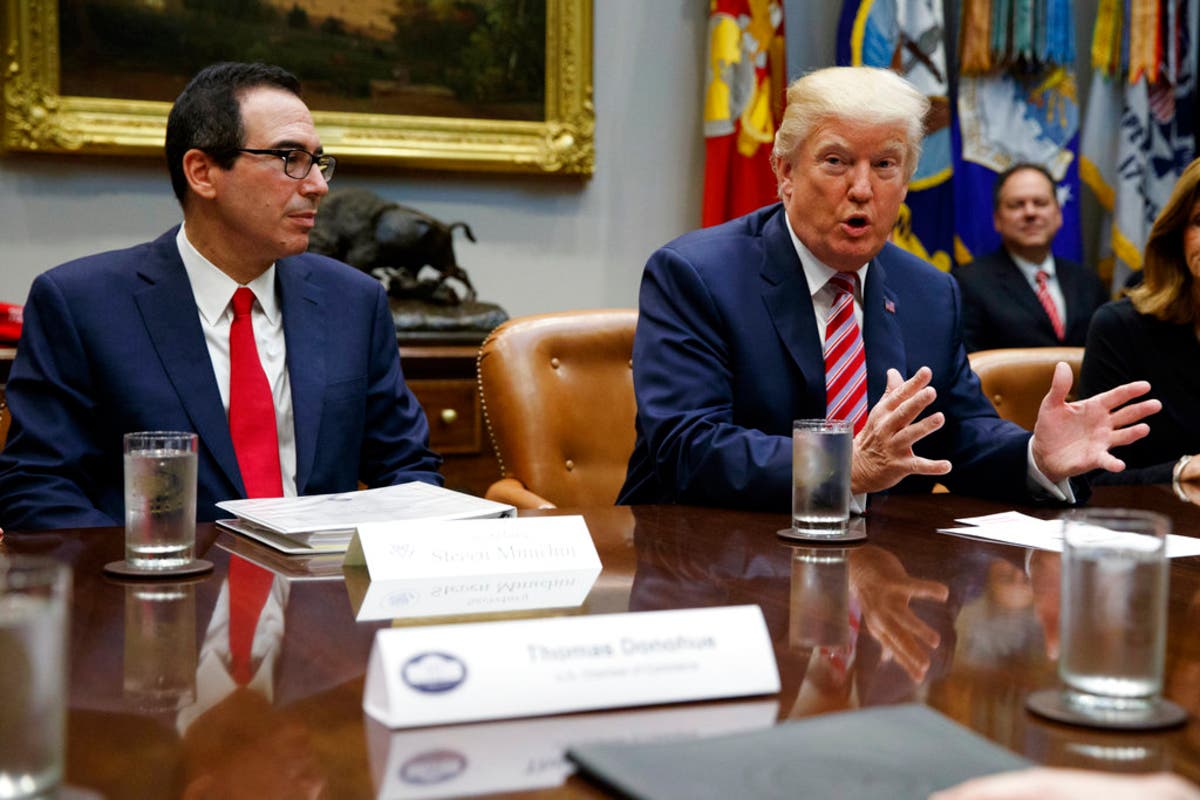
Photo: Treasury Secretary Steve Mnuchin listens as President Donald Trump speaks during a meeting on tax policy with business leaders in the Roosevelt Room of the White House, Tuesday, Oct. 31, 2017, in Washington. (AP Photo/Evan Vucci)
Get more local news delivered straight to your inbox. Sign up for free Patch newsletters and alerts.