Politics & Government
Trump's Plan For Afghanistan Involves Nearly 4K More Troops: Officials
The 3,900 figure includes a combination of trainers, security forces and other support troops, according to anonymous officials.

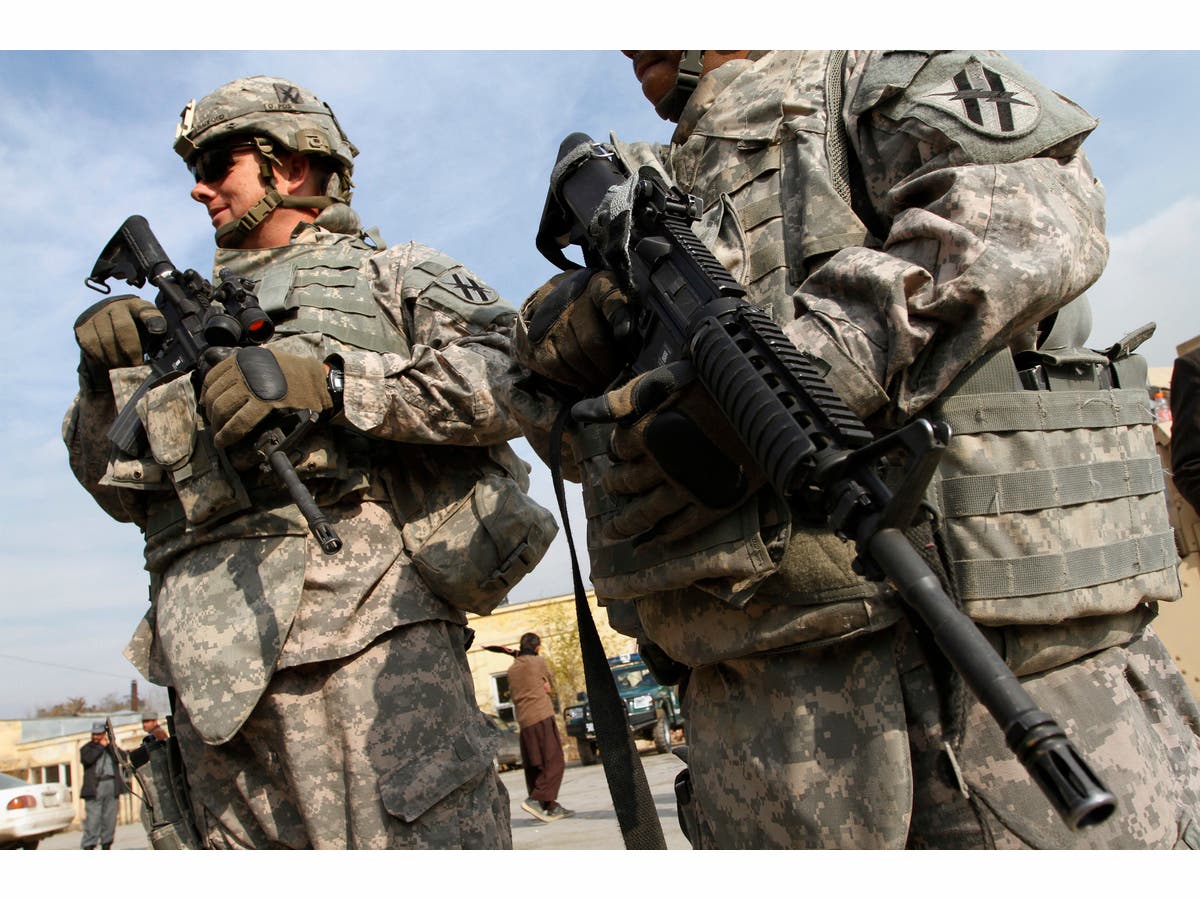


WASHINGTON, DC — America's plan to defeat Afghanistan's increasing extremist threat and end a 16-year conflict involves sending up to 3,900 more troops, senior officials said Tuesday, the first of which could be deployed within days or weeks.
Trump in a national address Monday night recommitted the United States to the conflict, saying U.S. troops must "fight to win." The address was an about-face from his past calls for a speedy exit. Trump also cautioned against repeating mistakes made in Iraq, when American forces withdrew, leading to a power vacuum that allowed the Islamic State group to quickly fill.
Trump would not confirm how many more service members he plans to send to Afghanistan, In interviews with television networks Tuesday, Vice President Mike Pence similarly wouldn't give any clear answer. Instead, he cited Pentagon plans from June calling for 3,900 more troops.(For more information on the Afghanistan conflict and other White House stories, subscribe to Patch to receive daily newsletters and breaking news alerts. If you have an iPhone, click here to get the free Patch iPhone app.)
Find out what's happening in White Housefor free with the latest updates from Patch.
Watch: President Trump Recommits US To Afghanistan War
"The troop levels are significant, and we'll listen to our military commanders about that," Pence said. "And the president will make that decision in the days ahead."
Find out what's happening in White Housefor free with the latest updates from Patch.
U.S. officials said there was no fixed number. But they said the Pentagon has told Trump it needs that many fresh forces in addition to the roughly 8,400 Americans in the country to accomplish Trump's objectives of "obliterating ISIS, crushing al-Qaida, preventing the Taliban from taking over Afghanistan and stopping mass terror attacks against America before they emerge."
The 3,900 figure includes a combination of trainers, security forces and other support troops, according to the officials, who weren't authorized to publicly discuss details about the the military planning and spoke on condition of anonymity. The exact number of arriving forces can vary as conditions change.
Defense Secretary Jim Mattis also declined to confirm an exact number Tuesday, saying he was waiting for more input from Gen. Joseph Dunford, America's top military official. Mattis said he will "reorganize" some U.S. troops in Afghanistan to reflect the new strategy.
Watch: There Are Likely Few (If Any) Good Options For The US In Afghanistan
The top U.S. commander for the Middle East said he expects the first reinforcements to arrive "pretty quickly," within days or weeks.
"What's most important for us now is to get some capabilities in to have an impact on the current fighting season," Gen. Joseph Votel, who spent last weekend in Afghanistan, told reporters traveling with him to Saudi Arabia on Tuesday.
Before he was a presidential candidate, Trump ardently argued for a quick withdrawal from Afghanistan and called the war a massive waste of U.S. "blood and treasure." On Monday, he suggested an open-ended commitment rather than a "time-based" approach.
"Conditions on the ground — not arbitrary timetables — will guide our strategy from now on," Trump said.
At its peak involvement in 2010-2011, the U.S. had roughly 100,000 troops in Afghanistan. President Barack Obama then started bringing them home, drawing criticism for the advance timetables he provided for his planned drawdown and ultimate withdrawal of forces.
Trump was among those who argued that Obama was aiding the enemy by telegraphing U.S. intentions. On Monday, Trump said he wouldn't discuss troop numbers, military tactics or timetables. "America's enemies must never know our plans or believe they can wait us out," he said.
While such reticence may have a military rationale, the American public may insist that it has a right to know how many of its citizens are waging a war overseas in its name.
The administration invariably will have to provide updates to Congress, which pays the military's bills, and to key U.S. allies, whose troop contributions it seeks, on the changing level of American manpower in Afghanistan.
Obama reversed himself on withdrawing from Afghanistan as security worsened. Taliban militants have made gains across the country, and the fractious Afghan government currently controls about half the country.
Afghanistan's U.S.-backed government welcomed Trump's strategy, with President Ashraf Ghani saying it will help stabilize the region.
Allies responded positively, too.
Germany, which contributes 950 troops in northern Afghanistan, approved the U.S. readiness for a "long-term commitment" and agreed the military's continued deployment should be "linked to the conditions on the ground."
Trump offered few specifics of how his strategy would be implemented. He didn't say how the U.S. would get Pakistan to crack down on militant sanctuaries on its soil — long a point of contention that has led Washington to restrict aid to the country.
Insisting that the U.S. was intent on "killing terrorists" rather than "nation building," Trump gave little indication of how the U.S. would use other instruments of American power to end the conflict.
Secretary of State Rex Tillerson said that after an effective military effort, a political settlement including some Taliban might be possible, echoing language of the Obama years. He said the U.S. would support peace talks with the Taliban "without preconditions."
U.S. lawmakers reflected the division among Americans about whether to press on with the conflict or pull back.
Republican Sen. John McCain of Arizona, the Senate Armed Services Committee chairman who'd criticized Trump for delays in presenting a plan, said Trump was "now moving us well beyond the prior administration's failed strategy of merely postponing defeat."
Maryland's Ben Cardin, the Senate Foreign Relations Committee's top Democrat, said he failed to see how another "surge" of forces in Afghanistan would turn the tide on the insurgency. He expressed concern that Trump was ceding significant responsibility to his defense secretary.
By LOLITA C. BALDOR and MATTHEW PENNINGTON, Associated Press
Associated Press writers Robert Burns and Kathy Gannon contributed to this report.
Photos credit: Carolyn Kaster, Musadeq Sadeq, Dusan Vranic and Rahmat Gul/Associated Press