Politics & Government
Senate Passes Tax Bill, A Boon To The Wealthy And Businesses
Non-partisan analysts say cuts will add $1 trillion or more to the deficit and go mostly to businesses and the very wealthy.

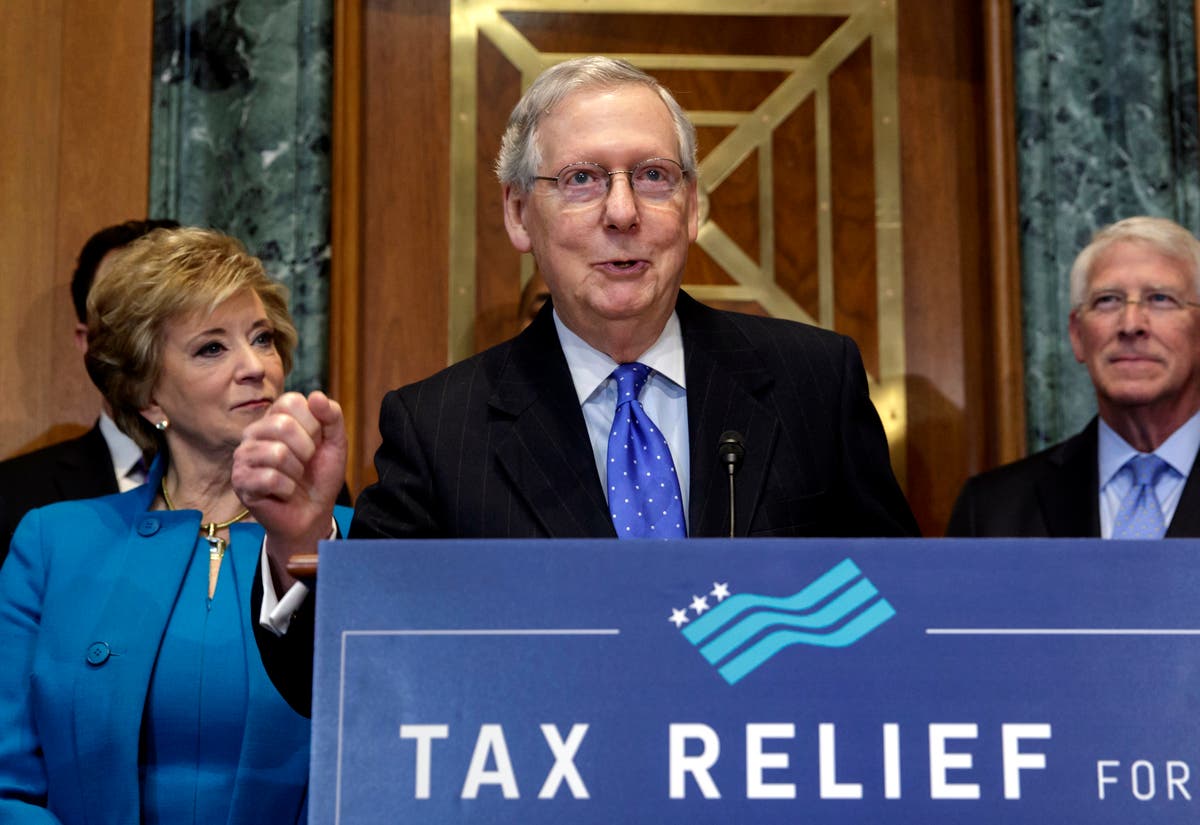
WASHINGTON, DC — Senate Republicans passed the most sweeping tax rewrite in decades early Saturday morning with little debate and no formal hearings, a major step forward for legislation that comes with a $1.6 trillion price tag for tax cuts that will mostly benefit corporations and the very wealthy. The vote was 51-49, with all 48 Democrats and a single Republican, Sen. Bob Corker, opposed.
Democrats were furious over the rush to vote on the House version of the bill, approved Nov. 16, and the Senate version, which was handed to Democrats in its final form just hours before Saturday's 2 a.m. vote. Republicans passed both versions of the legislation only two weeks after presenting it.
Sen. Chuck Schumer, Democrat of New York and the minority leader, was particularly frustrated because Republican leaders altered the original Senate bill dramatically with last-minute changes involving hundreds of billions of dollars. In their haste to vote on the bill, GOP leaders scribbled the changes into the margins of the nearly 500-page legislation.
Find out what's happening in White Housefor free with the latest updates from Patch.
The revisions made to the bill “under the cover of darkness,” Schumer said, would “stuff even more money into the pockets of the wealthy and the biggest corporations while raising taxes on millions in the middle class.”
With the Senate bill passed, lawmakers will move to resolve the differences with the tax legislation already approved by the House of Representatives. Once Congress has reconciled the two versions, President Trump can then sign the final legislation into law.
Find out what's happening in White Housefor free with the latest updates from Patch.
Democrats have argued that they're all for tax cuts but that the GOP bills give huge cuts to corporations and the wealthy, add significantly to the deficit while leaving crumbs for the middle and upper-middle class. And while Republicans maintain the tax cuts will spur the economy enough to pay for themselves, few serious analysts agree, including those at the Joint Committee on Taxation, the congressional scorekeepers.
While individual tax rates would decrease modestly and are temporary; the corporate tax rate would be slashed from 35 percent to 20 percent and will be a permanent cut.
Individual tax rates will be reduced for most people starting in 2019 but millions of people will actually pay more because of elimination of deductions for such expenses as state and local taxes and the cuts would disappear by 2027. Further, the individual tax reductions are also far more generous to the wealthy than for those who earn less. A Tax Policy Center analysis found 75 percent of the personal income tax cuts will go to the country's wealthiest 5 percent; 60 percent will go to the wealthiest percent.
By 2027, the Joint Committee on Taxation estimates, 84 percent of households will face either a tax increase or a tax cut that is smaller than $100. The GOP legislation also eliminates the individual mandate provision in Obamacare, a key funding mechanism whose removal will throw 13 million people from the roles of the insured and raise premiums by 10 percent for everybody else.
As soon as the votes were cast Saturday morning, Democrats left the chamber, Bloomberg reporter Steven Dennis said. Republicans clapped as the final vote tally was read out.
Corker had worked with Senate leadership earlier in the week with hopes of being able to support the bill. But by the end, non-partisan analyses findings that the bill would add $1 trillion to the deficit over 10 years convinced him not to support the bill.
The final draft brought before the Senate Friday night was only released hours before the vote, leading Democrats to object to the rushed process. Minority Leader Chuck Schumer called for a delay on the vote until Monday, but Republicans voted it down. The bill, with fresh scribbles in the margins and amendments made by hand, was passed without a comprehensive evaluation of the final draft's effects.
Republican Sen. Rand Paul of Kentucky cheered the passage, though he had hoped for more.
"While I still would have preferred larger cuts, this bill provides a foundation on which to continue building," he said. "Today marks a victory for giving the American people back more of their own money and reforming an archaic tax code."
"What's happening tonight is the worst of the United States Senate," said Oregon Democratic Sen. Ron Wyden, in a last-ditch plea against the bill. "There is a trail of broken promises to working families in the mad dash to pass this bill."
Here are some of the key parts of the GOP's tax reform push:
- The overall legislation would bring the first overhaul of the U.S. tax code in 31 years. It would slash the corporate tax rate, offer more modest cuts for families and individuals and eliminate several popular deductions.
- The Senate measure would end the requirement in President Barack Obama's health care law that people pay a tax penalty if they don't buy health insurance.
- The tax cuts for individuals in the Senate plan would expire in 2026 while the corporate tax cuts would be permanent, leaving many families to pay higher taxes.
- The bill would nearly double the standard deduction to around $12,000 for individuals and about $24,000 for married couples.
- After Senate passage, lawmakers will try to reconcile the Senate bill with the House version in hopes of delivering a first legislative accomplishment to Trump by Christmas.
- The bill would increase economic growth, generating an additional $458 billion in tax revenue, according to the analysis. That's far short of the $2 trillion promised by Treasury Secretary Steven Mnuchin.
- The current Senate bill completely eliminates the federal deduction for state and local taxes.
MARCY GORDON, STEPHEN OHLEMACHER, Alan Fram and Andrew Taylor contributed to this report. Cody Fenwick, Patch staff, also contributed.
Photo credit: J. Scott Applewhite/Associated Press