Wildlife specialists say they've known forever of insects sipping tears from animals, usually in the tropics.
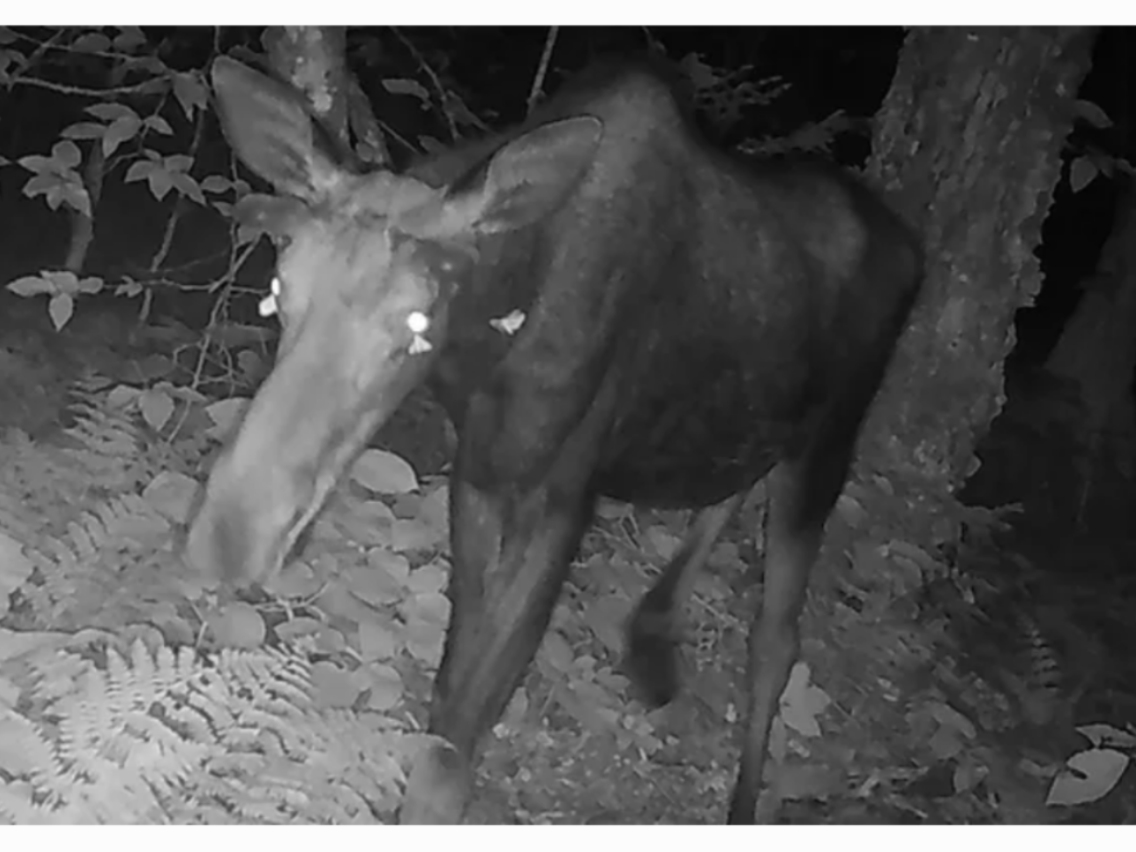
But for the first time ever a University of Vermont researcher has discovered moths drinking tears from moose - in Vermont no less.
“Laurence Clarfeld was sifting through images captured by a trail camera in Vermont when he came across a photo that stopped him in his tracks,” reports Smithsonian magazine.
Find out what's happening in Burlingtonfor free with the latest updates from Patch.
Clarfeld, an environmental scientist, said at first he thought the moose had four eyes.
But, “when Clarfeld flipped through more photos in the sequence, he finally understood what he was seeing: moths were sipping tears straight from the ungulate’s eyes.”
Find out what's happening in Burlingtonfor free with the latest updates from Patch.
Ungulates are mammals characterized by having hooves, which are hard coverings on their feet, and are typically herbivorous.
The photos were captured in the early morning hours in the Green Mountain National Forest, a large swath of protected woodlands in southern Vermont.
Researchers had deployed them as part of an ongoing wildlife survey by the Vermont Fish and Wildlife Department.
In total, the camera captured 80 snapshots of the moths fluttering around a moose’s head.
Scientists have observed this unusual phenomenon, known as lachryphagy, among other types of animals.
But, as far as anyone knows, the photos represent the first documented evidence of moths drinking moose tears, according to Smithsonian.
Scientists speculate that the reason insects drink the tears of wild animals is partly as a source of sodium for them.
Clarfeld and his colleagues describe their discovery in a new paper published November 20 in the journal Ecosphere.