Politics & Government
Spanberger's First 100 Days As VA Governor: Here’s What She's Done So Far
From energy costs to housing protections, here's what Abigail Spanberger has been up to since she was inaugurated as Virginia's governor.


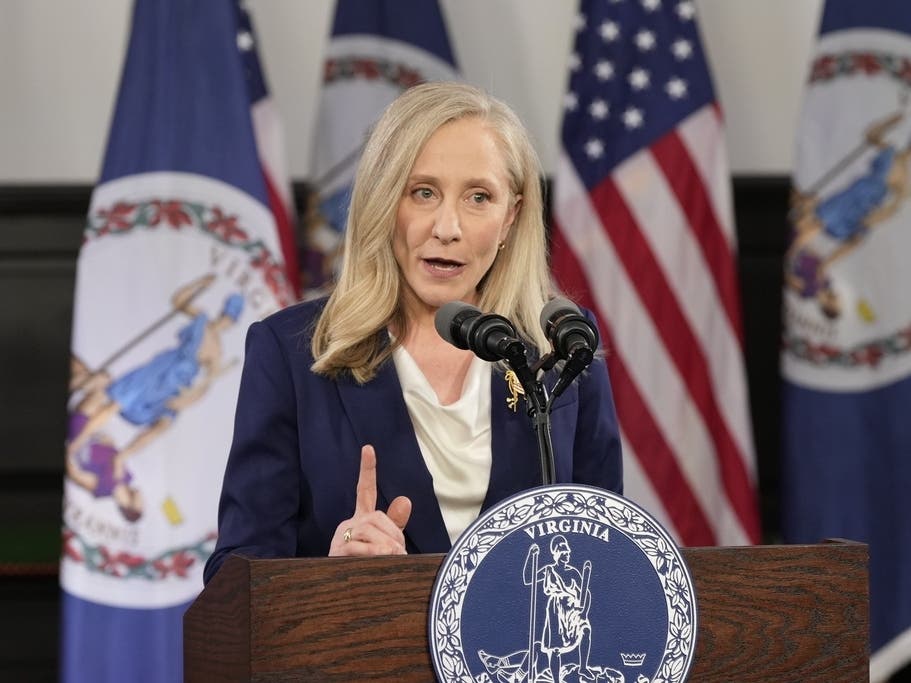
Abigail Spanberger recently surpassed a new milestone: her 100th day as Virginia's governor.
Spanberger was sworn in as Virginia's first female governor on Jan. 17, succeeding two-term Republican Gov. Glenn Youngkin.
In her first 100 days as governor, Spanberger focused heavily on delivering on her “Affordable Virginia Agenda," which she announced before her inauguration. The plan included key
legislative priorities to lower housing, healthcare, and energy costs for Virginians. Following her inauguration, she moved swiftly on executive actions and legislation that also addressed education and public safety.
Find out what's happening in Fredericksburgfor free with the latest updates from Patch.
Since taking office, Spanberger finalized action on roughly 1,100 bills passed during the 2026 Virginia General Assembly session, signing legislation tied to economic development, education, workforce training and public safety.
Despite delivering on some promises, her first 100 days have been politically divisive.
Find out what's happening in Fredericksburgfor free with the latest updates from Patch.
A Washington Post-Schar School poll published on April 6 showed Spanberger’s approval rating stood at 47 percent two months into her term, with 46 percent of voters disapproving and 7 percent expressing no opinion. Her approval was 13 percentage points lower than the average for Virginia governors in Post polling since the 1990s.
“Some amount of polarization is baked in, but this is unusual at this early stage of her administration and given that she had long cultivated a centrist image,” said Mark Rozell, dean of George Mason University’s Schar School of Policy and Government, which co-sponsored the poll.
Here’s a recap of Spanberger's first 100 days in office — and a look at what might be coming in the future.
Energy Costs
Spanberger took several actions to address energy affordability in Virginia, including allowing utility companies to offer discounted rates for low-income customers and
prohibiting them from increasing monthly payments more than once a year for customers enrolled in a budget plan.
Spanberger also signed measures allowing utilities to enter into agreements with high-load customers, such as data centers, to invest in new substations that will serve only them, thus protecting ordinary consumers from absorbing those costs.
The governor also appointed Virginia’s first-ever chief energy officer, a Cabinet-level position focused on addressing rising energy costs for families and meeting the Commonwealth’s long-term energy needs.
Healthcare
Since taking office, Spanberger has implemented policies that address high prescription drug prices and other healthcare costs, including capping out-of-pocket costs for insulin to $35 under Virginia-regulated plans, stopping predatory middlemen from hiking up prescription drug costs and establishing the right to contraception in state law.
Last month, she also signed into law a state-run Paid Family and Medical Leave Insurance program, which allows eligible Virginia employees to take up to 12 weeks of paid, job-protected leave for health, caregiving or family reasons starting in late 2028.
On day one in office, Spanberger signed an executive order that formed a task force to develop a plan to maximize federal funding, spend efficiently and strengthen Virginia’s long-term healthcare in the wake of President Donald Trump's "One Big Beautiful Bill Act," which will eventually cut money from the state's Medicaid program.
Housing
Spanberger made housing affordability a centerpiece of her first 100 days, though most of the work so far has been regulatory and doesn't offer much immediate price relief for Virginia residents.
Spanberger expanded the state's eviction protection program, which identifies at-risk households and provides financial assistance to prevent eviction before it reaches court.
On day one, Spanberger also signed into law a bill that would boost the state's housing supply by making it easier to build manufactured homes. She later signed a bill that empowers local governments to protect the long-term affordability of existing rental housing, ensuring it remains accessible.
Public Safety
Last month, Spanberger signed a series of bills into law to support law enforcement and first responders, keep Virginians safe online and in their communities, and protect kids, communities, and law enforcement officers from gun violence.
She also signed major gun-safety legislation, including a ban on ghost guns, measures allowing lawsuits against gun manufacturers in some cases and and closed loopholes involving domestic violence offenders.
Additionally, she ended state-level cooperation with U.S. Immigration and Customs Enforcement and terminated agreements that allowed state police and corrections officers to assist in federal immigration enforcement.
Redistricting
Spanberger also supported Virginia’s 2026 redistricting amendment, which voters approved in a special referendum election last month. The change could boost Democrats’ chances of winning four additional U.S. House seats in November’s midterm elections and decide control of a narrowly divided Congress.
While the state Supreme Court is considering whether to block the amendment, Spanberger previously faced backlash from critics for supporting the move, mainly because it contradicted the bipartisan image on which she ran for governor.
Get more local news delivered straight to your inbox. Sign up for free Patch newsletters and alerts.