Community Corner
Williamsburg School For Enslaved Children To Undergo Restoration
The Bray School, located on the campus of William & Mary, educated about 400 enslaved and free Black children from 1760 to 1774.


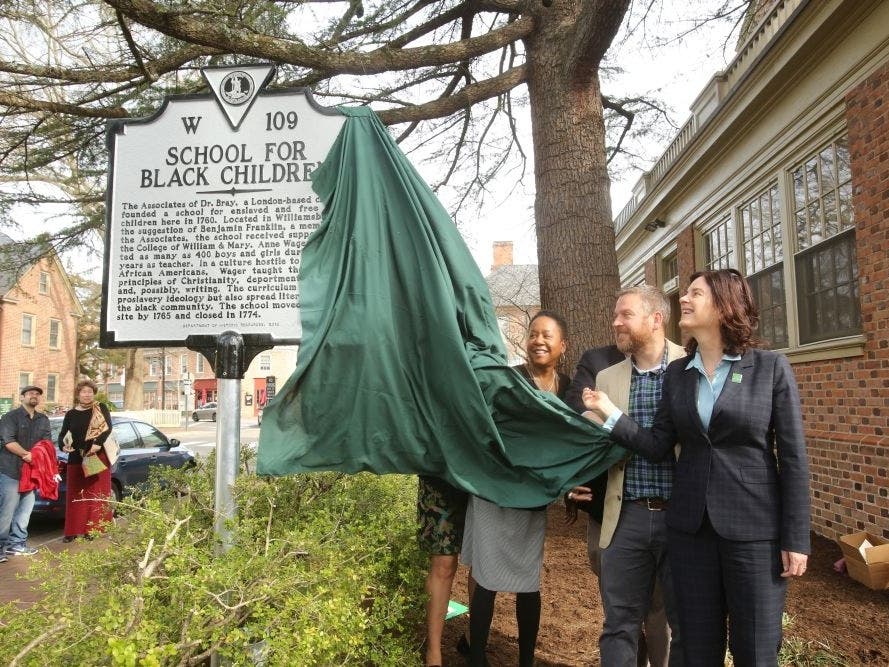
WILLIAMSBURG, VA — As part of Virginia’s racial reckoning with its long history of slavery and institutional racism, the state-supported College of William & Mary and the private Colonial Williamsburg Foundation are working to promote education about the history of the treatment of Black people in the city and across the nation.
Founded in 1693, William & Mary is the second-oldest institution of higher education in the country, after Harvard University. For nearly the first 300 years of the college's existence and for 50 years after the founding of Colonial Williamsburg, slavery was not talked about much and the history of Black families was often overlooked.
Half of Williamsburg’s Revolutionary-era population of 1,800 were slaves, a fact that was largely ignored until the 1970s. Over the past 40 years, Colonial Williamsburg's staff of historians and curators, together with researchers at William & Mary, has been trying to redress the early misconceptions.
Find out what's happening in Fredericksburgfor free with the latest updates from Patch.
On Thursday, William & Mary and the Colonial Williamsburg Foundation held an event inside the Hennage Auditorium in the Art Museums of Colonial Williamsburg to announce a new partnership on a project that will aim to educate the public on what is likely the oldest building — the Williamsburg Bray School — in the United States dedicated to the education of enslaved and free Black children.
The new partnership calls for relocation of the Bray-Digges House to Colonial Williamsburg’s historic area, where it would become the 89th original structure restored by the foundation.
Find out what's happening in Fredericksburgfor free with the latest updates from Patch.
The house was named after English clergyman Thomas Bray, who worked in the 1700s to build schools in the North American colonies to educate enslaved Black people. Dudley Digges served in the Virginia House of Burgesses from 1752 until the Revolutionary War.
The partnership between William & Mary and the foundation also will establish the Williamsburg Bray School Initiative, a joint venture of the university and foundation for research, scholarship and dialogue about race.
The partnership to restore the historic Bray School and place the school into historical context is “truly exciting,” said Virginia Gov. Ralph Northam, who attended Thursday's event in person.
To understand where the state is and where it is going, Virginians must understand what has occurred over the past 400 years of “our very complicated history,” Northam said. “And that means truly understanding our shared history and the full story of our past.”
Learning the full story includes “fully reckoning with and exploring how the evils of slavery and discrimination impacted people,” the governor said.
The Bray School, which was open from 1760 to 1774, educated about 400 enslaved and free Black children. The school taught children about Christianity and how to read.
“It was a curriculum that clearly reinforced a pro-slavery ideology. But its teachings spread literacy within the African American community,” Cliff Fleet, president of the Colonial Williamsburg Foundation, said at Thursday’s event.
For years, academics and researchers at William & Mary had known about the Bray School. But no one had ever found the school until last year, when workers found timber inside the walls of a building on the school’s campus that had been harvested in 1759. Researchers believe construction of the school was completed in 1760.
“The small, four-room school had been hiding in plain sight, inside William & Mary’s military science department,” the New York Times reported Friday.
The Bray School site “will be used as a critical and necessary location and topic for dialogue, research and scholarship regarding the complex yet compelling story of education, race and religion in the formation and development of America,” Fleet said Thursday.
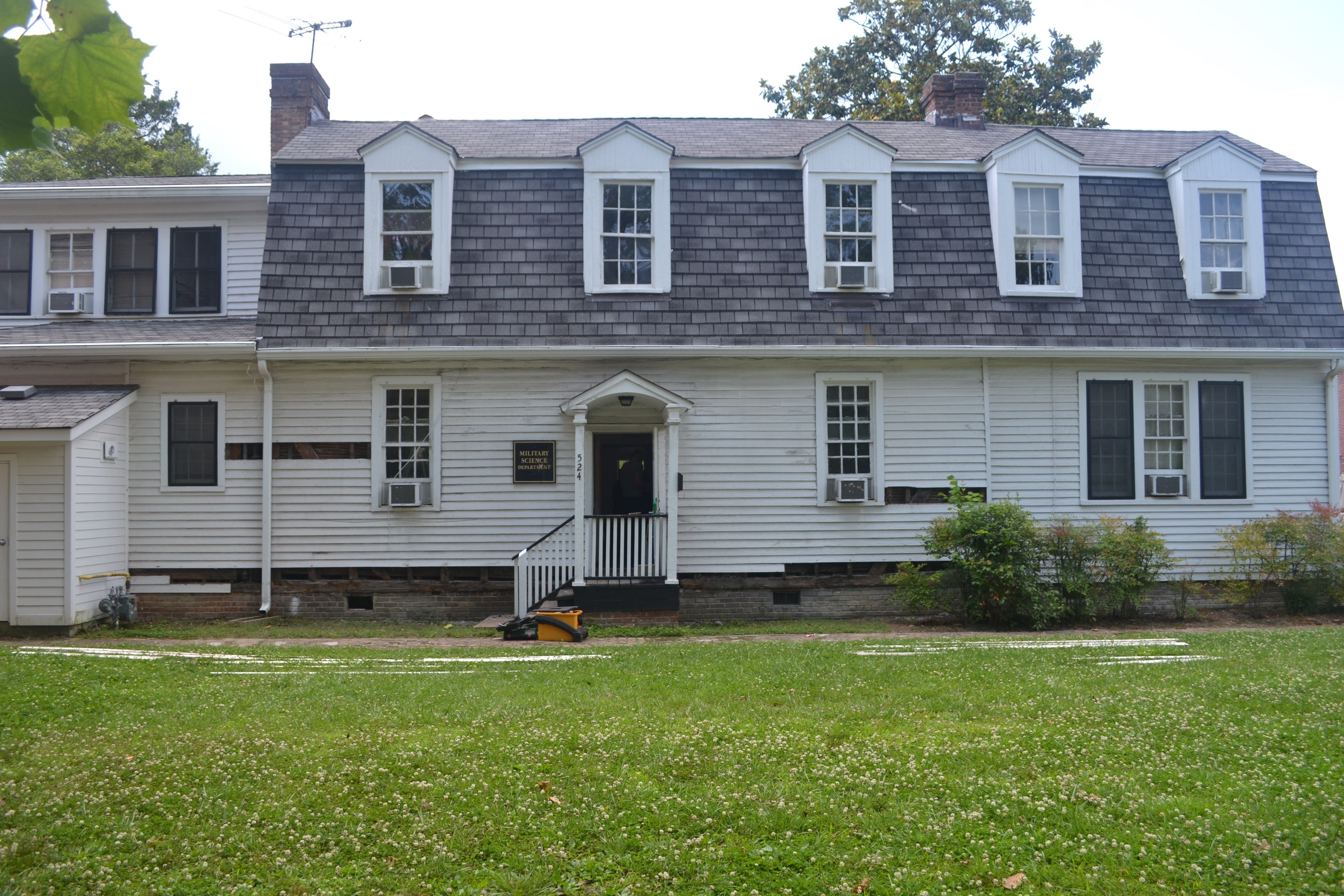
Dendrochronology analysis of the building’s wood framing in 2020 by Colonial Williamsburg researchers confirmed the structure at 524 Prince George St. once housed Williamsburg’s Bray School. The building has been modified and added to over time.
“Our analysis of the structure’s oldest elements conclusively places the timber’s harvest between the winter of 1759-60 and the spring of 1760, with the establishment of the Williamsburg Bray School in 1760,” Matt Webster, Colonial Williamsburg’s executive director of architectural preservation and research, said Thursday.
The timeframe for relocation of the Bray-Digges building is yet to be determined, and Colonial Williamsburg and William & Mary are considering a number of potential sites. The building most recently housed offices for William & Mary’s Department of Military Science and has been known as Prince George House.
In his speech at Thursday’s event, Northam highlighted the contradictions in the teachings of the Bray School.
“Our modern ears hear the great contradiction between teaching Christian practice while at the same time upholding the institution of slavery,” the governor said. “The story of the Bray House is not just a story of the people who created it, who had their own motives. It’s also the story of the Black students getting an education in a world where that was rare.”
Get more local news delivered straight to your inbox. Sign up for free Patch newsletters and alerts.