Health & Fitness
Drinking Through a Straw - Part 5: Speaking Without Talking
Follow my journey living with a devastating illness, and please join in a conversation about how we can all grow and thrive when faced with adversity.
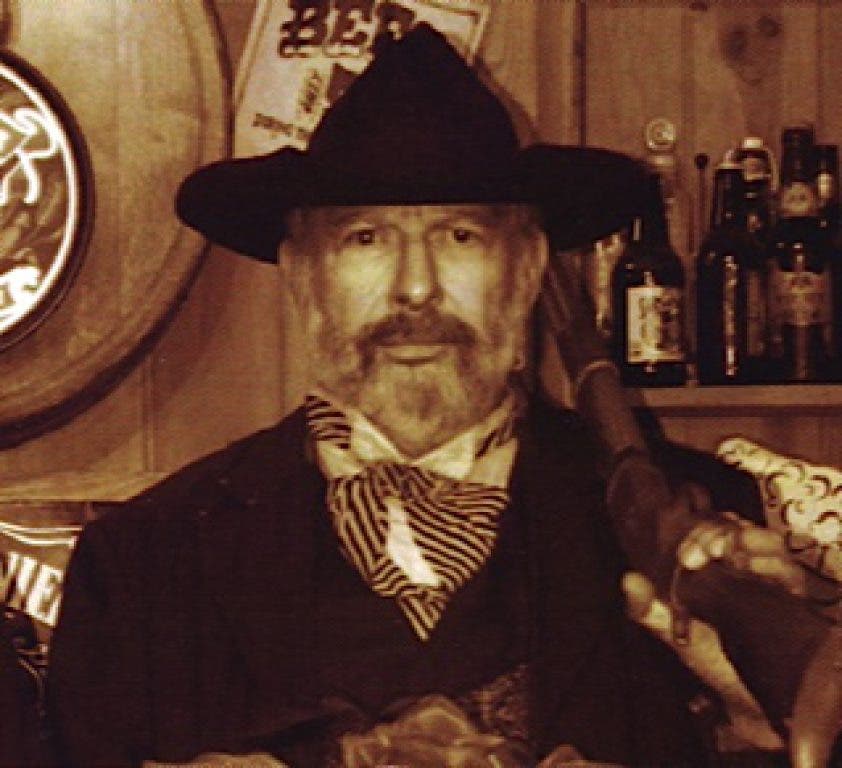
As my tongue and throat muscles have grown weaker, my speech has become more slurred, indistinct and hard to understand. I have already noticed that as a result of speech hesitancy I have become more withdrawn in social settings, less spontaneous and not as likely to offer a quip, bad pun or telling response.
At some point, unaided verbal communication will no longer be possible.
But even when I lose the ability to speak, I will not lose my voice.
Find out what's happening in Restonfor free with the latest updates from Patch.
Thanks to remarkable software developed by a dedicated team in Delaware, I will retain the capacity to verbalize with a synthetic voice that is built from my own recordings and can speak any words, phrases or sentences I type into it.
The software is called ModelTalker and Dr. Tim Bunnell and his colleagues at the Nemours Alfred I. duPont Hospital for Children, along with AgoraNet Inc., a small software company, are developing it. Funding has come from a variety of government agencies and private foundations.
Find out what's happening in Restonfor free with the latest updates from Patch.
A couple of months ago, I spent a week or so recording about 1,700 short sentences that contain multiple examples of the basic sounds and combinations of sounds that comprise spoken English. From that data, the ModelTalker team and software was able to build me a replacement voice that, while a little robotic, does sound like me, and with a little more fine tuning, may be close enough to fool my closest friends.
My earlier posts have often led me to the conclusion that paying careful attention to the details and the “small things” has become a critical part of my strategy for staying ahead of my disease’s intents. So it should not be surprising that I have learned how, by focusing on the very fine details of speech sounds and the spaces and relationships between them, the ModelTalker project is able to reconstruct fluid, understandable spoken English.
My only regret is that I waited too long before beginning the recording and my voice had already lost much of its crispness and clarity – while miraculous, ModelTalker can not overcome that poor start completely. But that’s another lesson – there’s no time like the present.
I hope my fellow PALS will look closely at ModelTalker.com and start the process of recording your voice before it gets too weak to be effective. I also hope that friends and families of PALS encourage their PAL to take these steps to preserve vocal capacity – an important element of the dignity and connectedness we all seek.
And finally I hope that any foundations and government agencies seeing this will think about helping bring this technology to maturity and make it widely and easily available to people for whom it can make a significant difference.