Neighbor News
The Eye of the Storm – A World Being Swept Away by Capitalism
Op-Ed on What You Need to Know about Capitalism
“Our situation is fundamentally one of disorientation.”
—Norman Wirzba
It’s general knowledge that we, as Americans, live within a capitalist system. Normally, when we think of “capitalism,” we think of the glowing advertisements in Times Square or the latest GDP report. But, while we hear of rising levels of atmospheric CO2, and of millions of citizens falling further within an already wide socio-economic hierarchy, we fail to understand how these two by-products of capitalism may compound capitalism’s impact on our future wellbeing. Even worse, we have accepted these consequences as the norm.
Find out what's happening in Restonfor free with the latest updates from Patch.
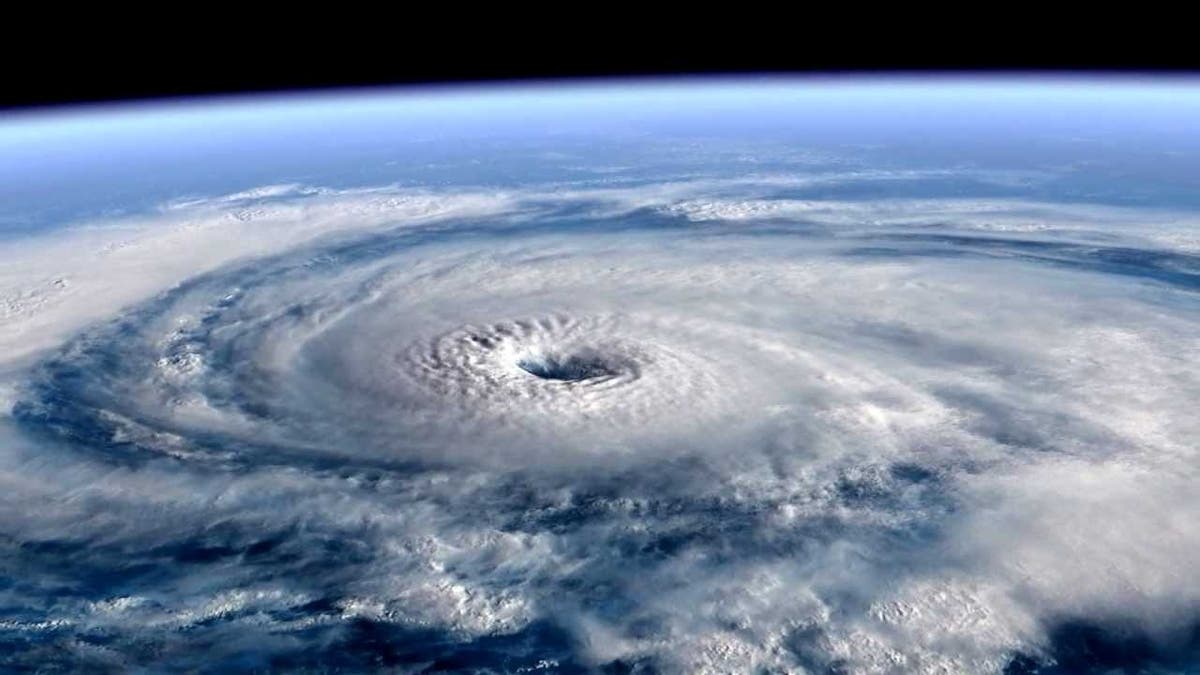
How did we come to rationalize the storm of problems that capitalism inflicts on our daily lives and the future wellbeing of the Earth and humanity? It is essential to ask penetrative questions about the roots of environmental destruction and inequality. Because, as we sit comfortably, basking in the sun in the eye of the storm, the waves are colliding around us, becoming more violent with each new extinction, oil spill, lost job, barrier to opportunity. In an instant, the eye of the storm could shift and we could find ourselves drowning.
Our society has accepted the notion that constant economic growth is inherently positive. Capitalism trains us to love the consumption that leads to the growth we conflate with healthy economies (Mosley 33), as we reason that a healthy economy means a healthy country. But upon closer analysis, capitalism has actually led humans to “inhabit a world built around mindless growth” (Philipsen, 13). We are unaware of the effects of this growth, or why we need to grow. Do we ever question why growth is so normal? Or what a trajectory of infinite growth looks like on a finite planet?
Find out what's happening in Restonfor free with the latest updates from Patch.
Our thinking has become so intertwined with capitalist ideologies that we are chained to the accelerating demands of the system’s insidious “growth fetish” (Speth 215), unable to step back and see the frightening direction Earth and humanity is headed. Our reality is this: annually, 200,000 people die prematurely in the United States due to air pollution (Chu), a number that could double by 2050 (Worland). Scientists have identified 414 cities in America that are guaranteed to soon be underwater (including New Orleans and Miami), yet our planet is parched, and the heat of rising death rates due to dehydration spark war and political unrest (Sherlock).
Take a moment, and imagine a world free of these ideological chains. We would feel more remorse and urgency for action when reading headlines about environmental scientists pleading for change, indicating how society has reached an ecological “tipping point” (Smith 1). We would recognize that corporations’ priorities lie only in increased profits, and would boycott their plans to burn 2795 gigatons of fossil fuel, “a number that is five times higher than what we are currently burning” (McKibben). We would revolt against our numbly habitual flat-lining, drilling, and resource draining of the planet past a point of no return. We would understand the reality that humans can no longer inhabit an Earth lacking biodiversity, wilderness, and resources—nor would we want to.
“The world of profit is a world of plunder. Advancement is defined by this margin but not by the quality of life or goodness.”
—Walter Mosley
***
Grabbing the latest copy of the New York Times, the front page reads: “…in America, the richest one percent owns thirty-four percent of the wealth and the richest ten percent own seventy-four percent of the wealth” (Hodgson). Below, an image of an eight-year-old boy— Jake—from inter-city Brooklyn is printed next to a picture of Mark Zuckerberg smiling on the red carpet. As our economy expands, research shows that Jake will not receive the same benefits from economic growth that Mark, or other members of the top 1%, will receive. (Bernstein and Spielberg 2) Through his life, Jake will contend with greater exposure to NYC’s air pollution, a higher chance of life-long health issues, lower lifetime earnings, less job opportunity, discrimination, and many other challenges (Stiglitz 38). He will be forced to buy into the system that is disadvantaging him by his need to address present suffering— to reach safety, joining the middle and upper classes in the “eye of the storm.”
Economists will rationalize that there has always been inequality and that “distributive questions in economics just raise hostility…ultimately, growth is the important issue” (Semuels). But while inequalities entrench Jake, and his future generations, further into socio-economic immobility (Bernstein and Spielberg 5), we buy into the growth mentality, rationalizing the ideology as the “American Dream”. Ultimately, we toss the newspaper without second thought, as Jake’s “lack of opportunity seem[s] a mere spectacle” (Cassidy).
***
“Given enough time in the darkness, people inevitably lose awareness of their own destructiveness. They lose the sense of what has been lost, or anything could be lost at all.”
—Norman Wirzba
Hence, as ecological decline and social stagnation caused by exploitation continues—and we see environmentalists as “radical” and social activists as “sentimental fools” —we must step out of the darkness and recognize that attention to these causes should be the norm. It is capitalism that has told us that growth, not fundamental human priorities, should be valued (Philipsen 14).
But I must apologize for using the metaphor of a storm to explain this fundamental issue of capitalism because, unlike storms, capitalism’s growth complex—and our disorientation within it—is neither inevitable nor natural. Rather, it is a construction that can be reconstructed. Once we realize we no longer have to justify a system that can be changed, we will gain autonomy over our emotions and priorities, breaking free of the veil of apathy that capitalism has placed over us (Cornick 4). So, after understanding the seriousness of the storm that rages around us, we must make a moral commitment to cultivate an ethic of inter-generational responsibility. We must safeguard the wellbeing of those not here to defend themselves—our future generations— from being swept away by the storm.
Works Cited
Bernstein, Jared, and Ben Spielberg. "Inequality Matters." The Atlantic, 5 June 2015, www.theatlantic.com/business/archive/2015/06/what-matters-inequality-or-.... Accessed 28 Mar. 2017.
Cassidy, John. "Pope Francis's Challenge to Global Capitalism." The New Yorker, 3 Dec. 2013, www.newyorker.com/news/john-cassidy/pope-franciss-challenge-to-global-ca....
Chu, Jennifer. "Study: Air pollution causes 200,000 early deaths each year in the U.S." MIT News, MIT News Office, 29 Aug. 2013, news.mit.edu/2013/study-air-pollution-causes-200000-early-deaths-each-year-in-the-us-0829.
Cornick, Celia. "Vitality and Health." Thoughts on I Am Me: An Autobiography of the Human Being, PDF ed., Victoria, Trafford, 2005, pp. 1-6.
Hodgson, Geoffrey M. "How Capitalism Actually Generates More Inequality." Evonomics: The Next Evolution of Economics, Evonomics 2017, July 2016, evonomics.com/how-capitalism-actually-generates-more-inequality/.
Mander, Jerry. "Endless Growth on a Finite Planet." The Capitalism Papers: Fatal Flaws of an Obsolete System, PDF ed., Berkeley, Counterpoint, pp. 94-121.
McKibben, Bill. "Global Warming's Terrifying New Math." Rolling Stone, Rolling Stone LLC, 19 July 2012, www.rollingstone.com/politics/news/global-warmings-terrifying-new-math-2....
Mosley, Walter. Working' on the Chain Gang: Shaking off the Dead Hand of History. 2000. 4th ed., University of Michigan Press, 2006.
Philipsen, Dirk. "GDP's Wicked Spell." The Chronicle Review [Washington, DC], 26 June 2015, pp. B13-B15.
Semuels, Alana. "Why So Few American Economists Are Studying Inequality." The Atlantic, 13 Sept. 2016, www.theatlantic.com/business/archive/2016/09/why-so-few-american-economi....
Sherlock, Ruth. "Too late: 400 cities in America, including Miami and New Orleans, will likely be submerged by rising sea waters." The Telegraph, Business Insider, 15 Oct. 2015, www.businessinsider.com/cities-that-will-be-underwater-because-of-climat....
Smith, Richard. "Capitalism and the Destruction of Life on Earth: Six Theses on Saving the Humans." Truthout, Buzzflash, 10 Nov. 2013, www.truth-out.org/opinion/item/19872-capitalism-and-the-destruction-of-l....
Stiglitz, Joseph E. "Resources 2020 Lecture: Inequality and Environmental Policy." 1 Sept. 2012. Resources for the Future, 22 Mar. 2013, www.rff.org/files/sharepoint/WorkImages/Download/RFF-Resources-182_Featu.... Accessed 27 Mar. 2017. Lecture.
Wirzba, Norman. "On Not Knowing Where or Who We Are." From Nature to Creation: A Christian Vision for Understanding and Loving Our World, PDF ed., Grand Rapids, Baker Academic, 2015, pp. 6-30.
Worland, Justin. "Air Pollution Kills More Than 5 Million People Around the World Every Year." TIME Magazine, 12 Feb. 2016, time.com/4219575/air-pollution-deaths/.