Home & Garden
Hurricane Season 2015 Begins: How to Prepare
NOAA is forecasting a lighter season ahead; you can start preparing now, just in case.

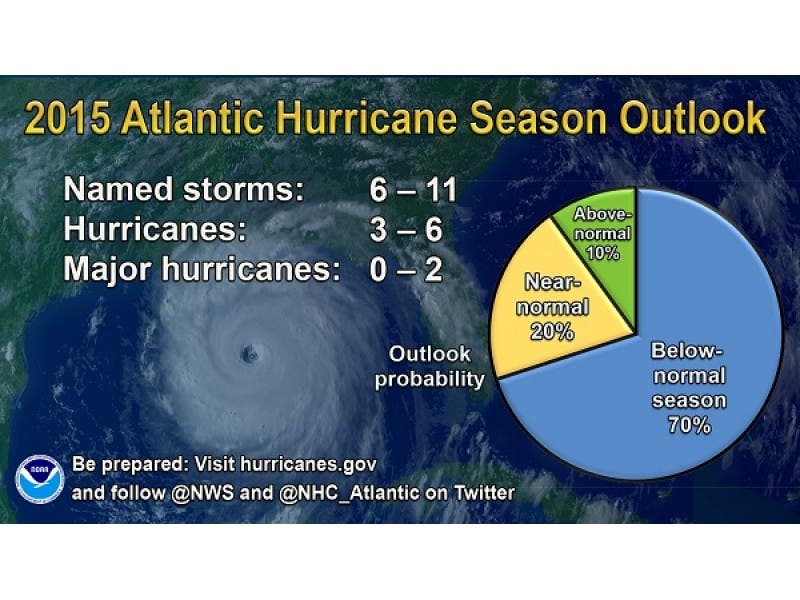

The Atlantic Hurricane Season officially arrives today, with weather forecasters already anticipating a below-normal number of storms, according to the National Oceanic and Atmospheric Administration. Forecasters, however, say “that’s no reason to believe coastal areas will have it easy.”
NOAA anticipates the 2015 season, which runs from today (Monday, June 1) through Nov. 30, will see the formation of six to 11 named storms. They’ve set the likelihood for that many storms at 70 percent.
Also read: These Hurricanes Were So Bad, Their Names Were Retired
Find out what's happening in Restonfor free with the latest updates from Patch.
Storms are named when they have winds of 39 mph or higher. Of those six to 11 storms, forecasters anticipate three to six could become full-blown hurricanes with winds of 74 mph or higher. Up to two major hurricanes – with winds of 111 mph or higher – could form.
“A below-normal season doesn’t mean we’re off the hook,” NOAA administrator Kathryn Sullivan was quoted in a media release as saying. “As we’ve seen before, below-normal seasons can still produce catastrophic impacts to communities.”
Find out what's happening in Restonfor free with the latest updates from Patch.
Sullivan was referencing the 1992 season that only saw seven named storms in total. The first storm that year was Andrew, the monster Category 5 storm that wreaked havoc on South Florida.
“The main factor expected to suppress the hurricane season this year is El Niño, which is already affecting wind and pressure patterns, and is forecast to last through the hurricane season,” Dr. Gerry Bell, the lead hurricane forecaster at NOAA’s Climate Prediction Center.
The recently released forecast for the upcoming season includes Tropical Storm Ana that developed pre-season.
Here are items you should have on hand, according to Virginia emergency management officials:
• Bottled water of any size, including flavored, carbonated and vitamin water.
• Artificial ice, blue ice, ice packs, reusable ice.
• Batteries, excluding car or boat batteries.
• Battery-powered light sources, including flashlights and lanterns.
• First-aid kits.
• Cellphone chargers.
• Weather Band radios and NOAA Weather Radios.
• Battery-powered or hand-crank radios, including radio with electrical power option.
• Two-way radios.
• Manual can openers
• Tarps, plastic sheeting, plastic drop cloths.
• Duct tape.
• Bungee cords and rope.
• Ground anchor systems or tie-down kits.
• Ratchet straps.
• Carbon monoxide and smoke detectors, fire extinguishers.
• Empty gas, propane or diesel fuel tanks or containers.
• Water storage containers such as buckets, barrels, canteens, coolers.
• Storm shutter devices made for the prevention of storm damage (not plywood). Save money on big-ticket items, too, with a sales price of $1,000 or less:
• Portable generators and generator power cords.
• Inverters and inverter power cables.
Get more local news delivered straight to your inbox. Sign up for free Patch newsletters and alerts.


