Neighbor News
The Recycling Industry Demystified
This article lends some understanding about our recycling industry, details common recycling errors, and provides recycling resources.
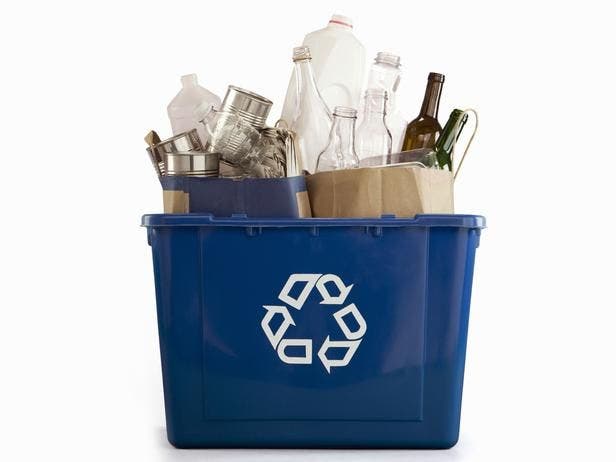
Recycling in the United States is a complicated and changing business. Without some knowledge of the industry most consumers may not be able to make sense of their end of it. To lend some understanding to this process a couple of local experts offer some insight regarding factors that drive the industry, as well as the most common recycling mistakes consumers make. Also listed below are some local resources for recycling electronics and miscellaneous items that haulers will not accept curbside.
“Changing world markets are making recycling complicated right now in the U.S.,” explains Luisa F. Robles, Sustainability Coordinator for the City of Greenbelt, Md. “Recycling is tied to the global market; its demands currently dictate if we have a buyer for certain materials. World markets have changed a lot in recent years.
“Just two years ago China was accepting plastics and paper of different grades so a lot of shipments were being made. But now China has established Operation Green Fence – which means they have implemented quality control as to what they collect. Many materials that we formerly collected and shipped to China we cannot send anymore because there is not a demand. As of January 2016, in Greenbelt, we have not been able to recycle plastic grocery bags curbside because of market issues such as the Green Fence.”
Find out what's happening in Restonfor free with the latest updates from Patch.
Some grocery stores accept plastic bags for recycling, which are then sold to a company that processes them into fabricated lumber for park benches and other outdoor products. Because the bags are going directly to the manufacturer as a clean material, they are easier to recycle and more valuable than bags that have been contaminated when mixed with other recyclables in the single-stream recycling system.
Shani Kruljac, environmental planner for the Arlington County Solid Waste Bureau in Virginia, adds, “The economics part is very important and that is what drives the entire recycling industry. Even if we have the technology to recycle different types of materials, if there is no place to sell it then it’s not feasible to recycle. That’s a hard message to get across. A type of plastic that might have been marketable five or six years ago when the price of oil was up may no longer be marketable today.”
Find out what's happening in Restonfor free with the latest updates from Patch.
Even more complexity arises from the many grades of plastic packaging. Robles reports, “The way the plastics industry makes plastics is very complicated. Manufacturers often stamp their products with a number inside the chasing arrows that indicates what the majority of that type of plastic is made of, but not necessarily the entire contents.
“Different types of plastics have different melting points. A number 1 clamshell container (the type strawberries and blueberries are packaged in) and a number 1 water bottle do not have the same melting point because they have different compositions, and cannot be melted down together in the recycling process. That is why a lot of programs will take water bottles but not clamshells. That is just the way plastic manufacturers stamp their products.”
Given the complex nature of the industry, what recycling mistakes do people commonly make?
Robles cautions the recycling public not to “assume that their packaging can go into the recycling bin just because it contains the chasing arrows stamp. The chasing arrows stamp only indicates the type of plastic the product is mostly made of. This item might have the capability of becoming recycled somewhere, but consumers have to check the specific recycling guidelines in their municipality.”
Kruljac says the most typical mistake she sees is “what we call ‘wishful recycling’ here in Arlington. We have a lot of very environmentally aware people and we try to message that 60 percent to 70 percent of what you throw away can be recycled, so in the consumer’s mind they think everything should be recycled. I would say the three most common items [errors] are the hot beverage cups (such as Starbucks cups), Solo cups (red plastic cups) and plastic bags. Hot beverage cups can’t be recycled because a plastic adhesive that lines them causes problems: It gets stuck to the paper and when the paper gets ground down it has a bunch of plastic adhesive in it, creating an impure product.
“Another misconception is that caps need to be removed before recycling. This is a holdover from old rules, but now they’ve asked people to keep the caps on because it is more likely that the caps will get recycled that way.
“Finally, some people think they almost have to wash their recyclables. It used to be heavily messaged that containers need to be very clean before going in the recycling bin but now if there is a little bit of food residue it is not that big of a deal. A half-full cup of yogurt isn’t acceptable, but if there are just remnants of the yogurt inside the cup that’s fine.”
Considering the changing standards of the recycling business, what upcoming trends can consumers expect?
“One upcoming trend is glass recycling,” Kruljac advises. “There is no market for it. I think glass is going to be pulled out of the single-stream recycling system. It is heavy to transport and unless you have a processor close by that can recycle that material it really is not economically beneficial to recycle. Glass recycling also involves all kinds of problems with the other commodities. The glass breaks and the material that comes out at the end is very contaminated. There are uses for glass that have proven to be viable like using it as a road base, but it has not been very successful, because that use is so extensively regulated. So glass might be something coming out of the stream or being separate, collected separately like plastic bags.”
Kruljac suggests that to stay up to date on recycling guidelines “consumers should check back frequently with their local rules for recycling. Rules change all the time, almost yearly it seems, so check back often. It’s so easy now with websites; all communities list what materials they will accept and won’t accept.”
Recycling Resources
Earth 911
A great site to learn where to take many different types of materials. Just type in your zip code and find out what and where you can recycle.
MOM (My Organic Market)
MOM recycles batteries, corks, cell phones, shoes, compost, and eyeglasses.
MOM also offers a TerraCycle upcycling service for energy bar wrappers, drink pouches, snack bags and squeeze pouches.
https://momsorganicmarket.com/recycle-center/
Materials can also be sent directly to TerraCycle
https://www.terracycle.com/en-US/
Staples
Staples recycles electronics and ink and toner cartridges.
Best Buy
Best Buy recycles a wide variety of electronics and ink and toner cartridges.
Home Depot
Home Depot recycles CFL bulbs, rechargeable batteries and incandescent holiday light strings.
Lowes
Lowes recycles rechargeable batteries, cell phones, CFL bulbs and plastic shopping bags.
http://www.lowes.com/cd_Helping+the+Environment+With+Recycling+Centers_368967519_
Also, check your local government recycling webpage for special recycling days.