Community Corner
Will Hurricane Irma Hit Reston?
"Extremely dangerous" Hurricane Irma was upgraded to a Category 5 as she entered the Caribbean Tuesday. Could she hit Virginia?


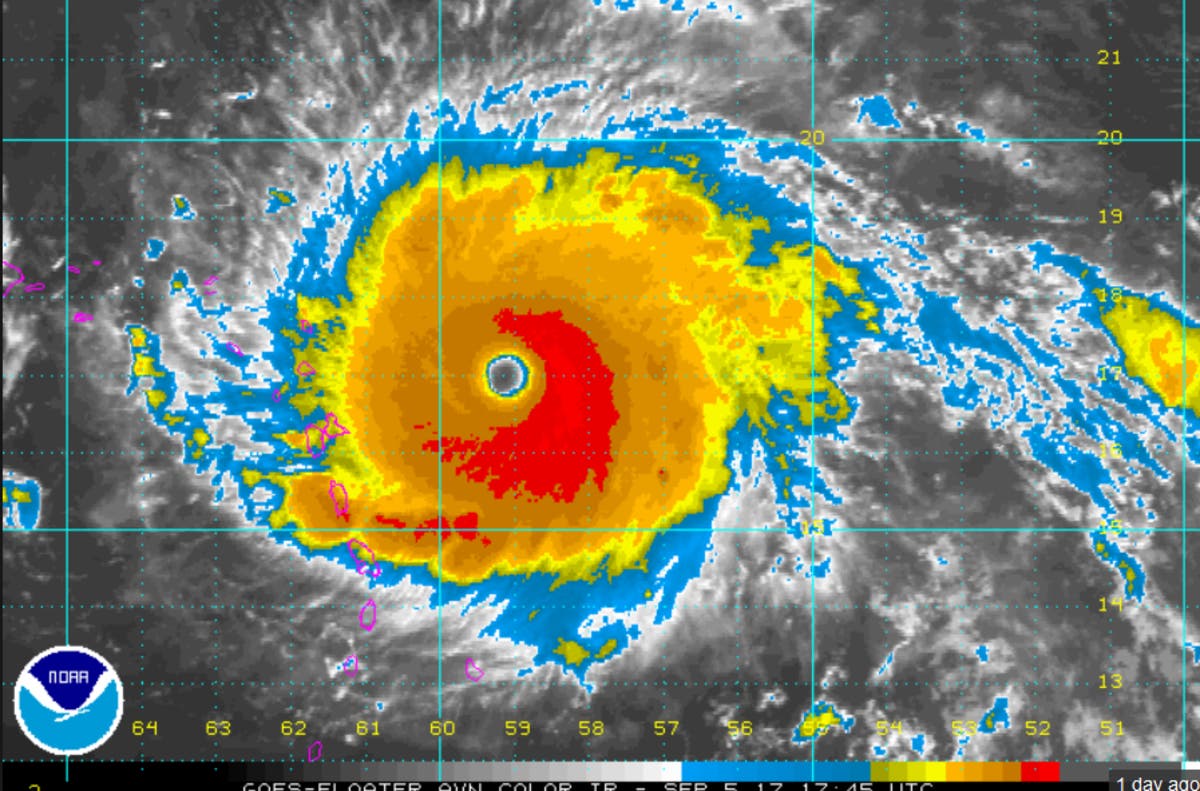
Forecasters at the National Hurricane Center issued a stark warning to interests in the Caribbean Sea Tuesday morning as Hurricane Irma moved into the region packing maximum sustained winds of 180 mph. Officially upgraded to a powerful Category 5 storm, Irma is likely on a collision course with Puerto Rico and other islands in the region. The storm also poses a threat to Cuba and a wide swath of the East Coast, including coastal Virginia if it turns north once it reaches Florida, which many computer models are predicting.
Currently, three different models show the hurricane making landfall in South Carolina and then heading due north, potentially hitting the Reston area at some point. At that point, it would have weakened greatly to a tropical depression or a very weak tropic storm, but it could bring some significant winds and flood concerns to our region.
For now, the hurricane center says it's too early to know where, if anywhere, the deadly storm will strike the continental United States, which is now the strongest hurricane in the Atlantic basin outside of the Caribbean Sea and Gulf of Mexico in the records of the National Hurricane Center. But forecasters are warning everyone in coastal areas to be prepared. Tuesday morning the center said there is an "increasing chance" the storm will impact the Florida peninsula and the Florida keys. After that, the unpredictable nature of hurricanes makes an exact forecast difficult.
Find out what's happening in Restonfor free with the latest updates from Patch.
"(I)t is still too early to determine what direct impacts Irma might have on the continental United States," the hurricane center said in an 8 a.m. post. "However, everyone in hurricane-prone areas should ensure that they have their hurricane plan in place." (For more hurricane news or local news from Virginia, click here to sign up for real-time news alerts and newsletters from Newport News Patch, and click here to find your local Virginia Patch. If you have an iPhone, click here to get the free Patch iPhone app.)
New #hurricane watches have been issued for the Turks & Caicos Islands, SE Bahamas & the north coast of #Haiti https://t.co/tW4KeGdBFb #Irma pic.twitter.com/uJmnbDnlY3
— NHC Atlantic Ops (@NHC_Atlantic) September 5, 2017
Watch: Another Powerful Hurricane Is Taking Aim At The US
Find out what's happening in Restonfor free with the latest updates from Patch.
As of 11 a.m. Tuesday, Irma was packing maximum sustained winds of 180 mph and located about 225 miles east of Antigua. She was moving west at 14 mph.
Forecasters say hurricane warnings have gone up for Antigua, Barbuda, Anguilla, St. Kitts, the British and U.S. Virgin Islands, Puerto Rico and other nearby islands. A hurricane watch has been issued Guadeloupe and the Dominican Republic, among other interests in the region. Hurricane warnings mean that hurricane conditions are expected within the warning area within 36 hours. Watches mean conditions are possible.
Tuesday morning, hurricane-force winds extended out from Irma by 45 miles from the center. Tropical-storm force winds were extending outward by 140 miles.
New #hurricane watches have been issued for the Turks & Caicos Islands, SE Bahamas & the north coast of #Haiti https://t.co/tW4KeGdBFb #Irma pic.twitter.com/uJmnbDnlY3
— NHC Atlantic Ops (@NHC_Atlantic) September 5, 2017
The East Coast, including the Carolinas and the Delmarva Peninsula, could see heavy rain, strong winds and coastal flooding from the storm, the Capital Weather Gang says. Two forecast models being considered late Monday showed the storm working its way up to the Georgia and Carolinas by early next week.

While, obviously, the biggest concern lies for Virginia residents lies along the coast, the storm could also severely affect next week's weather in western parts of the state, according to some computer models.
Irma formed during the peak of the 2017 hurricane season. Forecasters call the period between mid-August and mid-October the “season within the season.” This eight-week period “is often the most active and dangerous time for tropical cyclone activity,” according to NOAA.
The peak period is historically responsible for major spikes in tropical weather activity, NOAA said. In fact, it accounts for roughly 78 percent of all tropical storm days on record. It is also the period when 87 percent of the category 1 and 2 hurricane days on record occurred. In addition, this period is responsible for “a whopping 96 percent of the major (category 3, 4 and 5) hurricane days.”
The conditions gradually become less ripe for development in mid-October when increased wind shear tends to reappear and water and air temperatures cool.
The Atlantic hurricane season runs from June 1 to Nov. 30 each year. Average seasons produce about 12 named storms, of which six become hurricanes. Three of the hurricanes are generally deemed major.
Residents readying for the ongoing season can get tips and advice on the federal government’s Ready.gov website.
Get more local news delivered straight to your inbox. Sign up for free Patch newsletters and alerts.