Politics & Government
Lawmakers Skeptical Inslee's Homelessness Plan Can Pass
Ahead of the legislative session convening Monday, lawmakers questioned the governor's pitch to use $300 million from state reserves.

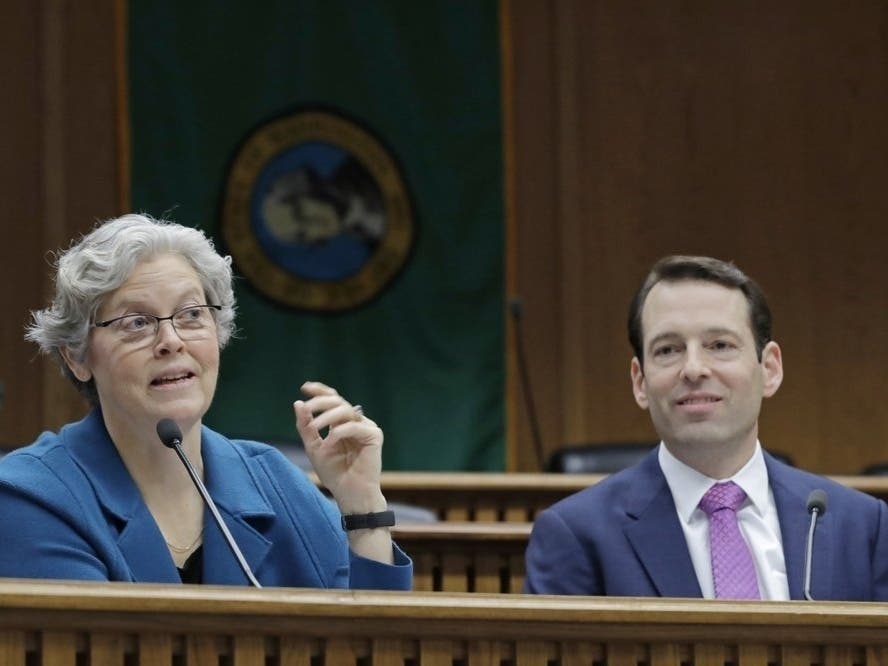
OLYMPIA, Wash. (AP) — Top lawmakers said Thursday that Gov. Jay Inslee’s plan to use hundreds of millions of dollars from the state’s emergency budget reserve to combat Washington’s homelessness crisis was unlikely to pass the Legislature.
Last month Inslee said he wants to spend more than $300 million from the state’s rainy day fund to add 2,100 shelter beds and provide other help to people without shelter.
"I applaud the governor for making this a priority, I’m not 100 percent sure the votes will be there to use the rainy day fund," Sen. Majority Leader Andy Billig, D-Spokane, said at The Associated Press Legislative Preview.
Find out what's happening in Across Washingtonfor free with the latest updates from Patch.
Sen. Mark Schoesler, R-Ritzville and the leader of the minority caucus in that chamber, said it was wrong to take reserve money to pay for things that will require ongoing funding.
"You take one-time money from the rainy day fund and you create ongoing costs. That is not sustainable, period," Schoesler said.
Find out what's happening in Across Washingtonfor free with the latest updates from Patch.
The Democratic governor says Washington must do more to find housing for people. The state has the fifth-highest per-capita rate of homelessness of all U.S. states. In addition to adding shelter beds, Inslee wants to give rental and other housing assistance to more than 3,000 people. His plan would cost $146 million during the 2019-2021 two-year budget cycle and ultimately cost $300 million over three years. The state currently has about $2.5 billion in its emergency fund.
The Legislature, which is controlled by Democrats, convenes Monday and will consider Inslee’s proposal as it adjusts the state’s current $52.4 billion two-year budget.
Legislative leaders said they would make addressing homelessness a top priority, but said they wanted to take a holistic approach. House Speaker-designate Laurie Jinkins, D-Tacoma, said providing homes is only one part of the problem. She said there isn’t enough transitional housing or adequate help for people addicted to drugs or who are mentally ill.
Rep. Morgan Irwin, R-Enumclaw, said there is agreement between the two parties on many things needed to address homelessness but not consensus about how to pay for them. And Irwin said cities and counties are sometimes reluctant to do enough to address the issue to avoid becoming a magnet for homeless people.
"That’s a hard nut to crack," he said.
Irwin said an idea like state matching funds for local communities who step up in this area are tactics to consider.
Sen. Hans Zeiger, R-Puyallup, said helping vulnerable people with unforeseen bills or rent payments is key. He also said creating a guardianship program to improve the care for drug addicted or mentally ill people would help.
Inslee said he wants to reduce the number of homeless people by 50 percent over the next two years. The United States Interagency Council on Homelessness said as of January 2018 there were more than 22,000 people without shelter in the state.
King County Executive Dow Constantine and Seattle Mayor Jenny Durkan recently signed an agreement that would designate the agency to coordinate the county and city response to homelessness. It would begin next year with $130 million in funding from the county and the city.
The homelessness problem is particularly acute in the Seattle area, with an imperfect one-night count earlier this year estimating more than 11,000 homeless in King County and encampments in parks and freeway underpasses.
Rep. Nicole Macri, D-Seattle, noted that a lot of housing had been built in Seattle during Washington’s largest city’s tech boom, but most of it was too pricey for people threatened with homelessness.
"Building housing supply is not a quick fix," she said.
Report by Chris Grygiel/Associated Press