Kids & Family
About Town: Life Lessons from a Hummingbird Feeder
Good intentions can lead to disastrous consequences when humans don't keep up their end of the bargain.
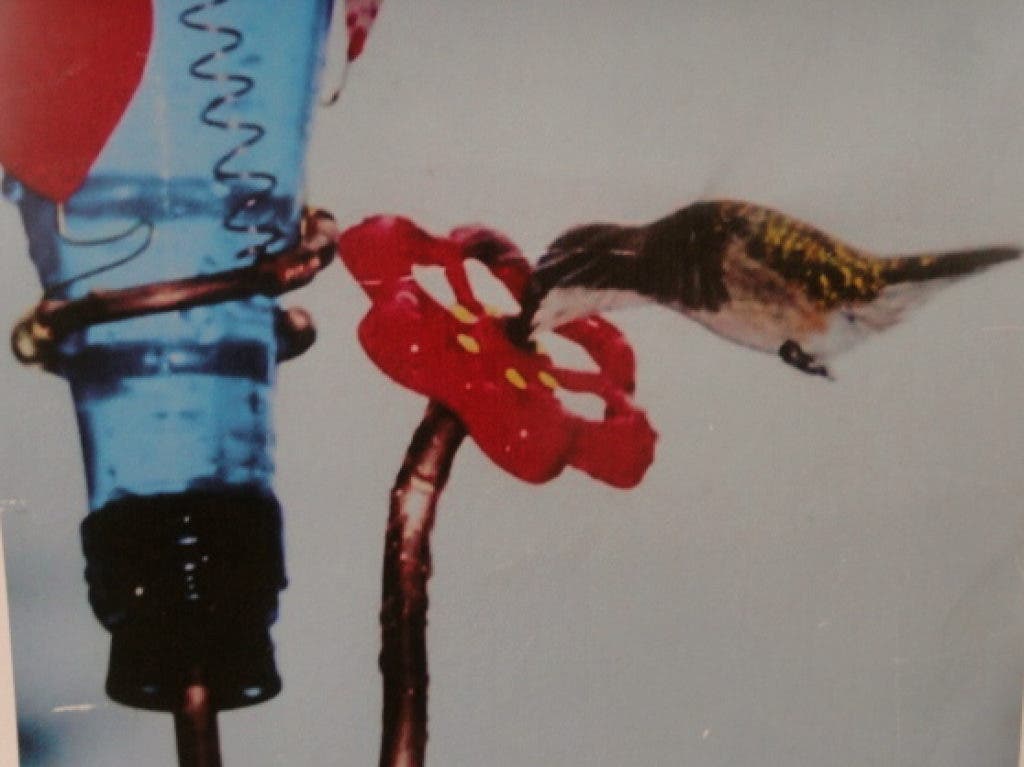


The sad and hushed tones of my husband’s voice caught my attention more than his words.
“You have to see this,” he said.
He had gone to the front porch to retrieve the hummingbird feeder so we could refill it with sugar syrup. I was at the stove, stirring our own dinner when he walked into the kitchen carrying the feeder.
Find out what's happening in Bellevuefor free with the latest updates from Patch.
“There’s a bird stuck in the feeder,” he said, as he carried the hanging glass bottle to the sink. “I think it is dead.”
I turned the stove off and we were both quiet. The tiny thing looked like a stuffed replica of the tiny creature. It didn’t seem real.
Find out what's happening in Bellevuefor free with the latest updates from Patch.
Our intentions are good. We both like birds and worry about them finding food as Bellevue becomes increasingly urbanized. We leave our large yard as natural as possible for wildlife. Both our bird feeders – a traditional seed station with cages for suet – and the hummingbird feeder were gifts. David, my husband, keeps the seed station filled. It is outside our kitchen window and he delights in the variety of birds that dine there. I’m the chef for the hummingbird juice. I enjoy their antics as they swirl, dance, dart and finally drink at the feeder.
I felt guilty. The hummingbird feeder had been empty in the morning and I should have filled it then. Instead I let it go until evening. Once you start feeding birds, they depend upon your largesse. The result was there before my eyes that were filling with tears. A desperate bird trying to reach the last drops in the bottom of the tray got his beak stuck in the hole and apparently died.
“Take it out to the patio to remove it,” I said. “In case he’s alive, we don’t want him trapped in the house.”
I turned back to the stove to hide my tears. David went out to the patio.
“Sherry,” he called. “The bird flapped its wings once when I took it out.”
I poured nectar into a small dish and carried it to the patio. The hummingbird on the picnic table wasn’t moving. It was not as big as the handle on my coffee mug. His leg was as thin as a blade of dry grass; his beak seemed as long as his entire body. As we watched, we could see him taking more frequent breaths. I worried he was dehydrated because it had been a warm day and we had no idea how many hours his beak had been stuck.
Gently I picked him up and put his beak in the nectar. I don’t know if he drank any but when I laid him back on the table he seemed more alert. Now one little black eye was peering at me. I tried not to move so I wouldn’t frighten him anymore than he already was. I don’t think hummingbird feathers change color but I swear the green on his back and wings grew more intense.
David and I silently watched in awe – it was as if we were looking at a fast-forward recording of a flower transitioning from bud to blossom. The bird went from lying prone on the table to alert and took wing in less than three seconds. The whirling noise of his wings made my heart zing as he turned into a flash of green zooming toward the tall trees on our hillside.
I took a deep breath. My procrastination almost killed this little creature. I vowed to refill the feeder before it runs completely empty. And I thank God for a life lesson which such a happy, beautiful ending.