Health & Fitness
How To Cope With Seasonal Depression During A Pandemic
Washington health experts have shared some ways to combat depression brought on by seasonal changes, on top of an already stressful year.


SEATTLE — This winter's gray weather and shorter days could have a greater toll on mental health, as many Washingontians grapple with seasonal changes on top of a global pandemic, according to local health experts.
The University of Washington's School of Medicine is sharing some insight into seasonal affective disorder, a type of depression that typically sets in during the fall and winter months. After an abundantly taxing year for mental health, doctors say symptoms may be more pronounced.
"I see quite a few cases in my practice with depression and anxiety, and this year we've definitely seen more folks," said Bryna McCollum, a physician assistant at the UW Neighborhood Northgate Clinic. "One thing we know about depression is it tends to feed on itself. Once people are feeling down and depressed, they often withdraw from their normal activities and they're not doing the types of things that bring them a lot of enjoyment, and that just makes depression worse."
Find out what's happening in Bellevuefor free with the latest updates from Patch.
While an estimated 25 percent of people are likely to experience depression in some form during their life, between 0.5 percent and 3 percent are affected by SAD each year. According to McCollum, quite a few factors play into developing depression, including genetics, other medical conditions and stressful events.
Find out what's happening in Bellevuefor free with the latest updates from Patch.
Symptoms of depression can include:
- Lack of interest in normal activities
- Sleeping or eating too much or too little
- Fatigue
- Loss of pleasure
- Feelings of letting yourself or your family down
Anyone who experiences symptoms for more than two weeks, especially if they interfere with home, work or school life, are encouraged to contact their doctor or mental health provider. Those in need of immediate help or facing suicidal thoughts can contact a crisis hotline or visit an emergency room.
Crisis helplines:
- King County: 206.461.3222 or 866.427.4747
- Snohomish County: 800.584.3578
- Text 741741 for access to a trained crisis counselor
- National Suicide Prevention Lifeline: 800.273.8255
- WA Listens, nonclinical support for people experiencing stress due to COVID-19: 833.681.0211
Apart from medication and other treatments, McCollum said, those experiencing depression can also practice "behavioral activation."
This means starting to do certain activities not necessarily because you feel up for doing them but because you know they are good for you. Keeping a journal can help with this. For instance, if you are planning to go for a walk outside with a friend you might rate your feelings as a 2 out of 10 before you go and then when you come home from the walk you might notice that your feelings are up to a 4 or 5 out of 10.
Another technique is to look for all-or-nothing, black-or-white thinking patterns which are more common when people are feeling depressed. If you find these try to replace them with a healthier thought. For instance, you might find yourself thinking “I don’t have time for a full 30 minute workout today so there is no point in exercising.” Try to replace that thought with something more helpful like “Even if I go outside and exercise for five or 10 minutes, that will be better than zero minutes.”
Another option that can prove useful in combatting SAD is using a light therapy boxes, equipped with at least 10,000 lux, and recommended about 30 minutes per day.
The prolonged public health crisis has already had significant detrimental effects on overall mental health in Washington, and those challenges are likely to continue into 2021, according to state health experts. Dr. Kira Mauseth, co-lead of Washington's behavioral health "strike team," shared an updated outlook on the lengthy path to mental recovery at the end of November.
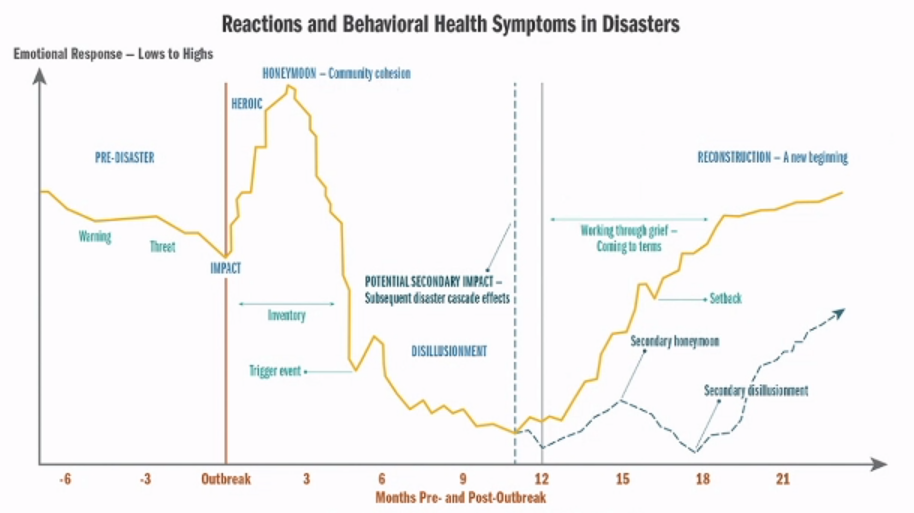
Mauseth said Washingtonians are in the middle of a prolonged "disillusionment phase," which can be the most difficult time in a disaster. Many people are exhausted and long-term stress can affect neurological responses, making it hard to regulate feelings, creating a "toxic emotional soup."
With the latest spikes in coronavirus transmissions, Mauseth said, already compromised emotional resources and coping skills can be stretched even further, extending the length of time it takes to recover and restore baseline behavioral health.
The state's current outlook shows a good chance for a full mental rebound sometime next year but expects symptoms will take some time to lessen, even after a vaccine is widely available. Mauseth said humans are resilient by nature, and recovery is the most common long-term mental health outcome in the wake of large-scale disasters.
Learn more about "coping with COVID" strategies on the state coronavirus response website, and read more about Seasonal Affective Disorder via UW Medicine.
Get more local news delivered straight to your inbox. Sign up for free Patch newsletters and alerts.