Health & Fitness
What is Aperture?
So what is aperture? Aperture in simple is the size of the hole, that lets in light, in the lens when a photo is taken.
So what is aperture?
Aperture in simple is the size of the hole, that lets in light, in the lens when a photo is taken.
Just like there are two main functions that you can set your camera to which will allow you to control your aperture. The first major function is to have your camera on manual, the major key function that will allow you to have complete control the final look of your image, and the other is the AV mode (or aperture priority). When you adjust the aperture in the aperture priority mode the will adjust automatically to prevent over (too bright) or under (too dark) exposure.
Find out what's happening in Bonney Lake-Sumnerfor free with the latest updates from Patch.
When you capture a moment your camera’s image sensor is seeing a glimpse of the scene. Aperture is what controls the size of the hole which allows the light of the scene to reach the sensor. The bigger the hole, the more light it gets – the smaller the hole, less light.
Aperture is measured in f-stops – for example f/1.4 f/1.8 f/2/8, f/8, f/22 etc. The higher the number the smaller the hole which in turn lets in less light, vice versa the lower the number the larger the hole and more light can reach the image sensor. This can sometimes be a bit confusing but f/1.4 lets in much more light than a larger aperture such as f/22.
Find out what's happening in Bonney Lake-Sumnerfor free with the latest updates from Patch.
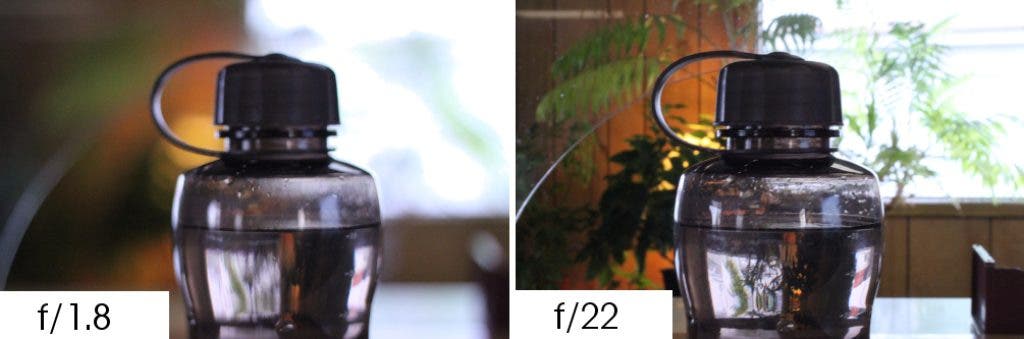
Another major function that Aperture has a huge impact on is the Depth of Field (DOF). The depth of field is the amount of your shot that will be in focus. A large DOF means that most of the image will be in focus whether close to the camera or far away. Larger f-stops such as f/16, f/22 etc means a larger DOF. This large DOF is really useful for landscape photography; this ensures that the foreground to the horizon is mostly in focus. A shallow (small) DOF means that only part of the image will be in focus and the rest will be fuzzy (blurry); another term for this shallow DOF is bokeh. Smaller f-stops such as f/1.4, f/1.8 means a smaller DOF. This can be used for portrait photography; this allows for less distraction using a nice blurry background (bokeh) and allows that the subject to be the main focal point.
For more information feel free to contact me at christian@chrisitianjanderson.com. You can also view my portfolio or my photoblog. Even Like me on Facebook.