Politics & Government
Layoffs Loom for Nearly 200 Pierce Transit Workers
Public Transportation agency gets ready for more cuts after two rounds of layoffs in the last 18 months.
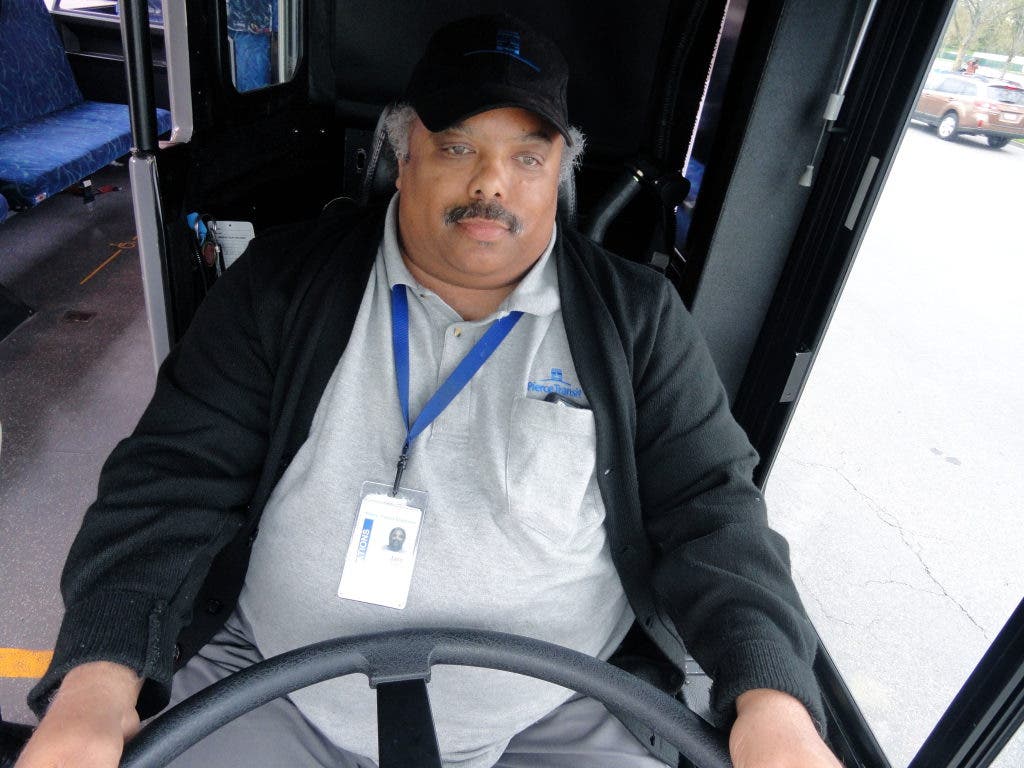
One of every five Pierce Transit workers will receive pink slips in coming months as a result of a $51-million budget shortfall, the public transportation agency acknowledged this week.
In addition to eliminating nearly 200 jobs across the board, the Lakewood-based transit system’s nine-member Board of Commissioners is scheduled to decide May 9 on 15-percent in service cuts to be implemented by Oct. 2.
“The board is really going to be wrestling with the extent to which we’re affecting riders,” agency spokeswoman Jessyn Farrell said. “It will be making some very difficult decisions Monday.”
Find out what's happening in Bonney Lake-Sumnerfor free with the latest updates from Patch.
Pierce Transit, which serves Lakewood, University Place, Bonney Lake, Sumner and other Puget Sound communities, already cut service by 20 percent earlier this year as a result of an at 3701 96th Street SW in Lakewood.
“There will be another round of layoffs associated with the final reduction, the exact date of which has not been determined,” she said. “Approximately 20 percent of our 1,000 workforce will be affected.”
Find out what's happening in Bonney Lake-Sumnerfor free with the latest updates from Patch.
Farrell said Pierce Transit’s Board of Commissioners has instructed staff to structure the layoffs to preserve as many direct-line services as possible.
Don McKnight, president of Amalgamated Transit Union Local 758, which represents nearly 800 of the workers, said he expects the layoffs to occur in October.
“We’ve already gone through two rounds of layoffs in the last 18 months,” he said. “When you’re talking about another 20 percent of the workforce, you’re talking about an incredible amount of stress on the employees as well as the customers who depend upon this system to get work and to doctor appointments.
“I also have a concern for operator safety, as well. If you put this kind of strain on the public, operator assaults may increase. Obviously we’re going to have more disgruntled passengers.”
McKnight said the agency's leadership is not to blame. Pierce Transit officials have made the most out of existing revenues, he said, and even postponed layoffs by drawing from reserves they socked aside during boom years.
Several recent years of lean tax revenue have forced the agency to dig deeply into those reserves, however.
“With this big of a shortfall, there’s nothing we can actually do to prevent what’s ultimately coming,” he said.
As for the layoff process, McKnight said, it will be based “for the most part” on seniority.
All told, Farrell said Pierce Transit already has made $89 million in budget cuts over the last few years to backfill a $140-million revenue shortfall that amassed between 2008 and 2012 — mainly due to shrinking sales-tax. The agency still needs $51 million to break even.
“We rely on sales tax for 70 percent of our operating expenses,” she said. “Since the end of 2007, sales tax has been in a pretty steep decline because people aren’t shopping as much.”
Pierce Transit’s 2010 operating budget was $127.2 million. Since 2008, the agency has raised fares, gone through two rounds of layoffs, postponed capital expenditures and sold property to reduce its budget deficit.
“There were lots of steps taken to fill the gap, but we were not able to fill it all the way,” she said. “With the failure of Prop. 1, we’re now in the position of having to implement permanent service cuts.”
Proposition 1 failure
The ballot measure, defeated earlier this year, asked Pierce County voters to authorize three-tenths of 1 percent in additional sales tax — or three cents on every $10 dollars in consumer purchases — to backfill the $51 million and help the agency maintain a balanced budget.
After Prop. 1’s failure, the Pierce Transit's Board of Commissioners ordered 35 percent in total service cuts by Oct. 2. The CNG explosion accelerated the reduction by taking 23 percent of the bus fleet off the street.
While foul-play has been ruled out, the cause of the explosion remains under investigation.
“Before the incident, we were able to put 147 buses out during high commute periods in the morning and afternoon,” Farrell said. “Since the fire, we’re driving our buses primarily at night to the Sea-Tac fuel facility, which means we’re able to get only 113 buses filled and ready to go for the next day.”
That means riders have fewer options and longer waits between buses.
Even so, the agency has restored some trips, Farrell noted, and schedules will continue to change to better reflect ridership demand during weekday peak commute times.
“We don’t want people thinking there’s going to be much more service, but on some routes people will see service that is more oriented to work trips and school trips,” she said. “There is still an additional 15 percent in cuts that must be implemented by Oct. 2.”
Toward that end, Pierce Transit officials have been hosting public hearings throughout the service area.
“Our board has a reduction plan before it and that’s what we’ve been vetting with the public,” Farrell said. “We’ve already had over 300 people comment or testify — mainly riders.”
At its April 11 meeting, the board directed staff to prepare a service-reduction plan that harms the fewest riders.
“Over the last two years, what we’ve heard the most is the need to get people to school, to get them to jobs,” Farrell said. “The other thing is to preserve lifeline service where people are truly dependent on public transit, including the elderly and disabled.”
The bottom line, however, is that riders ultimately will see and feel a difference in service by Oct. 2.
“It’s extremely unfortunate,” she said. “There’s no doubt people’s lives are going to be impacted.
“But there are really only two options: One is passage of another ballot measure, which currently isn’t on the table. The other is to wait for sales tax and the economy to improve.
“And that’s not going to happen overnight.”