Sports
Weight Lifting 101
Never underestimate the importance of the weight room as part of your fitness program!
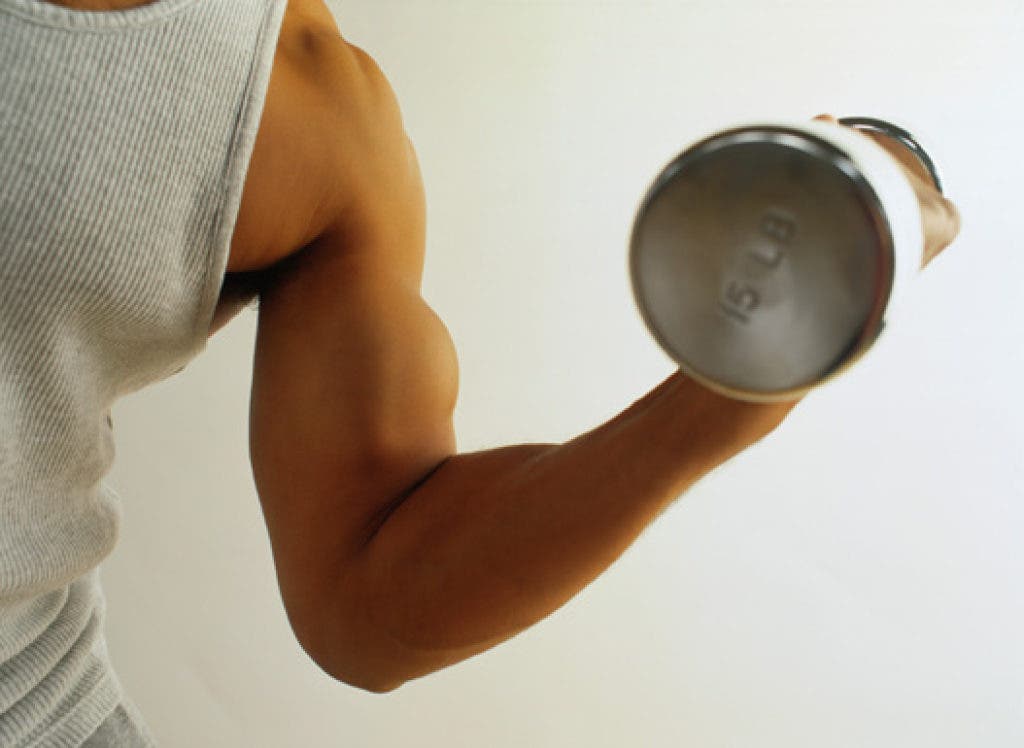
Are you the type of person who heads to the gym with a clear plan in your head of what you are going to do? Or are you more often the person who looks at the weight room feeling overwhelmed, maybe picks up a set of weights to do some bicep curls, but ultimately ends up on the treadmill because it’s just easier than trying to do something different? The weight room can be an intimidating place if you are not familiar with it and if you don’t have much experience.
So how do you plan an exercise routine? Are free weights or machines a better choice? Which is a more effective plan: light weights and high repetitions or heavier weights with fewer repetitions?
There are fairly lengthy answers to all of these questions, but I would like to try to simplify things a little and give you a game plan for moving forward. Probably the easiest solution is to hire a qualified personal trainer, explain your goals and have them map a game plan for you. However, this may not be financially possible. The first thing to decide is how many days each week you will be lifting weights. I would recommend two to three days. If you have more time available and four to five days is possible, by all means, that’s great!
Find out what's happening in Bonney Lake-Sumnerfor free with the latest updates from Patch.
Let’s assume you will be strength training two days each week, to begin. The key to creating a great program is to make sure you have a balanced routine. In other words, you want to do exercises that strengthen all muscle groups, not just a select few. I have seen gym members in the past (and sorry, it’s mostly the men!) who focus on building one or two body parts, like their chest and biceps, and forget about the rest of the body. I know it sounds silly, but this is more common than I would like to think.
A good rule of thumb is, if you do exercises for the front of your body (your chest), make sure you do an equal number of exercises for the back of your body. The same rule applies for your biceps/triceps, abs/lower back, etc. Also, you will want to work your legs just as much as your upper body. Perhaps one day you could do upper body work, and the next day you train you could do lower body work. That would be an example of an upper body/lower body split routine. The bottom line is to just make sure all of your body parts are getting equal attention.
Find out what's happening in Bonney Lake-Sumnerfor free with the latest updates from Patch.
As for free weights versus machines, there are pros and cons for both types of training. If you are just starting, machines may be less intimidating and generally there are pictures and instructions printed on the machine that can assist you. Unfortunately, machines have a set movement pattern that may not feel natural to some people. Also, the crossover between machines and the movements that you do in your everyday life is much less than free-weight exercises.
Free weights require a greater utilization of your stabilizing muscles when you are performing exercises. They also allow you to move through a range of motion that is completely natural for your specific body. There is no fixed position as there is with machines. However, free weights can be more difficult to work with if you are a beginner. They require strict attention to form and alignment, since you don’t have a machine doing that work for you.
As for heavier or lighter weights and lower or higher repetitions, much of this depends on your goals. The majority of the time, you need to make sure you are lifting enough weight to stimulate development of the muscles. Don’t worry about “bulking up.” It takes a tremendous amount of calories and an excessive amount of weight lifting for this to occur. For general strength training, 10-15 repetitions of each exercise is a good starting place. If you finish 15 repetitions fairly easily you may want to try increasing the weight (as long as you can do the exercise with good form) on your next set.
This information is just scraping the surface for getting started. Hopefully you already have a strength training program in place. If you don’t, you can always refer to my previous articles, and . Don’t be afraid of the weight room! It can be your best friend when it comes to fat loss and your overall health!