Community Corner
Challenging the Western Way of Parenting
This Plateau mom battles through Amy Chua's Battle Hymn of the Tiger Mother.
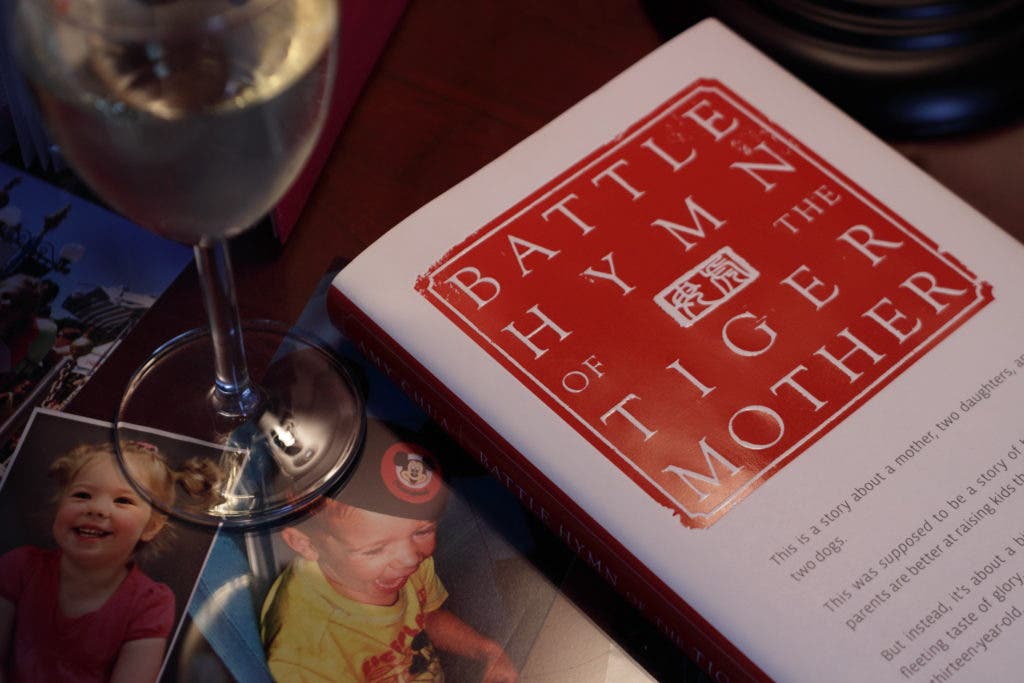
The highly criticized parenting memoir Battle Hymn of the Tiger Mother by Amy Chua may have more to do with hiding behind the excuse of a culture clash than owning up to the fears and failures of one’s own parenting style.
Before I venture too far, let me first say that it takes incredible courage and thick skin to honestly reveal the more private inner workings of a family core. To allow the world into the most vulnerable profession of motherhood is a risky gamble and one I highly respect. Parenting is not easy and it’s not pretty. It’s rarely glamorous and with advice and opinions as plentiful and far reaching as the stars in the Milky Way, it’s easy to be a back-seat driver and Monday-morning quarterback on the mother-child dynamics involved in child raising. I don’t for one moment doubt that Chua had the best intentions in her discipline of her daughters.
Why she chose the path she did is harder for me to get behind.
Find out what's happening in Enumclawfor free with the latest updates from Patch.
Chua’s book is roughly a defense of her parenting choices. As an American-born Chinese woman, she was raised strictly and in accordance with what was seen as traditional Eastern practice. From a society that believes schoolwork always comes first, she explains, being second best is failure and academic achievements reflect successful parenting -- it’s no wonder this author’s story was met with more than a few critics.
Chua narrates through several chapters some of her most challenging parenting moments which include forcing her daughters to play for yet another hour of instrument practice before enjoying a 9 p.m. dinner and spending countless hours on long car drives to meet with one or another world-renowned music instructor in her quest to find her daughters fame.
Find out what's happening in Enumclawfor free with the latest updates from Patch.
The author also uses a good amount of space knocking the “Western” way of parenting. Though she does add a disclaimer in the beginning admitting that she is generalizing and certainly not all Westerners are this way, her tone is more than stiff in her constant comparisons as to why Westerners parent the way they do.
The book began to quickly rub me the wrong way at less than half-way through. Certainly, living in a Western society as a minority as far as her parenting choices are concerned, you would think Chua would be wiser than to throw rocks in a glass house. It’s horribly easy to criticize her practices as self-centered and downright unfair.
As she stumbles through what she believes to be the best practices, she spends next to no time demonstrating any form of humility or admitting that these very practices may not be correct, although in some ways they did work for her – some of the time. Compared to several other parenting books and methods I have researched in my child-raising attempt, I’ve found her writing to be arrogant and self-righteous while at the same time, terrifyingly oblivious. She spent so much time trying to ensure that her children were among the best of the best, but at what cost? She failed to spend any time delving into her own desires which must have ultimately failed as she had no experience in being tops in violin or piano – the very things she relentlessly forced upon her children. What void was she trying to fill? And I’d love to know if she was able to find a single like-minded parent friend, though I probably know the answer to that as she repeatedly bashes the Western idea of ‘play dates’ – the holy grail for making mommy friends.
One of the most difficult passages in the book for me to read was an excerpt from Chua’s oldest daughter. Sophia Chua, at age 13, was playing a highly coveted piano recital at Carnegie Hall. In a school essay she writes, “Carnegie Hall. It didn’t seem right. This was supposed to be the unattainable goal, the carrot of false hope that would keep me practicing for an entire lifetime. And yet here I was an eighth-grader, about to play 'Juliet as a Young Girl' for an expectant crowd.” The icing on the cake from this passage was author’s clarification that her daughter was in fact playing in a small venue hall within Carnegie, on the third floor, and not the one that hosts famous musicians.
I reflected on this for a while as I realized that it doesn’t seem celebratory to peak at such a young age – even in Carnegie’s lesser venue. When we force our children into adult expectation, what is left after reaching these “unattainable goals”?
This in itself seems to be an argument against the strict Chinese way of pushing for excellence right out of the womb. What more will kids have to work for? When will any accomplishment ever be enough? How long can you enjoy the fruits of your labor before you become fixated on the next “unattainable goal”? What comes next when you’ve mastered a skill before high school?
Chua could be correct in that typically Western ways of parenting are certainly different in what she herself was raised with and in turn chose to practice in her home, though her broad stereotype of wine-sipping yoga-practicing soccer-moms fell far from the mark. I find it interesting that in her statement, “Despite our squeamishness about cultural stereotypes, there are tons of studies out there showing marked and quantifiable differences between Chinese and Western when it comes to parenting,” she does not begin to address the effectiveness with any solid statistics. She continues that while almost 70 percent of Western mothers might foster the idea that ‘learning should be fun,’ compared to 0 percent of Chinese mothers, she doesn’t get into the nitty-gritty regarding quality of life and character outside of the home.
In the world of child-raising, no one person really can claim success over any other and what saddens me most is that this book is a perfect example of how quickly we can judge and subject ourselves to being judged. I fully admit that the “Western way,” or any other way for that matter, has some dark moments as well as some bright shiny ones.
While I applaud Chua for her brave choice in publishing her experiences with the “Chinese way” I wish she could have found more sensitivity in her process. But then that might be too much to ask of someone who couldn’t find sensitivity in her young children’s struggles of trying to fit into the Western way of friendship and socialization. Chua did not allow play dates, sleepovers, school plays, TV or choosing one’s own extra-curricular activities.
Chua is right about one thing: Westerners are different. And that’s not a bad thing. In the same way that I assume Chua might have hoped for a little more respect from her memoir, she might have found some way to better respect those women, those parents, those Westerners around her. We’re all in this together. One thing us Westerners are good at is sympathizing and commiserating, even if it is over a glass of wine at a play date.