Politics & Government
Civil Service Commission Hearing Wraps Up, Decision Expected Within 30 Days
Saturday marked the second and final day of the hearing to consider former Enumclaw police Lt. Eric Sortland's appeal of his termination last year.


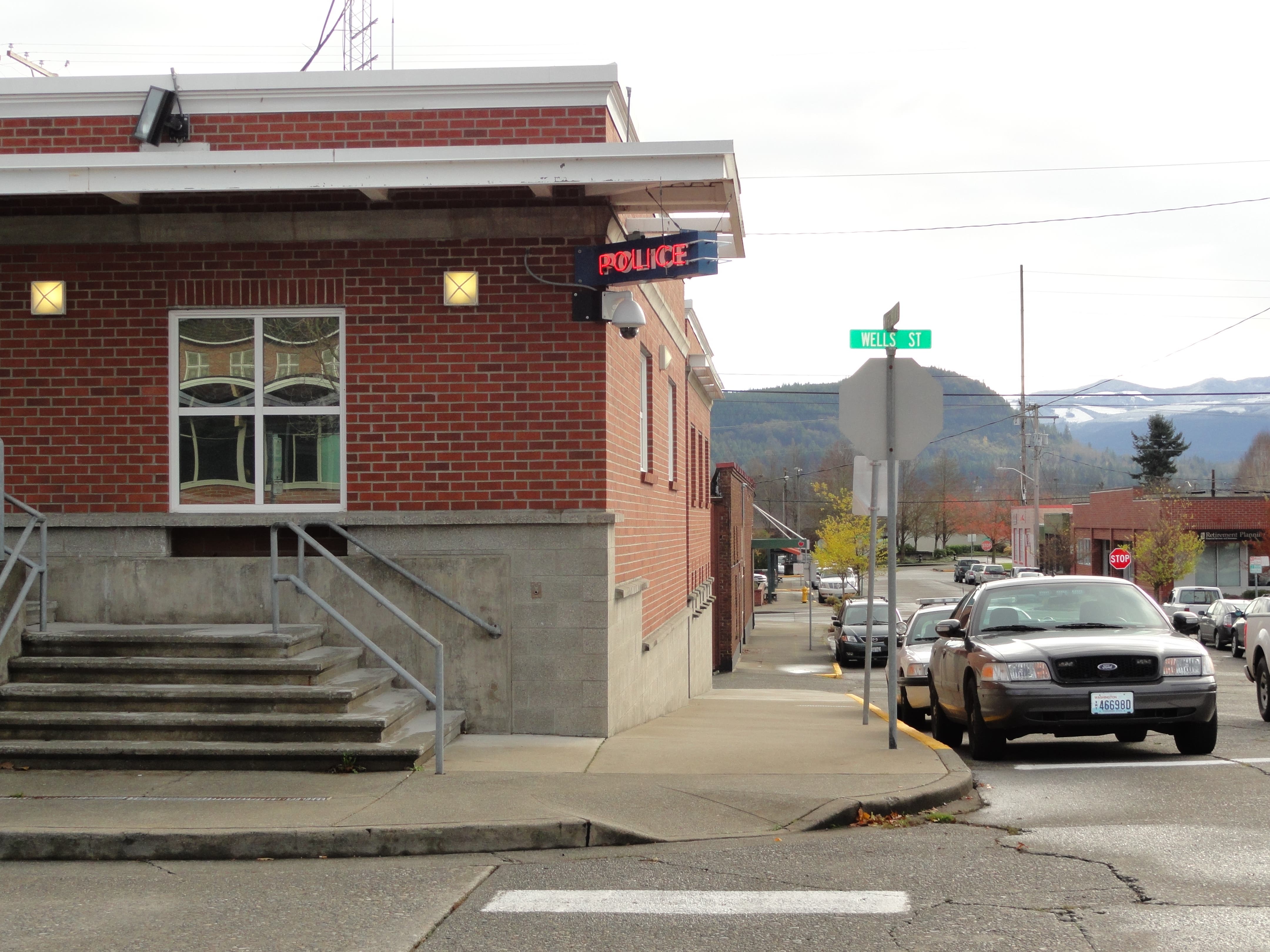
It was Eric Sortland's turn to tell his side of the story Saturday during the second and final day of the Civil Service Commission hearing convened to consider his appeal of his termination from the Enumclaw Police Department last year.
The city of Enumclaw presented its case for the disciplinary action against him yesterday ().
At issue was two separate disciplinary acts the city took against Sortland in 2011: a 10-day suspension following a three-month independent investigation into department dynamics which began because of a complaint Sortland initally filed against Chief Jim Zoll; and his termination which occurred after a heated office exchange that the city described as an example of insubordination against Zoll.
Find out what's happening in Enumclawfor free with the latest updates from Patch.
Brett Purtzer, who is representing the former lieutenant, concluded in his closing remarks that there was no insubordination and there was no substantial and timely evidence that showed Sortland deserved the separate 10-day suspension.
The evidence the city presented in support of the suspension came from an investigation by outside attorney Don Austin into Sortland's allegations of a hostile work environment and workplace harassment against Zoll in 2010. During his testimony on Friday, Austin said what he turned up instead showed that Sortland put the city in a vulnerable position with potential workplace harassment issues for other department members – its two female officers in particular. But Purtzer asserted that if the allegations against Sortland that surfaced as a result of Austin's investigation were that serious, why did not a single officer file a formal complaint. Why is the 10-day suspension backed by allegations that are more than three years old, he asked. The lack of a relationship time was 'not appropriate,' Purtzer said.
Find out what's happening in Enumclawfor free with the latest updates from Patch.
Purtzer concluded for the commission that this was evidence that while there is official policy in the department that members are supposed to report misconduct, few do and instead rely on heresay and rumors. The department is dysfunctional in terms of chain of command, he said Friday, and he attributed that to Zoll's leadership.
John Kugler, who represents the city, countered that few reported Sortland's alleged misconduct because he maintained a culture fueled by intimidation and retaliation.
With regards to the office argument that ultimately led to his termination, Purtzer asserted that though Zoll had told Sortland to 'get out of my way,' he left no time for Sortland to react and instead instigated deliberate physical contact. Sortland's action to report Zoll for assault following the encounter was an example of an employee following policy to report misconduct rather than an example of insubordination. 'Insubordination' reflects a deliberate intent to act against the chief, which didn't happen in what he described as 'a moment in time,' and Sortland should not have been terminated for that.
Not so, said Kugler. Sortland 'baited him' by blocking the chief's path to walk away from the argument, he said. That the incident happened within 60 days of Sortland being notified of his 10-day suspension is tantamount to insubordination.
In spite of a 2008 letter by the Enumclaw Police Officer's Association to then City Administrator Mark Bauer that was signed by 10 officers, accusing Zoll of unfair treatment of Sortland, none of the officers who are still with the department still share that view, Kugler said. Zoll has won over most members of the department 'by being a good chief,' he said.
Sortland needs to face the penalties for his actions, Kugler concluded. “It is not acceptable to be disrespectful to the chief of police,” he said.
Purtzer countered that, “this is not a daycare. This is a police department,” and people who are here are police officers because “they like the rough and tumble of being a cop.”
It is not insubordination to voice an opinion about the chief, he said.
With the hearing wrapped up, the three-member commission has until July 23 to render a decision on whether or not to reverse Sortland's termination.
Reporter's Notebook - Sortland Testimony:
2007 Rifle Incident: In 2007, Sortland was issued a 5-day suspension by Zoll after he had allegedly violated policy by pulling a corrections officer, who was not a commissioned police officer, for a high-risk narcotics traffic arrest and gave him a weapon he was not authorized by the department to carry. He also gave the corrections officer a 'police' jacket to wear. Sortland insists there was no violation of policy given 'the totality' of the incident and that mitigating circumstances made his actions OK; he was consistent with the protocol of the department. Sortland said he received help from the Enumclaw Police Officer's Association in a letter to then City Administrator Bauer who reprimanded Zoll and reduced Sortland's penalty to a reprimand that was removed six months later. In 2008, Zoll issued a memo that corrections officers were not to be used in high-risk situations.
Department Politics: Sortland said he was not a part of the union with the EPOA issued its letter to Bauer. He denied that he directed Officers Tony Ryan and Brian Lynch to confront Zoll in meetings and challenge him. Sortland said the officers went to him with concerns that things were being said in their meetings, so he advised them to document it. Sortland said that officers went to speak to him about a potential no confidence vote against the chief and that he didn't initiate the effort.
Officer Tony Ryan: Sortland received a reprimand in the form of a memo in 2009 concerning not following department policy when he failed to forward along a letter of commendation that Officer Tony Ryan received. He said he had intended to print it out (it was emailed to him) and pass it along to Ryan, Zoll and put a copy in the officer's record but unintentionally deleted the email before that could be done. While Ryan had testified he saw Sortland misrepresent himself as a King County Sheriff's deputy during an off-duty assignment they worked in 2007, Sortland insisted he never did so beyond saying he was an officer in King County.
Corrections Officer Amber Brunelle: Sortland said Zoll ordered him to do the internal affairs investigation of Officer Amber Brunelle after a female inmate died during her shift. Sortland said in his investigation of the incident, he noted that Brunelle had not followed policy with regards to hourly jail walk-throughs. She was anywhere from five to 20 minutes after the hour late on several walk-throughs the night of the death, he said. Policy does allow room for some leeway, but the checks should be done within the hour or less; she was over, he said. (See .)
Officer Nona Zilbauer: Sortland said the decision to put then Corrections Officer Nona Zilbauer on a performance plan came after jail staff as well as her direct manager, Sgt. Tyler Chilman reported her work was not satisfactory. Zoll was a part of putting the plan in place and it did yield improvement from Zilbauer. Other staff members didn't have a performance plan because it wasn't warranted. Zoll also directed him to have Zilbauer's mistakes documented. Sortland said he never told her she'd be more comfortable in a police department with women; instead, the conversation which Zilbauer instigated as she was considering becoming a police officer, centered on the pros and cons of big versus small agencies. (See .)
Chief Zoll: Sortland said he never expected in his law enforcement career to like each of the eight chiefs he's worked under but the common factor that made each relationship workable was there was constant communication. Sortland's complaint against Zoll included that he played favorites while with past chiefs even if they didn't like you, “at least they faked it pretty well.” Without a reliable communication channel, Zoll went over his head with assignments to subordinate officers. “It was hurtful,” Sortland said. He told Kugler he never called Zoll a 'coward' or 'liar' though did say statements the chief was making were lies. He said he didn't recall telling other officers they needed to get rid of Zoll.
State Audit: Sortland said he knew the audit was coming but historically, there isn't much consistency in what auditors are looking for. The issue with the audit in question was tracking the department's drug funds (buy money) and ledger that accounts for it. On the day of the auditor's visit, Det. Grant McCall was out and he was in charge of that. Sortland said he knew that the funds were historically kept in a metal cabinet but they weren't there when he went to retrieve the money for the auditor. She consented to wait until McCall returned to work as he hadn't answered his cell phone when Sortland tried to reach him for an answer. Upon McCall's return, he apologized and reported that the lock cabinet looked flimsy and so the money was in the evidence vault. Sortland said he proceeded to respond to an email query from Zoll asking about the money and reported the money and ledger were found and correct. Shortly after the email was sent, Det. Mark Leitl asked to retrieve some money for an operation and so the fund balance Sortland reported in the email was no longer accurate. He went to find the chief and told him about the discrepancy and Zoll responded it was fine. He said he wasn't aware the city was penalized for the delay. (See The Courier-Herald story about the audit.)
Argument in Huebler's Office: The conversation about the state auditor turned into one about doing self-audits, said Sortland. He was with Zoll and Lt. Bob Huebler in Huebler's office. Sortland said he told Zoll that he used to write self-audits when the department was accredited in the past. It was last accredited around 2004 and 2005, he said. Zoll disagreed and was adamant that Sortland turned in no such reports. Sortland said he remembered asking Zoll early on once the department was no longer accredited if he should continue doing the reports and Zoll told him no – the rationale being that the signficant expense of doing self-audits would raise a flag with the city council. The disagreement turned into an argument with raised voices. Sortland said at one point both he and Zoll agreed they wanted to stop arguing and there was a break. Then, he said Zoll approached him with no intent to leave the office and stressed again that there were no such reports; Sortland disagreed again and Zoll said to 'get out of my way' before bumping into his shoulder and chest before leaving the room. Sortland asserts this was not an inadvertant bump and there was enough force that he stepped back to regain his balance. Sortland asserts he never blocked the doorway and there was room for Zoll to pass without the physical contact. He said he feared for his safety in the confrontation with Zoll. He then sent a complaint to City Attorney Mike Reynolds. Sortland said he never defied Zoll but there were frequent debates.
Editor's Note: I was not present Saturday morning during the testimonies of Sgt. Tyler Chilman, Officer Chris Grant or former City Administrator Mark Bauer in support of Sortland. If you were there and would like to contribute to the notes here or amend the existing notes, please do so in the comments area below.
Get more local news delivered straight to your inbox. Sign up for free Patch newsletters and alerts.