Schools
Enumclaw Schools Look at Report Cards to See Where They Can Improve
Students score better in many areas of state tests.
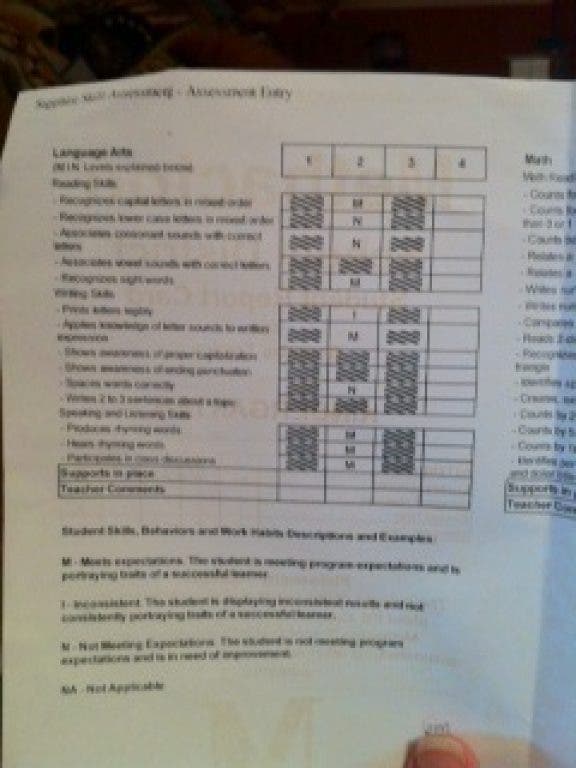
Since today is the first day of school in the Enumclaw district, why are report cards coming out already?
Well, the report cards aren’t for students; they are for schools.
State schools Superintendent Randy Dorn recently released the report cards, which explain how districts are doing in relation to state test scores and the federal No Child Left Behind act.
Find out what's happening in Enumclawfor free with the latest updates from Patch.
Enumclaw schools curriculum director Terry Parker was pleased overall.
“In general we improved straight across the board,” he said. “We’ve worked hard the last couple of years” to do well on the state tests. “Teachers are doing an outstanding job.”
Find out what's happening in Enumclawfor free with the latest updates from Patch.
Parker said the district has seen “tremendous improvement” in math, which has been a focus of local schools for two years. Science scores also improved.
“A lot of grade levels received their highest scores” ever, he added.
However, just like a growing number of schools across the nation, local schools did not fare well when it comes to Annual Yearly Progress.
The reason, Dorn says in a news release, is unrealistic expectations. The benchmark for passage in some subjects is 88 percent. By 2014 the goal is for 100 percent. That is unrealistic, Dorn said, and Parker agreed.
In 2011, preliminary figures show that 1,388 schools did not make Adequate Yearly Progress, an increase of a little more than 200 schools from 2010.
“Congress was supposed to revise it four years ago and still hasn’t,” Parker said.
AYP is part of the federal Elementary and Secondary Education Act, otherwise known as No Child Left Behind. Under AYP, all schools and districts will have a specific – and growing – percentage of students passing the state’s reading and math tests each year. All states are required to have a goal that all students in all schools pass the reading and math tests by 2014.
“Under AYP in 2014, a school or district could have 99 percent of its students at proficiency and still be deemed as needing improvement,” Dorn said. “This is a highly flawed law.”
Parker said there are 37 performance areas that are measured, and if any one doesn’t pass then the school doesn’t pass when it comes to AYP.
Locally, Westwood and Black Diamond elementaries both passed with flying colors. Southwood Elementary only missed in one area, that was in low-income proficiency. Enumclaw High School passed in all areas of proficiency, but failed in three areas of participation. Enumclaw middle missed out on three areas; Sunrise and Kibler elementaries missed on four areas each; and Thunder Mountain Middle School did not meet standards in eight areas.
Southwood and Kibler are still the only two schools in the district under federal sanctions because of poor performances previously.
Schools and districts that do not meet AYP goals for two consecutive years move into “improvement” status and, if they receive federal Title I funds -- which those two schools do -- face an escalating series of consequences each year they do not make AYP.
The district now needs to look in-depth at the scores and “focus on areas for improvement next year,” Parker said.
Dorn said the transition to end-of-course exams is the final major move in transforming the state testing system. EOCs allow for students to feel more confident by testing on material they learned throughout the school year, he said. In spring 2012, high school students will take a biology end-of-course exam, which will replace the comprehensive HSPE science exam.
Parker said students did an excellent job locally on the new EOC test in math. In geometry, for example, students passed at a 79.4 percent clip, compared with 72.9 percent statewide. Also impressive was 62 percent of local middle school students passed the high school algebra test, although overall students fell just below the state average in that subject.
Parker said because this state changed from the Washington Assessment of Student Learning to the High School Proficiency Exam and Measurement of Student Progress it is hard to compare scores from the past to the present.
“The WASL was much longer and open-ended. Students had to demonstrate their ability to think,” Parker said.
The new tests have more multiple choice questions, and they are not as long. Parker said even though with both procedures the goal is to test content knowledge, the better benchmark is to compare local scores with the state average.
Parker said a push is being made statewide to take the tests online, and now that Enumclaw has passed a technology levy that should be able to happen. He said a higher percentage of students take the test when it’s done online.
“Technology should play a major role in education,” Dorn said. “Online testing is less disruptive to the schools and the classroom environment. Eighty-two percent of students surveyed said they prefer to take tests on the computer rather than paper. We need to listen to them.”
Overally locally, Enumclaw schools saw test scores up for three grades and down for four in reading; down one and up one in writing; down three and up three in math, with huge gains in grades three and four; and up for all three grades that had science tests.
In grade 10, students rated better than the state average in science, writing and reading, but were down in math. Compared with WASL scores the previous year, 10th graders were lower in every subject.
All state testing scores from spring 2011 are available at the state’s Report Card site at http://reportcard.ospi.k12.wa.us.