
Sports
Moss Lake Nature Trail a Nice Option when Winter Conditions Hinder Access to Snoquera Falls
Outdoors writer Karen Sykes found a slide blocking access to Snoquera Falls during an outing in March, but it was a different story on the Moss Lake Nature Trail which was in fact, hinting that spring was just around the corner.
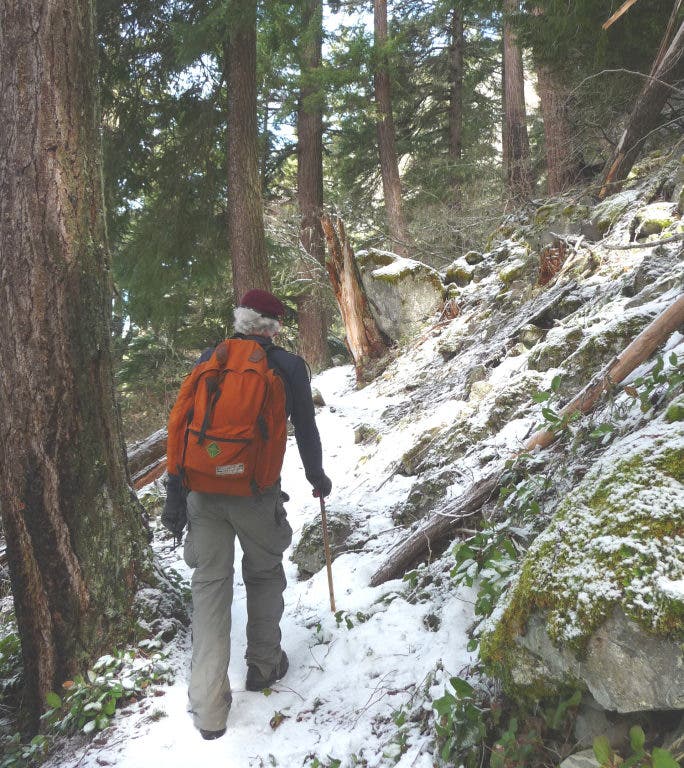


In April don’t find out the hard way that some popular trails may turn into snowshoe trips. It’s a good idea to be prepared for snow on many trails this spring though not all will require snowshoes. If you don’t want to carry snowshoes you can get by on many trails with sturdy boots, traction devices and trekking poles (some hikers prefer an ice axe). Some hikers call trails this time of year “snow-line probers” and prepare accordingly.
Winter storms have damaged some trails near Enumclaw including nearby Skookum Falls; other lowland favorites are inaccessible due to snowed-in access roads. Note that some trails may require a Sno-Park permit until mid-April.
Meanwhile let the Moss Lake Nature Trail and/or Snoquera Falls come to the rescue. Since nobody knew the condition of the Snoquera Falls trail, we opted to check it out and left snowshoes behind. We did carry traction devices and ice axes (trekking poles will suffice though).
In late March, a glance at the foothills bordering State Route 410 confirmed what we suspected; we’d be hiking in snow at least part of the way. Luckily, Camp Sheppard where the hike begins was ploughed and accessible to passenger cars.
Camp Sheppard is managed by the Boy Scouts of America; however the trail is on Forest Service land and requires a Northwest Forest Pass. The trail is well signed and begins near the restrooms. Bypass the spur to the Moss Lake Nature Trail (unless you prefer to hike that first). Just past the connection to the Moss Lake Nature Trail, the trail skirts an amphitheater and begins to climb.
Though there were bare patches of ground most of the trail was covered with a combination of crunchy snow and ice. My traction devices came in handy; my partner’s boots had better tread and he was able to hike without traction devices.
This is a mostly forested trail with a couple of peeks at foothills across the way as the trail climbs through an appealing setting of evergreens, moss, ferns and lichens. Interspersed with evergreens are collections of vine maple, an indication the trail makes a good fall-color hike as well as a spring and summer hike.
At the next designated junction stay left. The trail (right) is a continuation of the White River Trail No. 1199 a long trail that extends to the Corral Pass Road.
Later in spring look for the twinkle of tiny Calypso orchids beside the trail. A little later you will also find trilliums and vanilla leaf in bloom. In March the trail was still dressed for winter, the only color the burnt umber and burnt sienna bark of Douglas firs and Western red cedars amidst the greenery.
A couple of small trees had fallen across the trail; neither presented a problem in stepping over or hiking around. As the trail climbs boulders with dollops of moss break the flow of evergreens and as we approached the final switchbacks, I recognized particular trees from previous visits and was sure we’d get to the falls. However, hopes were dashed when we turned a corner and came to a jumble of snow, tree limbs and boulders where a rockslide (or avalanche) had come down. It appears the landslide took out a piece of the trail where it crosses Snoquera Creek below the waterfall.
We could see the trail continuing on the other side of the creek but after a few tentative steps on the unstable terrain we turned around. There was just enough snow covering the debris to risk spraining an ankle or worse. We also couldn’t see how much snow was above us so thought it best to settle for a partial view of the waterfall. In March, Snoquera Falls was merely a trickle and not the powerful display that occurs later in spring from snowmelt.
We suggest you wait until later this spring and/or get an up-to-date report on the condition of the trail before giving it a try. When the snow is gone it should be safe to hike to the waterfall after the landslide settles a bit or the trail repaired. After crossing the creek a rough spur climbs closer to the waterfall but it is steep and subject to rock-fall from surrounding cliffs. Proceed with caution. When it is safe to hike to Snoquera Falls you can also make a loop back down to Camp Sheppard - study the map for details.
When you can’t safely get to Snoquera Falls, the Moss Lake Nature Trail is a sweet consolation prize. It’s a nice trail that is a nice addition to any hike in the region. Numbered posts indicate this is an interpretive trail but in winter the interpretive signs are taken down. It’s fun to ponder what each numbered post describes – let your imagination run wild.
In March the Moss Lake Nature Trail was still partially snow-covered but easy to follow through a luxurious tapestry of old-growth Western red cedar, Douglas firs and marshes where russet willows cast a warm glow in contrast to solemn evergreens. Salmonberry, flowering currant and Indian Plum are budding and getting ready to leaf out. Here it feels like spring is just around the corner.
Getting there: From Enumclaw drive east on State Route 410 to Camp Sheppard Boy Scout Camp and facilities on the left side of SR 410, about 11 miles east of Greenwater (elevation about 2,400 feet). Though Camp Sheppard is managed by the Boy Scouts of America, a Northwest Forest Pass is required for hiking trails.
Trail data: It is about four miles round trip to Snoquera Falls with about 750-800 feet of elevation gain.
Map: Green Trails No. 238 Greenwater.
For additional information on this trail, others in the region and/or current conditions visit the Mount Baker Snoqualmie National Forest website at www.fs.fed.us/r6/mbs
Or call the Enumclaw Ranger District at 360-825-6585.