Community Corner
Trivia 2: Test Your Water IQ
Ahead of the free screening of Tapped this Saturday at 7 p.m. at Enumclaw High School, here are some questions about bottled water.


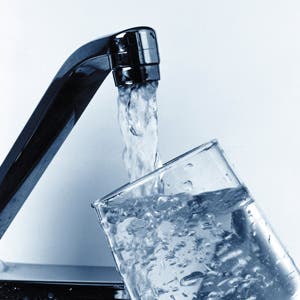
Austin Schuver is a 15-year-old Enumclaw High School student who has undertaken the impressive project of learning and informing others about the bottled water industry and its effects on the environment. He has organized a free screening of the documentary this Saturday, August 18 at the Enumclaw High School Auditorium, beginning at 7 p.m.
How much do you know about the water supply in Enumclaw as well as the issue of bottled water? (We'll post the answers in the comments Wednesday night.)
1. In 2011, the city of Enumclaw detected which substances in its water system:
Find out what's happening in Enumclawfor free with the latest updates from Patch.
a. Chlorine
b. Total Trihalomethane
Find out what's happening in Enumclawfor free with the latest updates from Patch.
c. Nitrate
d. Lead
e. Copper
f. All of the above
(Source: City of Enumclaw Water Utility)
2. True or False: All substances the city detected in 2011 were well below the highest level allowed by the Environmental Protection Agency.
(Source: City of Enumclaw Water Utility)
3. If harmful substances are found in your drinking water, your water utility is required to tell you within ______ if water quality standards are not met.
a. Immediately
b. 24 hours
c. 48 hours
d. Never. You have to check the local news.
(Source: Washington State Department of Health)
4. True or False: In the United States, the Food and Drug Administration regulates bottled drinking water while the Environmental Protection Agency regulates public drinking water including tap water.
(Source: FDA)
5. DEHP (a chemical known as a phthalate) is commonly used as a plasticizer in many products including plastic bottles for water. According to the EPA, chronic exposure to DEHP at levels above what the agency allows can cause damage to the liver and testes as well as reproductive effects. Both the EPA and FDA now have a maximum allowable standard of 0.006 mg/L for DEHP to be found in both tap water and bottled water. The EPA began regulating for DEHP in 1994. When did the FDA put the same standard to bottled water companies?
a. 1994
b. 1998
c. 2000
Get more local news delivered straight to your inbox. Sign up for free Patch newsletters and alerts.