Kids & Family
Shaming the Uncontrollable
We've removed physical barriers, but the stigma surrounding neurological disabilities remains a persistent injustice.


“Do you need what I need?
Boundaries overthrown
Look inside to each his own”
Find out what's happening in Fife Heightsfor free with the latest updates from Patch.
— Metallica, “Eye of the Beholder”
For finals week, my high school would transform the gym into a testing room, setting up rows of folding desktops. To prevent cheating, students would be assigned seats so that the rows to either side were taking a different test. Teachers would patrol the space between rows like guards in a maximum-security prison.
Find out what's happening in Fife Heightsfor free with the latest updates from Patch.
During one of these tests, I remember a strange noise echoing through the gym. Short and guttural, the sound repeated at increasingly frequent intervals. The teachers scrambled, trying to find the source so they could put an end to the hijinks. They eventually surrounded the student who was making the noise. Before anything could be said, another teacher intervened, and they all scattered.
I would later find out that the student's sounds were involuntary. They were tics resulting from Tourette's syndrome, "a neurological disorder that may cause sudden unwanted and uncontrolled rapid and repeated movements or vocal sounds.”
The school had failed this student by putting him in this situation. At the very least, the teachers proctoring the exams should have been made aware of his condition in advance and educated about his challenges. Even better, the test for his classes should have been scheduled in regular classrooms, where his tics would not have echoed through the vast space, disrupting other students and drawing unnecessary attention to him.
This lack of concern for a person with a disability came to mind as I heard the story of John Davidson, an advocate for those living with Tourette's syndrome. As the inspiration for a movie about Tourette's, he attended the televised British Academy Film Awards (BAFTA), where the film had been nominated. During the ceremony, Davidson's tics resulted in involuntary vocalizations, including racial obscenities, as two Black actors stood on stage.
Like the administrators at my high school, those producing the BAFTA awards failed Davidson. No contingency plans were in place to deal with the disruptions caused by his involuntary tics. Even worse, they were not edited out of the immediate rebroadcasts of the ceremony. What started as a celebration of Davidson's efforts to raise awareness for the Tourette's community ended up highlighting their hurdles in the worst possible way.
Although the tics are not something he can control, Davidson was put in a position where he had to apologize and explain that his words did not reflect his beliefs. Imagine a blind man having to express contrition for not being able to see or a man without legs forced to show remorse for slowing down the crowd.
While mistakes made in the moment can be seen as learning opportunities, attacks on Davidson in the aftermath are inexcusable. With time to learn and understand the nature of his condition, any condemnation of his involuntary words is an act of disability shaming.
As an example, a Medium.com columnist argued the following:
“It was over a month ago that Delroy Lindo and Michael B. Jordan were racially abused while presenting an award at the BAFTAs.
White Brits were quick to point out to those outraged by the humiliation of the highly distinguished African-American actors that the perpetrator had a neurological condition, which made it perfectly acceptable for him to say whatever he wanted.
I, like other Black folks, wasn’t swayed by this nonsense, safe in the knowledge that had Davidson used anti-Semitic words at the ceremony, there would have been high-profile resignations at the BBC.”
It is hard to say this author's viewpoint is misinformed, as he acknowledges the medical reality faced by Davidson. He then places the science aside to brand a disabled person as a "perpetrator," treating involuntary neurological symptoms as intentional speech. Davidson's medical condition removed choice from the equation, but the author still wants him held accountable and shames him for his disability.
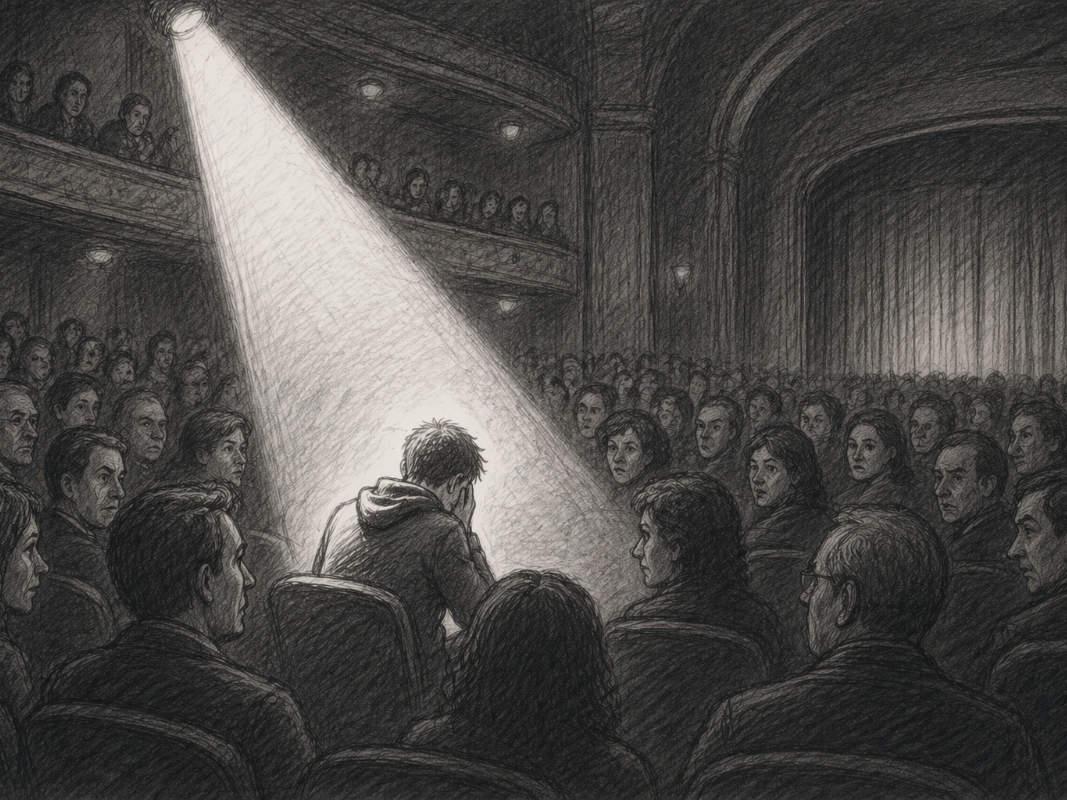
As a father of a daughter who has been diagnosed with Tourette’s alongside severe autism, I know that disability shaming can be a common occurrence. Our family has been shushed at plays and movies, and we’ve learned to ignore the stares and snide remarks from diners irritated by her tics and vocalizations.
There is a constant stress of determining where the line falls between the right of others to enjoy themselves and our determination to make sure my daughter is included. There have been cases where I have removed her from the environment because her behaviors were crossing the line into disruption. But some would draw that line further back to include her tics. Admittedly, these can be annoying (our family lives with them every day), but should they really mean she is banished from public life?
The alternative is to deprive my daughter of the experience of being included in society, returning to the old days when people with disabilities like hers were hidden from view. From the day I took on the responsibility of being her father, I have been determined to help her reach her full capabilities, and that includes the opportunity to attend public events.
I see your disability shaming and raise you one determined, unyielding father.
While we have a long way to go, society has done an increasingly better job of ensuring that the physically disabled have equal access to public buildings. The passage of the Americans with Disabilities Act (ADA) ensured that physical barriers were removed. We have far more work to do when it comes to neurological disabilities, especially those whose symptoms are considered disruptive. It is easy to build a ramp, but harder to end shaming by those who lack empathy for what others are going through.
Change begins when we refuse to hide, and I intend to make sure my daughter is seen.
Carl Petersen is a former Green Party candidate for the LAUSD School Board and a longtime advocate for public education and special needs families. Now based in Washington State, he writes about politics, culture, and their intersections at TheDifrntDrmr.