Arts & Entertainment
The Songs We Loved…and the Harm We Ignored
A look at the hits we embraced, the harm they normalized, and what that says about us.


“You all know it's wrong, but you're singing along.”
- Five Finger Death Punch, “AfterLife”
Comedian Dustin Nickerson has a bit where he looks at the Looney Tunes from today's point of view. As good comedy does, he gets his laughs by making the audience uncomfortable. Children now are learning empathy from Bluey; what were we getting out of the hijinks of Bugs Bunny and his famously chaotic co-stars?
Find out what's happening in Fife Heightsfor free with the latest updates from Patch.
Did spending our Saturday mornings laughing at the speech impediments of Porky Pig, Tweety Bird, and Elmer Fudd permit us to do the same to disabled students on the playground? How many boys learned that “no” doesn't always mean no through the lessons of Pepe Le Pew? How many young girls were conditioned to believe that this type of behavior was a normal part of life; that it was acceptable for them to be sexually harassed?
Find out what's happening in Fife Heightsfor free with the latest updates from Patch.
Nickerson’s bit turned my thoughts to the music I listened to after I outgrew Saturday morning cartoons. Driven by the success of MTV, the eighties were a unique time in music history, when Madonna coexisted on the charts with Mötley Crüe. The era had its share of throwaway songs, but also produced tracks that would stand the test of time. For every “Hey Mickey,” there’s “Everybody Wants to Rule the World,” which still pulls in roughly 1.18 million daily streams.
Then there are the songs that should have been retired long ago, the ones that get rotated into your playlist and make you say, “What were they thinking?”
“You want me to fix up lyrics while our president gets his dick sucked?”
- Eminem, “Who Knew”
There was a group of Washington Wives who tried to use their husbands' political power to implement a plan to police lyrics, but their efforts said more about their personal hangups than a real concern about songs that propagated harmful societal norms. Three songs on the PMRC’s "Filthy 15" list were there because of their references to female masturbation: Prince’s “Darling Nikki,” Vanity’s “Strap On ‘Robbie Baby’,” and Cyndi Lauper's “She Bop.” Prince’s second entry on the list, “Sugar Walls,” is a reference to the lining of female genitalia, though the reference would have been lost on most children.
It is hard to understand why W.A.S.P.’s Animal (Fuck Like a Beast) would need a warning label, as its title seems to tell you all you need to know, but this song is also on the PMRC’s list. Its inclusion is bewildering because the song was not included on the initial domestic version of the album. While the band had a considerable cult following, they were not exactly burning up the charts. Mercyful Fate (“Into the Coven”) and Venom (“Possessed”) were even more obscure.
The most obscene part of the PMRC’s list was the inclusion of Twisted Sister’s “We’re Not Gonna Take It.” While the song was described by the group as containing “violence,” the closest the lyrics come to this description is “We’ll fight the powers that be.” Questioning those in power is essential for a functioning democracy and should be celebrated, not labeled as potentially harmful.
“And freedom is the reason
You can’t take it without a fight.”
- Anthrax, “Startin’ Up A Posse”
It would be unfair to judge older songs based on today's standards. As a society, we have become more cognizant of the harm words can inflict and have relegated many to the trash heap, replacing them with euphemisms like “the n-word” or “the r-word.” But songwriters do not have the luxury of retrofitting what has already been recorded.
This is especially true with songs that are meant to tell the story of a character, like the working-class protagonist in Dire Straits’ “Money For Nothing.” During the 80s, it would have been commonplace for someone from this social group to use a homophobic slur as an insult, yet stations on Sirius will remove those references when playing the song today. This is like removing the use of the n-word from Huckleberry Finn; it makes the artistic work conform to today’s standards but sanitizes our past.
Lyrics also need to be judged in context. For example, when a lyric includes “Why the fuck do you hate?”, it is obvious that the writer abhors racism. But in the original release of the song “Keep It In the Family,” Anthrax also used both the n-word and a slur directed at Jewish people in a way that was meant to condemn their use as hateful language. As times have changed, they have revised that lyric to say “When to you blacks are targets and in your sights.” This makes sense in today’s environment, but they should not be condemned for their original presentation.
But the same consideration should not be given when lyrics are used to condone actions that cause harm. These next examples move beyond questions of language entirely and fall squarely into the category of What Were They Thinking?:
Seventeen - Winger
“Daddy says she's too young
But she's old enough for me.”
Kip Winger was about 27 when this song was released, so this wasn’t a case of a brand‑new adult being “brought…to the floor” by a girlfriend just a few months younger than him. This song is describing conduct that is illegal in some states and indefensible in all of them. The problem isn’t outdated slang; it’s the normalization of predatory behavior.
I Want Action - Poison
“If I can't have her, I'll take her and make her.”
That’s not innuendo; it’s a description of sexual assault. Setting it to the tune of a party anthem only amplifies the harm.
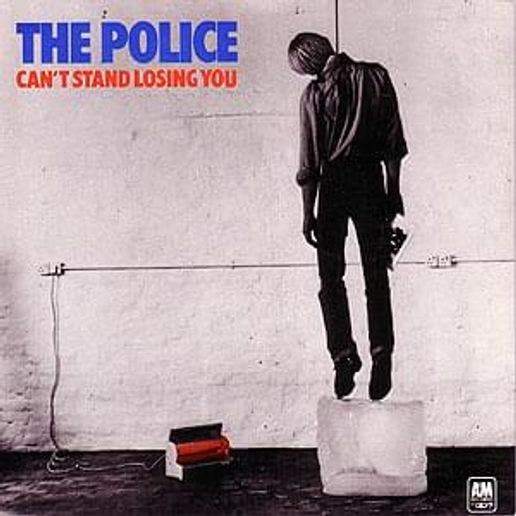
Can’t Stand Losing You - The Police
“I guess you’d call it suicide
But I’m too full to swallow my pride.”
Between 1970 and 1978, the suicide rate for young people aged 15 to 24 jumped by 41%, accounting for over 5,100 deaths in the year this song was released. It was the second most common cause of death for college students and young adults. Making light of suicide over the loss of a relationship was, at best, irresponsible. In a song awash in dark humor, it was reckless.
But the real problem wasn’t that the artists created them; we live in a free society where people should feel free to create without outside interference. The real tragedy is that they became hits; that we bought them even though they were normalizing harm. VH1 even ranked “Seventeen” in its list of the 100 Greatest Hard Rock Songs. That says more about us than it does about the artists.
What were WE thinking?
Carl Petersen is a former Green Party candidate for the LAUSD School Board and a longtime advocate for public education and special needs families. Now based in Washington State, he writes about politics, culture, and their intersections at TheDifrntDrmr.