Community Corner
Speed Cushions Coming to Local Neighborhood
Residents hope the three temporary cushions will help slow down drivers cruising through their neighborhood.

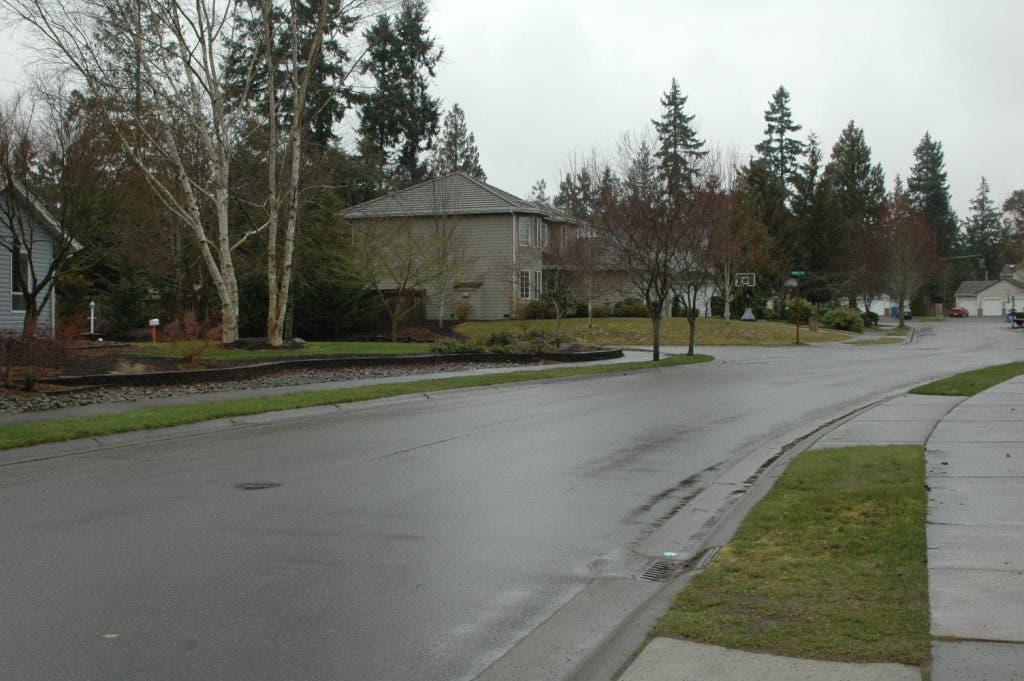

Local residents are taking action to make their neighborhood a safer place, and they hope speed cushions will be the solution.
The has approved to allow three temporary speed cushions built within the neighborhood on Schoolhouse Avenue, Roby Street and Beardsley Avenue by Gig Harbor High School off Rosedale Street Northwest.
Speed cushions are different from speed bumps in that they have spaces in between. While regular vehicles would have to slow down to drive over the cushions, the spaces are placed wide enough that it wouldn't be an obstacle for emergency vehicles.
Find out what's happening in Gig Harborfor free with the latest updates from Patch.
“The way the city installs speed cushions, we are still able to respond without delay,” said Penny Hulse, Prevention Division Chief at the . “If you travel around the area, you will see speed bumps in varying style throughout the community.”
Stephanie Dry, who has lived in the neighborhood for a year and a half, approached the city officials with her concerns in August 2010. The speed limit for the area is 25 mph, but she said drivers were speeding through the neighborhood, making it unsafe for children and residents.
Find out what's happening in Gig Harborfor free with the latest updates from Patch.
In October 2010, the City of Gig Harbor gathered data on Beardsley Avenue by installing counters. The data showed that there was a high volume of people using the road during school hours.
“The data didn’t indicate there was a huge speeding issue,” said Emily Appleton, the city's senior engineer. “The problem is it is a local, smaller neighborhood street.”
The city then asked the to enforce the area as much as possible to try to help with the concerns. Meanwhile, the city continued to work with the neighborhood to try to find a resolution, said Appleton.
“It is a public road, and you can’t quite stop people from driving through it,” said Appleton.
The city came up with the plan to put temporary speed cushions in three designated areas in the neighborhood.
Before the city could install the speed cushions, Appleton asked Dry to have residents sign a petition to show they were in support of the idea. And to make sure no one could protest, said Appleton.
Dry and neighbor Katrin Dietz went door-to-door and gathered 29 signatures from residents.
“As we went around and got signatures there was people who were skeptical, but there were a lot in support,” said Dietz. “Some had good ideas on ways to make the neighborhood safer.”
Dry and Dietz also learned that other residents tried to do something about the issue 10 years ago. However, nothing became of it, and the problem was never resolved.
“There has been a problem for a long time, and I haven’t experienced even a quarter of what other residents have,” Dry said.
Dry and Dietz said they simply want people to slow down in the neighborhood and be cautious of their surroundings. Dry said she sees people driving through her neighborhood on their cell phones and not paying attention. She also put out a “Watch for Children” sign, which people have used it for target practice.
“We would try to tell people to slow down when our children were outside, and they would flip us off and speed up,” Dry said. “We just want to make this a safe neighborhood again.”
Drivers in the neighborhood have crashed into mailboxes and light poles, said Dry. One neighbor told Dry that he had to put trees in his lawn so that people would stop driving over it when they turned the corner.
"If we can’t stop the traffic, we can at least slow them down with the speed cushions," said Dry.
Despite community efforts, not every resident thinks the speed cushions will solve the problem.
Steve Bay said he signed the petition reluctantly.
Bay, who has lived in the neighborhood for two and a half years, said he's used to having traffic backed up to his driveway on Schoolhouse Avenue.
"It is expected to be busy on this road since it is by a high school and elementary school," Bay said. "I see the speed cushions to be more of a nuisance than helping."
According to Appleton, the temporary speed cushions will be installed as soon as there is a window of dry, warm weather. She said the asphalt needs to be a certain temperature to install the cushions, which will take a few days.
Meanwhile, Appleton is putting together a policy that all the Gig Harbor neighborhoods can use.
“I don’t want the policy to be just for one neighborhood,” said Appleton. “I want to have a consistent approach to all neighborhoods that have a problem.”
Appleton plans to look at surrounding areas that have successful policies to see if they can apply them to Gig Harbor. Consistency and transparency is important in creating the policy that way people know their options, said Appleton.
Get more local news delivered straight to your inbox. Sign up for free Patch newsletters and alerts.