Politics & Government
Complete Streets: Intelligent Design for Road Planners
Kirkland and Redmond have completed several projects that make city roadways friendlier to bicycles and pedestrians.
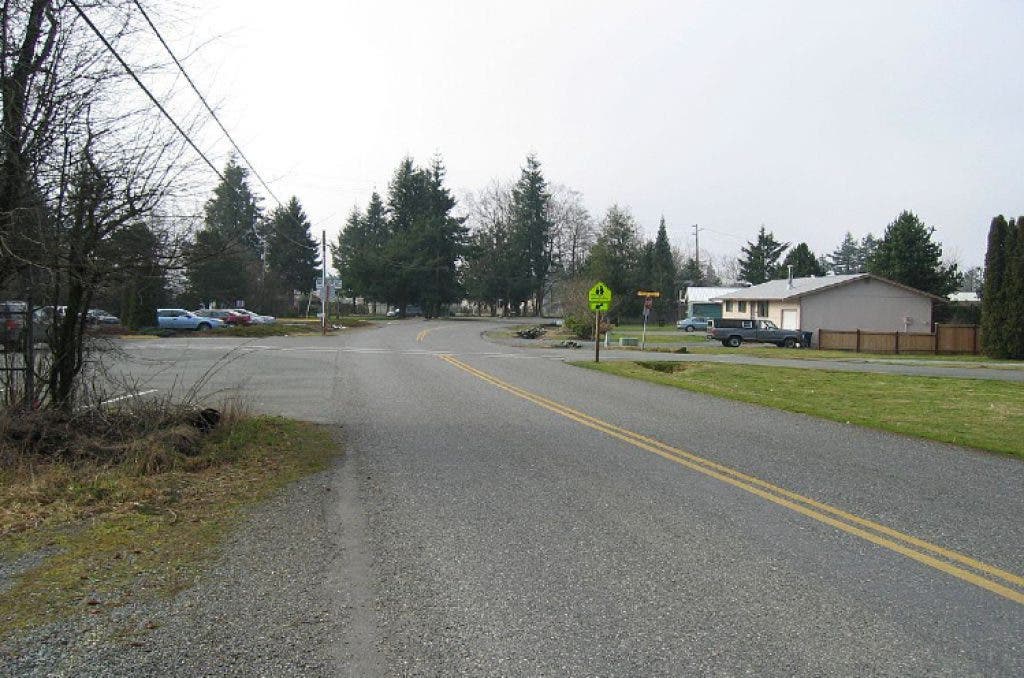
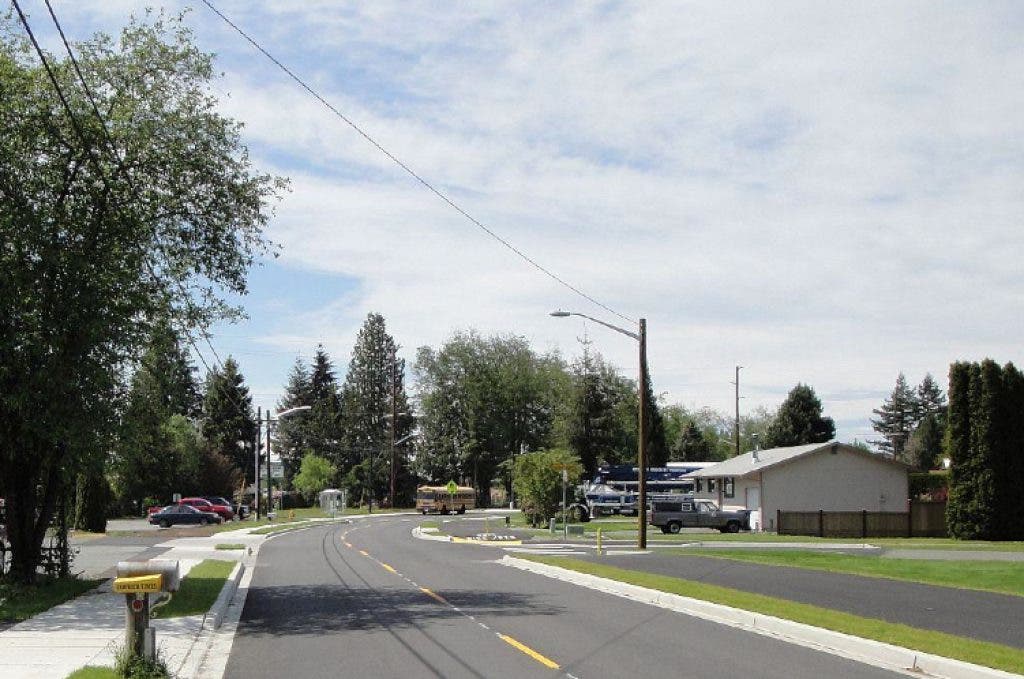
Kirkland was the first city in Washington to adopt a “Complete Streets” ordinance. Redmond has Complete Streets. Issaquah and Tukwila do, too. Four of the state’s largest cities — Seattle, Spokane, Tacoma and Everett — all have some sort of Complete Streets legislation or ordinance or design guidance. And smaller communities such as Airway Heights, University Place and Sedro-Woolley also have something in place.
Pierce County jumped on the Complete Streets bandwagon early, urged by the county health department, and King County has a model plan that is being held up nationally as an example.
You might be raising your eyebrow like Mr. Spock and asking, What is this Complete Streets you speak of? Well, you don’t have to be from Vulcan (the “Star Trek” world, not the Paul Allen company) to be in the dark about this, as it’s a recent concept in transportation project planning.
Find out what's happening in Kirklandfor free with the latest updates from Patch.
Olympia legislators have two Complete Streets-related bills in their final stages right now, so I thought it would be a good time to describe this growing trend in road design that can so affect urban or suburban bicyclists.
Simply, it is a transportation design concept that directs road planners to “take into account the needs of everyone who will be using that road,” says Barbara McCann, executive director of the Washington, D.C.-based National Complete Streets Coalition. The list includes pedestrians, cyclists, mass-transit users and, yes, those big, four-wheeled metal things with internal-combustion engines.
Find out what's happening in Kirklandfor free with the latest updates from Patch.
Currently, 23 states and 151 cities have some sort of policies enacted, and McCann says there has been “tremendous growth” recently. “We’ve pretty much doubled the number of policies being adopted annually over the last four or five years.”
Holistic Design
McCann, who grew up in Burien, describes the old way versus the new.
“It’s really very common in the U.S. for road projects to be planned to move automobiles, and at the end of the process, the agency will have a public meeting to tell the public what they want to do,” she says. “The public will say, wait a minute, there’s a school on one side of the road and a housing project on the other, and you haven’t done anything to help kids get to that school.” Often, at that point in the design process, “it’s too late.”
However, she says, “once an agency takes a Complete Streets approach, it really isn’t an additive process. It’s not that they design a road for cars, and then they tack on sidewalks. They make an assessment of primary use of that roadway corridor, and maybe in some places the road will be designed more for pedestrians and bicycle users, and other roads will maintain their more automobile perspective.”
A common misconception is that designing a Complete Streets project costs more.
“It’s really about taking your existing transportation resources and reprioritizing those resources so that you’re thinking about the needs of all users,” she says.
The most high-profile projects are big arterial roads that move a ton of traffic, and McCann admits that those are often in need of a Complete Streets approach, often because that’s where the public transportation is also moving.
But, she says, “about one-third of areas that have enacted the policies are in small towns. A lot of places see it as a way to help revitalize their community. It gets converged with main street projects, where they’re trying to create a sense of place in small town downtown.”
Local examples
Sedro-Wooley, the Skagit County town with about 10,000 residents, is one such smaller community that has implemented Complete Streets. After enacting an ordinance in 2010, it has improved access along a number of roads, adding curbs and sidewalks, and increasing safety at the entries to Evergreen Elementary School.
Redmond has been working on Complete Streets projects since passing an ordinance in 2007, explains Tessa Gregor, principal planner for the Cascade Bicycle Club, which worked with the Transportation Choices Coalition to assist the city.
One project, on 150th Avenue Northeast, restriped the road to include a bike lane north of Northeast 40th Street. Another added a new street and bridge on Northeast 36th Street to improve access to all users, including a connection to the state Route 520 Bike Trail.
A third project created a “rechannelized” roadway into downtown Redmond, sometimes called a “road diet,” that reduced Northeast 85th Street from four lanes to three and provided parking on both sides from 154th Avenue Northeast to 164th.
Upcoming is a rechannelization of 164th to add bike lanes and reduce the number of vehicle lanes from four to three. The last leg in a continuous bike lane corridor through downtown will be accomplished with an extension of 161st Avenue Northeast, now under construction. It will also enhance the pedestrian experience and provide better access to the city’s Downtown Transit Center.
Reasons for Growth
There are many reasons why a city should enact Complete Streets, says McCann, among them economic revitalization and livable communities. But safety is the argument that often trumps all others. Sidewalks at school entries and bike lanes that don’t disappear are good examples.
“We know that incomplete streets are not safe. There’s just tons and tons of research that shows that a lot of the treatments that are used to make roads safer for multiple users make the roads safer for motorists.”
Safety is an easier sell, too. “The transportation departments generally agree that safety is something they care about,” she says.
The health angle is another big selling point. “The public health community has really stepped up and is working on Complete Streets policies throughout the country,” says McCann.
King County last year received federal money through a program called Communities Putting Prevention to Work that helps fund projects that increase residents’ nutrition and physical activity, and that includes putting in bike paths and sidewalks.
An Engineering Challenge
Another constituency that has become a supporter of Complete Streets are the engineers, McCann says. “Once they understand the community priorities, they really roll up their sleeves and figure out how to make it happen safely.”
Resistance comes from transportation planners who are skeptical that they will be able to move as much traffic as smoothly and quickly, she says, but again it’s a problem of seeing the situation differently. “If we provide people with more transportation options, and we start to get people out of their automobiles, you make it easier for the drivers.”
Such eventual benefits might not be immediately evident.
“Something like a quarter of all trips in urban areas are less than a mile, and most of those trips are made in automobiles,” she says.
The necessity of using your car might be greater in suburban areas. “On many suburban roads, the designs really tell drivers it’s just for them,” she explains. “No sidewalk, lanes are wide, roads are straight. It pretty much says, go fast.” So when you see a pedestrian darting across the road to catch a bus, or a cyclist along the edge of the lane, “drivers think, what are you doing there?”
But in roads designed as Complete Streets, there are more visual cues that say share the road, and drivers get used to it.
“The intent,” she says, “is to create a comfortable experience for everyone using that road.”
Get Involved: Redesign Shoreline
Here’s your chance to help build Complete Streets. On Thursday, April 20, the city of Shoreline is holding a transportation master plan open house, and residents are invited to provide input on the draft bicycle and pedestrian system plans.
For more information about Shoreline's Transportation Master Plan or the open house, visitwww.shorelinewa.gov or contact Alicia McIntire, senior transportation planner, at 206-801-2483 oramcintire@shorelinewa.gov.
Bill Thorness is the author of Biking Puget Sound: 50 Rides from Olympia to the San Juans. Contact him at bill@bikingpugetsound.com.