Schools
Clover Park School Board Votes Down Mastery-Style Learning
Amendment would eliminate grade levels, allowing students to accelerate their rate of learning. Board members expressed concern over rushing into a vote—and rushing teens along.
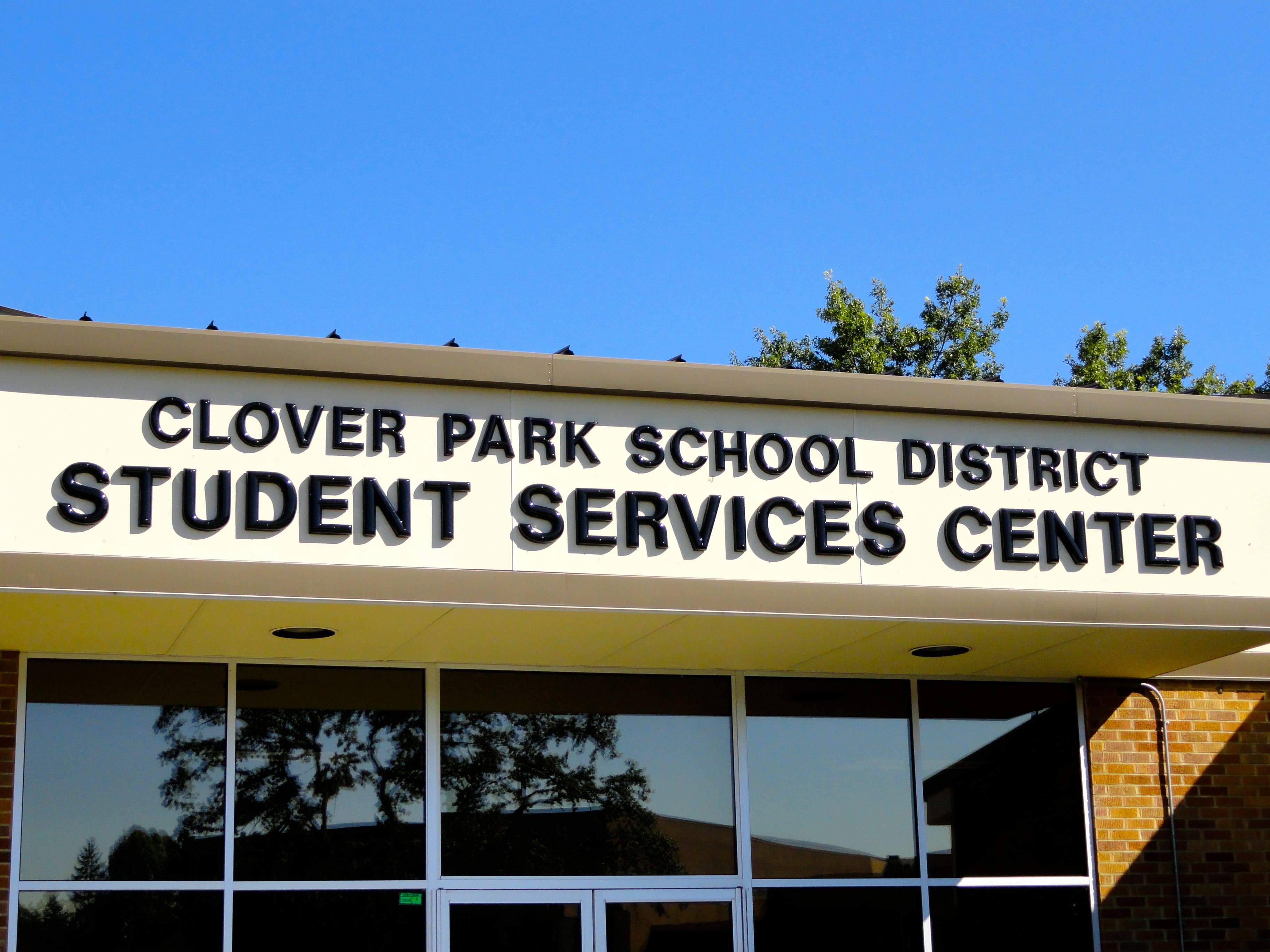
A controversial idea to get rid of grade levels to allow students to accelerate their rate of learning sparked a lively debate at the Clover Park School Board’s meeting Monday night.
A proposed amendment to the Washington State School Directors Association’s position relating to standards based education was introduced on the board’s individual-action agenda. The board voted down the amendment 3-1. Director Joe Vlaming was absent.
The ideas are supported by , who, in the past, has expressed a desire to emphasize subject mastery over grade level progression to ensure the best value for students and their educational dollars.
Find out what's happening in Lakewood-JBLMfor free with the latest updates from Patch.
(Click to read about Wagemann's thoughts in a story published by Patch.)
The amendment states that “students currently spend 180 days at each grade level and then move on to the next grade level until age 21 or when graduation requirements are met.” Therefore, through WSSDA’s promotion of “mastery of the required subject matter, students could accelerate their learning and use the educational savings to augment post-secondary learning allowing students to become integrated into careers or training sooner.”
Find out what's happening in Lakewood-JBLMfor free with the latest updates from Patch.
Wagemann said that some students simply do not enjoy school, and “We can allow them to get through this thing and get on with their life.”
He added, “Certainly, the system we have in place right now is not serving all.”
The dissenting board members shared a concern about moving the amendment forward too soon and without the proper amount of research.
Board Vice President said that she does not hear from many parents who think that their children are being held back. She also expressed a belief that teenagers have a certain window of time when they are able to be high-school students.
“I’m all for rigor, but to move them out before the world is ready for them—or they are ready for the world—is not a place I think we should be,” she said.
Board President said that he appreciates “forward thinking,” but also felt that in talking about the cost of educating a student, “It’s a nice general term. It may cost more to educate one student than another.”
Superintendent Debbie LeBeau said that the district does offer some accelerated learning opportunities, citing a few middle-school students who are taking math at the high-school level. She also said that there are some sixth- and seventh-graders ready to take algebra, which is traditionally taken in ninth or 10th grade.
Regarding the idea of emphasizing mastery, she said, “This is something you couldn’t do overnight by any means.”
Director Marty Schafer felt similarly. He said he would not feel comfortable endorsing such an amendment without a good six months of research.
“There’s no way to roll up my sleeves and investigate this,” he said of making a decision Monday night. “And I think this warrants it.”
Wagemann disagreed, saying that he prefers to be “ahead of the paradigm instead of sucked into it.”
Also on the agenda
Also Monday night, Deputy Superintendent Keith Rittel gave a report on the status of the district’s two Department of Defense Education Activity (DoDEA) Grants.
DoDEA I, which promotes student achievement, will expire in September 2012. Fifteen CPSD schools are supported by the $2 million grant, including the six elementary schools on Joint Base Lewis-McChord, and .
The grant’s focus areas include improving math and reading through expanded assessments and teacher training; using data to inform instruction; college-test preparation and family involvement; and an online-learning program for military students on JBLM.
DoDEA II, called an invitational grant, is worth $1.4 million, and ends in September 2013. It focuses on improving math and science using technology and training math and science teachers to “infuse” technology at Lakes, Mann and .
“Our plan was never to take teachers of technology and make them math and science teachers,” Rittel said. “Rather, we wanted to take math and science teachers and make them more adept at technology.”
Both grants require quarterly tracking of the impact of student achievement and a comprehensive annual report.
Rittel said the DoDEA has been pleased with the district’s performance on both, and it has approached officials about applying for additional grants.
“(But) there are only so many grants we can handle in a given time,” he said. “We’re very happy with the financial support we have received.”
Still, he said, they may ask the board to support grant applications in the future.