Schools
CPSD Continues Adding to Its Ranks of National Board Certified Teachers
17 teachers celebrate being newly certified, and for good reason: the three-year process is long and challenging.
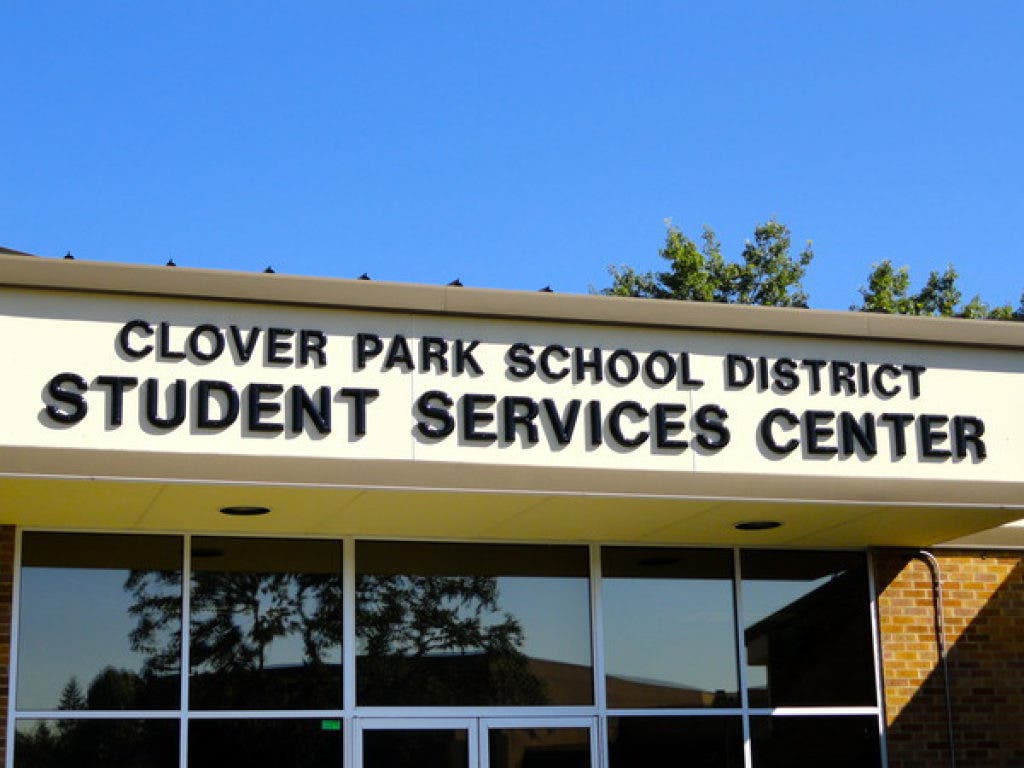
As employees in the head to Christmas break, 17 educators have already received a priceless holiday gift: National Board Certification.
The latest addition to the district's 90-plus NBCT means that an average of one in eight CPSD teachers is certified. The certification is an advanced teaching credential that complements a state teaching license.
Teachers must meet high and rigorous standards set by the National Board for Professional Teaching Standards. The program started 23 years ago and is patterned on the concept of standards for doctors and lawyers.
Find out what's happening in Lakewood-JBLMfor free with the latest updates from Patch.
Jan Lonsway, supervisor of professional development for CPSD, said research shows students in the class of a NBCT get the equivalent of an extra three months of school in one year.
“It’s hard work, it’s challenging, and it’s giving high standards to our profession,” she said.
Find out what's happening in Lakewood-JBLMfor free with the latest updates from Patch.
Matters of principle
Among the National Board principles are that teachers are committed to students and their teaching; teachers are members of teaching communities; and teachers think systematically about their practice and learn from experience.
Washington has more than certified 5,000 teachers, the fourth most in the nation.
“We were late to get into the game, but once we did, we really took over,” Lonsway said.
CPSD launched its program in 2006. Prior to that, teachers could seek out certification from local universities on their own. Eight teachers passed that first year, and in 2008, the program began to skyrocket. Between 50 and 60 percent of the district’s teachers pass every year.
“We are blessed in this district because we have a superintendent who devotes resources to the program,” Lonsway said.
However, she added, Washington ranks districts with raw numbers, which means that CPSD does not get the credit it deserves.
“Tacoma is, what, three times bigger that we are, and they have just a few more NBCTs, so they get to have that No. 5 spot,” she said. “But if you do it percentage wise, we would be up there.”
To seek certification, a teacher must have a bachelor’s degree; have completed three full years of K-12 teaching or counseling; and possess a valid state teaching or counseling license. Certification is valid for 10 years; renewal candidates must begin the process during their eighth or ninth year teaching.
Superintendent Debbie LeBeau said the teachers’ commitment is especially inspiring. While speaking with a teacher from who recently completed her recertification, she commended her for finishing on top of everything else she has to do on a day-to-day basis.
“I said, ‘I don’t know how you did that!’ ” LeBeau said. “People are just driven to do this. They love working with kids, and they love to learn and grow, and that doesn’t diminish over time.”
A serious committment
Shelley Heinzman, an English Language Learners teacher at , became certified in 2005. She said that financial support from CPSD, OSPI and Washington Mutual Bank enabled her to pursue the opportunity through Pacific Lutheran University.
When she began the process, the district’s support was mainly financial, but now, “There is a much stronger, more cohesive, more organized network of support from our district,” Heinzman said.
“The difference between then and now is night and day.”
In addition to having Lonsway to facilitate the program, CPSD teachers meet once or twice a month for three-hour sessions where they read and critique each other’s work. The program takes about 400 hours to complete.
CPSD also participates in a federal grant program that subsidizes most of the cost of Take 1, which gives teachers the chance to complete one of the four required portfolio entries — and bank the score.
“It’s a way to taste it before you jump in all the way,” Lonsway said.
Jumping in eventually isn’t optional — teachers must receive their National Board or ProTeach certification within five years; otherwise, their job could be in jeopardy.
“Before, all you had to do was get a four-year degree, and then have yearly evaluations,” Lonsway said. “You never had to show that you could really teach. Now, you have to offer up proof that you can impact student learning.”
National Board certification is a three-year process that includes compiling a 60- to 70-page portfolio of work and videotaping classes. It costs $2,500 to register, and $350 per retake of any of the 10 sections. But there is financial incentive: NBCTs during the 2011-12 school year earn an annual bonus of $5,090, and those who become certificated during the year receive $3,540. Teachers in “challenging schools” receive an additional bonus of up to $5,000.
LeBeau said recruiters make sure that job candidates are aware of CPSD’s support for the program.
“We’re proud of it,” she said. “I think it does help us stand out, and it gives people the idea that we’re working hard to improve teachers and keep quality teachers in our district.”
The program does not cost CPSD extra money because it is considered professional development.
“We have committed to this program, financially and philosophically,” Lonsway said.
In turn, LeBeau said that the NBCTs that come to CPSD from other states are “wonderful.”
“It’s kind of a stamp of approval,” she said. “You don’t know much about the university system for teachers in another state, so this helps give you a certain quality level.”
A powerful voice
Heinzman said that some people believe NBCTs are elitist, but she feels the opposite is true.
“They are committed to their students and to improving student achievement,” she said. “They are a powerful and compelling ‘voice’ for teachers across our state.
“Many NBCTs work toward school reform — but believe such reform should come primarily from accomplished teachers themselves, rather than from the outside.”
Synette Melluzzo, an assistant principal at , also certified in 2005 through PLU. Her daughter and son-in-law had become certified and in hearing of how much the process improved their teaching, she was inspired to look into it herself.
“The hard part was the sacrifices you make during the process,” she said. “To be successful, it takes your entire focus, which doesn’t leave much time for anything else.”
However, it was worth it, she said.
Since becoming certified, Melluzzo has changed her teaching practices. She constantly questions her approach and the way she handles instructing others – “I am always reflecting on what I do and say” – and she makes sure to listen to students.
“They have lots to tell us as teachers, if we just listen to them.”
It is that kind of willingness to evolve as an educator — and a person — that LeBeau appreciates.
While it is one thing for her, as superintendent, to say the district has great teachers, National Board results make a far bigger statement, she said.
“They could just take my word for it,” she said with a laugh, “but this is a wonderful thing.”