Arts & Entertainment
Leschi Hanging Drama Began and Ended in Lakewood
Boulder marker notes the tragedy of 1858.
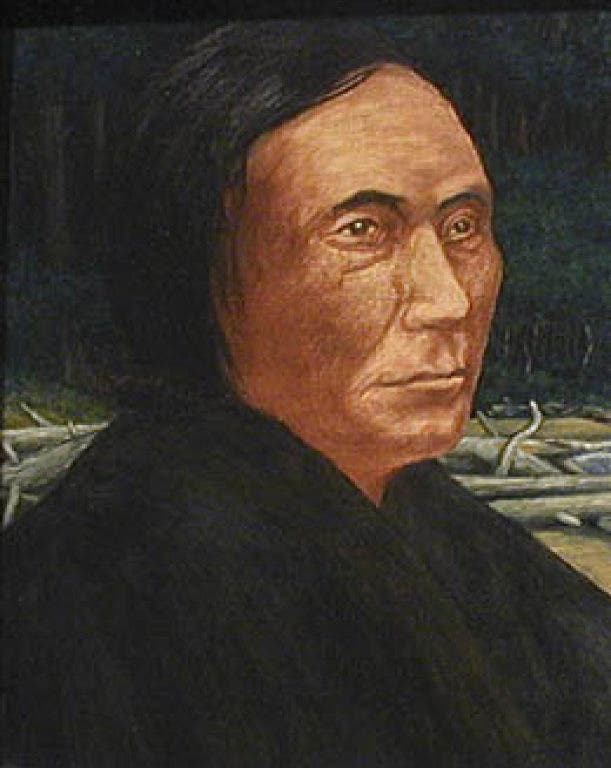
Chief Leshi, a prominent Nisqually Native American elder, played out his story in Lakewood.
South Puget Sound land in the 1850s was land in dispute. The British had already set up trading posts around the Pacific Northwest, and a growing number of American settlers were threatening that dominance, further squeezing out the Native American tribes that had lived here.
Something was bound to boil over, as the early years of pioneer settlement were filled with shifting alliances and mixed emotions, leading to the hanging of Leschi in Lakewood.
Find out what's happening in Lakewood-JBLMfor free with the latest updates from Patch.
The Medicine Creek Treaty of 1854 was meant to solve the issue with the establishment of tribal reservations. At least, that was the thought of Washington Territorial Governor Isaac Stevens. He boiler-plated a treaty and told tribal leaders to sign or face trouble. They signed with little understanding a reservation, among those signers was Leschi.
Although that is a matter of debate.
Find out what's happening in Lakewood-JBLMfor free with the latest updates from Patch.
The treaty established a 2-square-mile treaty in Thurston County for the Nisquallies that didn't include the main food supply for the tribe, namely the Nisqually River. Giving up access to land simply didn’t exist in Coastal tribe culture, so confusion and turmoil began shortly after the ink on the treaty dried.
Native American tribes were soon attacking homesteads and outposts. Settlers around the South Puget Sound rallied for safety at Fort Steilacoom, rather than take their chances at their farms.
Battles between Native Americans and Federal soldiers and local militias dotted the 1855 and 1856. Leschi was seen by Stevens as the main agitator and sought revenge. Stevens sought murder charges against him for the alleged murder of a militia commander, Col. Benton Moses during the conflict.
Leschi’s own nephew captured and turned him in for the reward money. A trial was set.
Many local settlers and even military officers of the day disputed the charges on two fronts. First, they argued that Leschi wasn’t even at the scene of the attack that left Moses dead. Second, any killing of a soldier during a war by an enemy could not, by definition be murder. War is soldiers killing other soldiers.
But the rules of war could not match politics. Even though a civilian trial at Fort Steilacoom could not reach a verdict, another one that could be described as rigged by today’s standards, found him guilty and sentenced to death by hanging.
The commander at Fort Steilacoom protested and sided with Leschi, his former adversary, as best he could. He refused to allow the gallows to be erected on Federal property since the trial was a territorial issue, not a military one. But the carpenters did their work just east of the fort in what is now the housing development along Steilacoom Boulevard and Hipkins Road.
A stone marker in the Thurderbird Parkway shopping center notes the location.
The day came on Feb. 19, 1858. Several hundred people gathered around the gallows. A few Nisquallies stood nearby, beating drums. His hangman, Charles Grainger, recalled:
"(Leschi) did not seem to be the least bit excited at all — nothing of the kind, and that is more than I could say for myself. In fact, Leschi seemed to be the coolest of any on the scaffold. He was in good flesh and had a firm step and mounted the scaffold without assistance, and as well as I did myself. I felt then I was hanging an innocent man, and I believe it yet."
Leschi made the sign of the cross over his chest, having converted to Christianity years prior. The noose went around his neck and the signal was given. Leschi died with a snap of his neck as the crowd watched. His body was given to the Nisquallies for burial. But his body would not rest long.
Leschi was reburied in 1895 on tribal land in Puyallup during a ceremony that drew more than 1,000 people. Among them was the noted pioneer Ezra Meeker, who had served on Leschi’s first trial and had voted to acquit him. He called Leschi, "a patriotic martyr to Steven's political ambition and ill-conceived policies."
History would side with Meeker. Washington legislators pardoned Leschi in 2004 and acknowledged the injustice with a resolution of exoneration.
"The Senate recognize Chief Leschi as a courageous leader whose sacrifice for his people is worthy of honor and respect and that the residents of the State of Washington solemnly remember Chief Leschi as a great and noble man,” stated the formal resolution.
A special court later that year formally found him innocent of the murder charge on the same legal ground outlined during his trial on 1858.