Community Corner
Kilauea Eruption A Reminder Of Deadly Pacific Northwest Volcanoes
Cities like Seattle, Tacoma, and Portland are in the shadow of active volcanoes like Mt. Rainier and Mt. Hood.


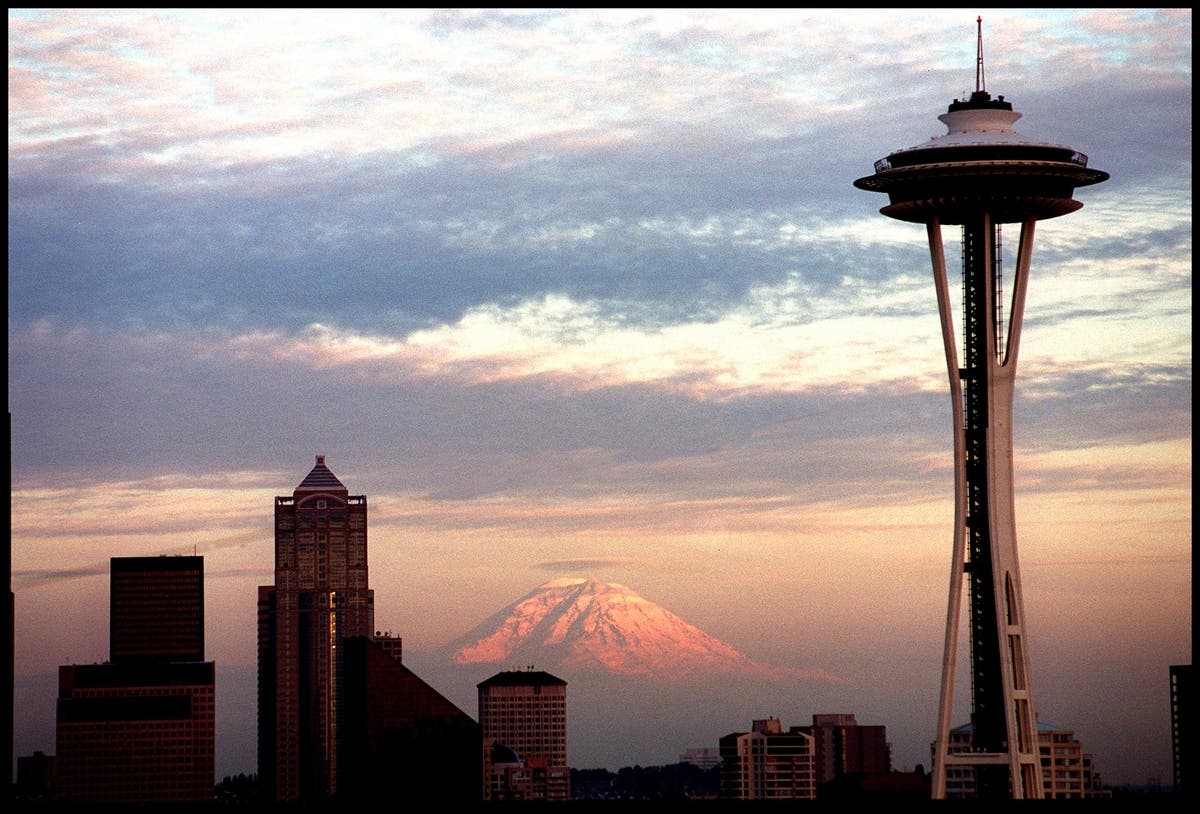
PUYALLUP, WA - At noon on the first Monday of each month, residents across Pierce County hear a familiar sound: a test of the lahar siren, which sounds like a fire truck with the volume turned up to 1,000. The siren is a reminder that nearby Mt. Rainier will erupt someday, sending a deadly flow of mud and debris down through the local valleys at up to 50 MPH.
The possible full eruption of Kilauea in Hawaii has renewed interest in the volcanoes of the Cascade Range, including Rainier, Mt. Hood, Mt. Baker, and the most recent to erupt, Mt. St. Helen's. Each one poses a threat to cities like Seattle and Portland due to ash clouds. Smaller cities like Puyallup and Tacoma are close enough that lahar flow and pyroclastic flow endanger hundreds of thousands of people.
There is no evidence that Kilauea might trigger volcanoes along the West Coast. But local volcanoes erupt about every 100 years, according to geologists - and it's important to know how these eruptions could damage the region.
Find out what's happening in Puyallupfor free with the latest updates from Patch.

The volcanoes
There are six active volcanoes in the Cascades between Portland and Bellingham. North to south they are: Mt. Baker, Glacier Peak, Mt. Rainier, Mt. Adams, Mt. St. Helens, and Mt. Hood. All are considered a "very high" threat except Mt. Adams, which is just a "high threat" to the region, according to the U.S. Geological Survey (USGS).
Find out what's happening in Puyallupfor free with the latest updates from Patch.
Rainier is the biggest local volcano, and looms over the most populated part of the Pacific Northwest. When Rainier erupts, it will spew ash into the air, and glaciers on top of the mountain will melt, sending lahar flow into river valleys - even as far as Puget Sound and the Tacoma area. The lahars will likely cause flooding up the Duwamish River, which flows through residential and industrial areas in Seattle, Tukwila, Kent, and Renton.
How will we know if a volcano is going to erupt?
The USGS-Cascades Volcano Observatory in Vancouver monitors activity at local volcanoes. It's unlikely a volcano would erupt with no warning. If the observatory detects activity inside one of the volcanoes - a swarm of earthquakes, for example - the volcano threat level will change. During normal times, the threat level is green for "normal." Depending on the severity of the threat, the color changes from yellow to orange to red.
"The ongoing unrest at Mount Rainier has evolved significantly during the past 12 hours prompting a rise in the alert level. Swarms of shallow (less than 2 miles below the summit) earthquakes have intensified in duration and in number of events per hour. Continuous GPS instruments on the volcano’s flanks are now clearly recording a slow inflation," reads a sample warning that the observatory might issue.
What will happen in the event of an eruption?
Pacific Northwest volcanoes are different than ones in Hawaii like Kilauea. For example, magma produced by our volcanoes will stay close to the eruption source - you won't see it bubbling along local streets swallowing cars.
Our volcanoes produce plenty of hazards, however: lahars, landslides, pyroclastic flow, an enormous ash cloud, and acid rain. Winds can carry an ash cloud thousands of miles, hindering air travel and clogging streets and engines with fine sediment.
What should you do if a volcano erupts?
If you live in the path of a lahar, the lahar siren will be your cue to get to higher ground - anywhere between 50 and 1,000 feet. Some cities near Mt. Rainier, like Enumclaw, are high enough that lahar flow should not be an issue.
The state Emergency Management Division has put together a helpful guide on how to survive a volcano in in the Pacific Northwest.
And it's never a bad time to review your emergency plan: according to the Pacific Northwest Seismic Network, there have been dozens of small earthquakes recently under the top of Mt. St. Helens.
The Cascades Volcano Observatory recently released an alert about the activity. The earthquakes are normal, according to the observatory, and there's no eminent threat of an eruption - at least for now.
Photo via Getty Images
Get more local news delivered straight to your inbox. Sign up for free Patch newsletters and alerts.