Community Corner
After Showdown With Bear, Woodinville Woman Warns 'Be Vigilant'
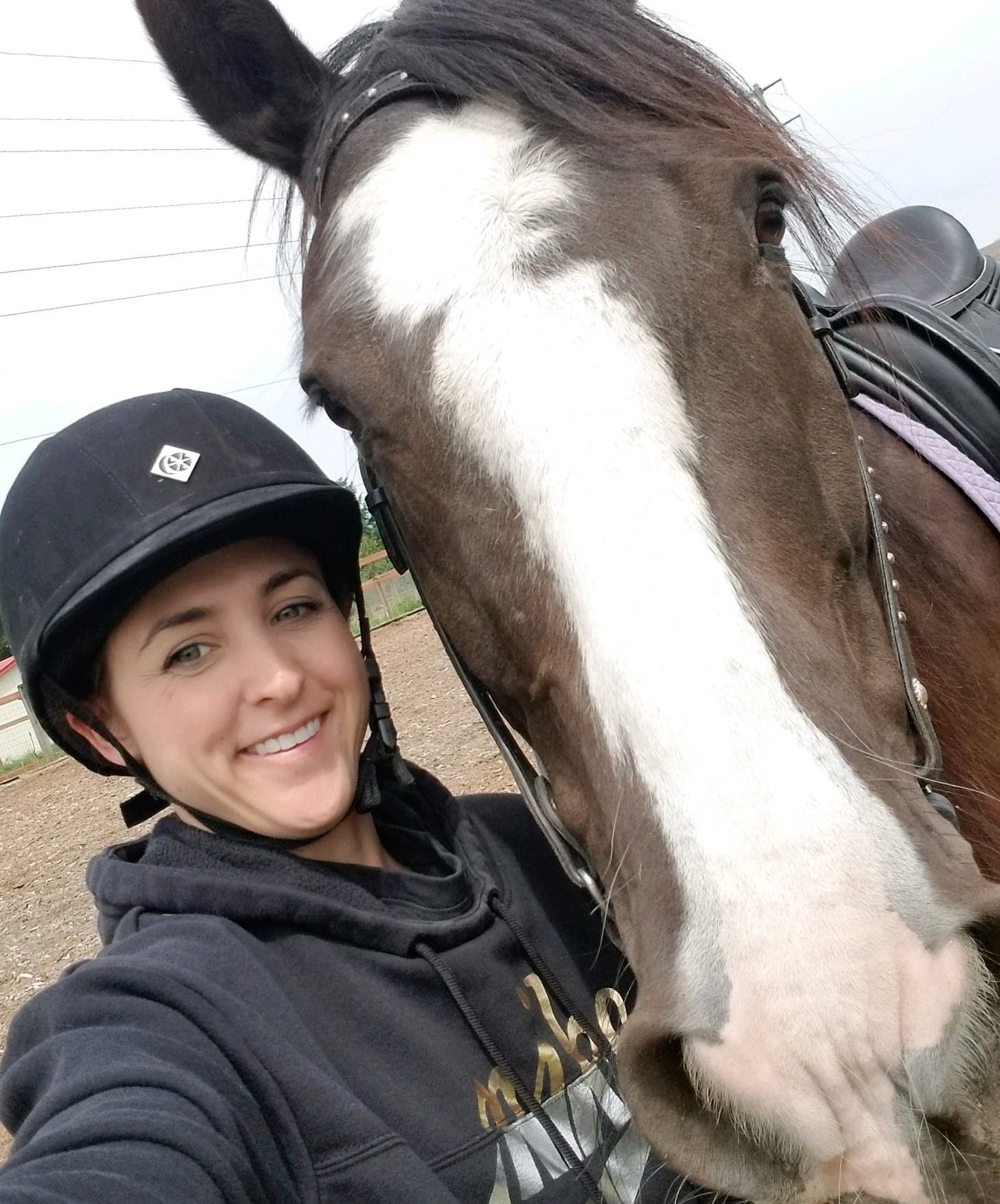
Renee Lee was riding her horse in Redmond when she literally came face-to-face with a black bear and cubs.


REDMOND, WA — Renee Lee's horse was trying to tell her something. He was snorting and acting strange, even though he was familiar with the network of trails in the Union Hill area east of the Redmond city limits.
Lee and her horse, Aries, had just left the San Sebastian Equestrian Center along Northeast 100th Street on Monday. They were trotting along the Chickadee Trail when Lee rounded a blind corner, and there she was. A large, brown-colored black bear standing in the middle of the trail with two cubs. The mother bear was facing Lee, and they locked eyes as the cubs ran into the bushes.
The bear stood her ground, making deep grunting noises. Aries stood his ground, snorting at the bear.
Find out what's happening in Redmondfor free with the latest updates from Patch.
"I think I snuck up on her as much as she snuck up me," Lee recalled on Tuesday. "The only thing I could think about was getting out of there."
Lee told her story hoping to remind hikers, bikers, and anyone else enjoying the outdoors: this is bear country, and you have to remain vigilant. Spring is a particularly sensitive time for bears, who are emerging from their winter stupor, some with cubs in tow.
Find out what's happening in Redmondfor free with the latest updates from Patch.
"She's standing her ground, [Aries] is pawing and snorting," Lee recalled. "I kept saying, 'don't fall off this horse.' If I fall off and she's as pissed as she is, I have nothing to protect myself."
Lee has owned Aries for almost a decade. Over the years, the pair have encountered snakes, bobcats, and other creatures, but never a bear. After about 10 seconds in a standoff, Lee signaled for Aries to go, and he did. The horse took off running in the opposite direction at top speed. Lee didn't see if the bear followed, but wasn't able look back and check, anyway.
The forests of Western Washington, including ones in Seattle suburbs, are full of black bears. Most of the time you don't see them because they like to avoid humans, according to state wildlife officials. Conflict usually occurs when bears come into human territory to feed on trash or bird feeders — and wildlife officials urge locals to secure items like that.
(Black bears, it should be noted, can come in a variety of colors, including brown. Grizzly or brown bears do not live in Puget Sound, and there are only a handful living in the state north of Mt. Baker and north of Spokane near the Canadian border.)
Bear encounters in the wild are rare, and what to do depends on the situation. If you see a bear but it doesn't see you, give it space by moving away. If a black bear does notice you, identify yourself as a human by waving your arms and talking in a low, calm voice.
"If you cannot safely move away from the bear or the bear continues toward you, scare it away by clapping your hands, stomping your feet, yelling, and staring the animal in the eyes. If you are in a group, stand shoulder-to shoulder and raise and wave your arms to appear intimidating. The more it persists the more aggressive your response should be. If you have bear spray, use it," the state Department of Fish and Wildlife advises.
Do not run away or climb a tree. Black bears can run up to 35 MPH and are excellent climbers. Black bear attacks are exceptionally rare, with only about 14 on record in Washington. Bears will also give plenty of warnings if they're not happy, like the bear Lee encountered.
"They wear their emotions on their big, furry sleeves, and you’ll see signs of distress such as jaw popping with head turning, huffing or vocalizing, or aggressive slamming of their paws to the ground. If a bear behaves this way, it’s trying to tell you that you’ve crossed the line," an article on black bear confrontations from the Washington Trails Association reads.
Although Lee described her encounter as "exciting but pretty terrifying," she knows the bear was just doing what any good mother would. It's up to human to avoid dangerous encounters, she said.
"Just be vigilant, be aware. This is their territory, their home," she said.
Get more local news delivered straight to your inbox. Sign up for free Patch newsletters and alerts.