Politics & Government
Q&A with Christine Himes, Redmond's First Female Mayor
Former Mayor of Redmond (1980-1984), Christine T. Himes is a woman who was successful despite many people who said she couldn't cut it as a female mayor. Himes answered the naysayers by creating 19 parks and one major trail system.
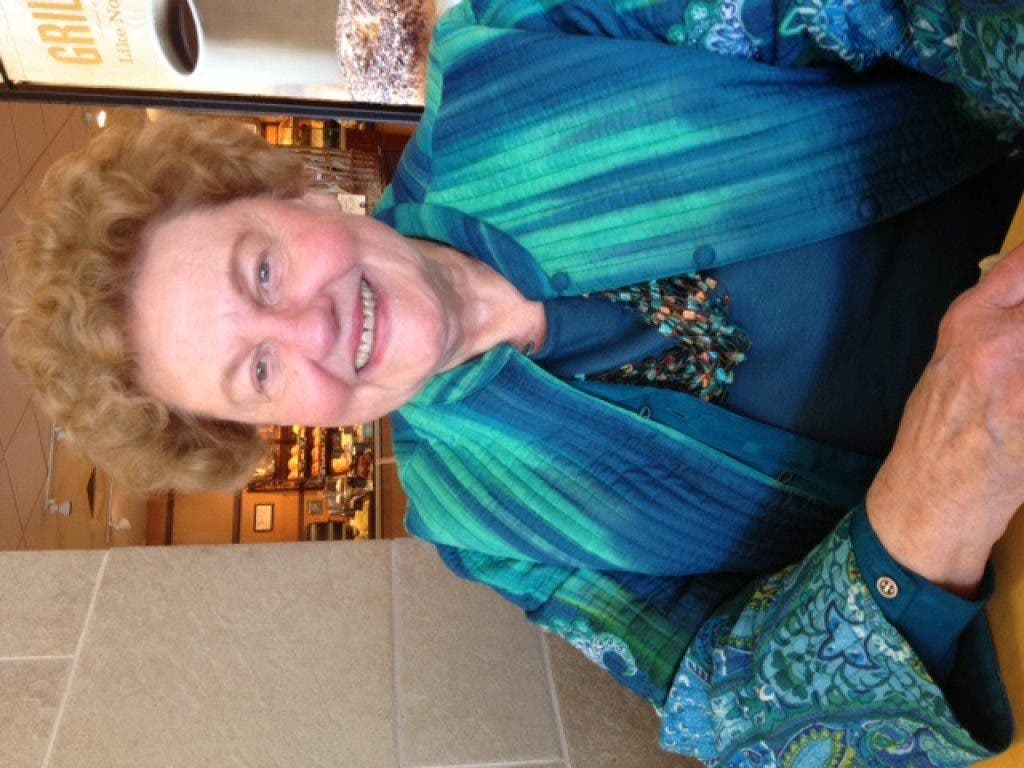
The following are excerpts from a recent "Question and Answer" interview with Himes, a 37-year former resident of Redmond. Himes is currently honored in an called Washington's First Women in Government.
Where were you born and raised? Tell us about your education and family.
My mother was of Swiss-German descent. She worked for the U.S. Senate as Secretary of the Governmental Operations Committee. My dad was German, straight up. You couldn’t get more German than Dad, who owned a tire company. I was born in the late 1920s in Washington, D.C. My younger brother, Buddy and I traveled all over the U.S. with Mom and Dad. One of my best memories was going to Niagara Falls. They had a special ride called “Maid of the Mist Boat.” Buddy and I got to wear big raincoats and hats; you looked like Gorton Fishermen. (Himes laughs with great joy.) We thought it was so fun because we got to ride in the boat at the bottom of the falls and we got really wet. The New York World’s Fair and Grand Canyon were also a blast.
Find out what's happening in Redmondfor free with the latest updates from Patch.
In 1947, I graduated from McKinley Technical High School. In the fall of 1947, I started school at The University of Maryland. In the summer, I worked in Ocean City, Md., as a waitress. The money I earned helped to pay for admission into school, books, room and board and other items related to matriculation.
It was so fun. After work you could swim in the ocean, hang around with your friends at the gin mills—bar and grills is what they call them these days; it was not a gin distillery. Some guy would yell out the name of a song, the piano person would play it, and we would all sing along.
Find out what's happening in Redmondfor free with the latest updates from Patch.
In the fall of 1948, I went to the wedding of one of my sorority sisters, a Tri Delta. I was dating lots of guys at the time—times were different then. Dates were dates with friends, nothing serious until somebody said they were serious about you—you know? At the time, Jack (my future husband) was dating this gal from Philly. At the wedding Jack and I clicked. Jack and I got married in April 1950. I never knew what happened to the girl from Philly.
In 1956, Jack was working for the “Hole Proof Hosiery Company.” This company was taken over by Hanes. When Hanes took over, they sent Jack to Seattle. Of course, I went with him. We lived in an apartment on Mercer Island, bought and sold a home in Bellevue and landed in Redmond in 1964. By that time we had five kids: one boy and four girls.
How did you become Mayor of Redmond? Why did you run for mayor?
In 1971, Farrel-McWhirter Park was given to Redmond. In 1972 and 1973, I went to the Redmond City Council and asked why the city didn’t go ahead and do something with the park so that horse people could have an equestrian facility. My family and I had horses. The Redmond City Council said that there was no money for that and that the park was not annexed yet. In 1974, I asked the same question and received the same answer. I was told that I shouldn’t be asking such a question, that my thinking was premature. I got mad.
In 1975, a few of us wrote up a park bond. We wanted more lights at Hartman Park and Grasslawn Park. We wanted to open up Farrel-McWhirter for horses and other uses. We wrote an open letter to The Sammamish Valley Newspaper. Bud Young (the mayor at the time) and the council approved the bond. In 1977, the people voted for the park bond. Soon after the bond was approved my friend told me that I should run for city council to make sure that the money would be spent on the parks. I did just that.
Later, I ran for and was elected mayor in 1980. I cut the ribbon on Farrel-McWhirter Park in 1981.
Tell us about the significance of being the first female mayor of Redmond.
I was the very first full-time mayor in Redmond. I made the position a full time job to better serve the citizens of Redmond. Before I started, the title of mayor was a designated part-time job. There had not been a woman in city politics since 1912, and the council was made up of men since the 1920s.
There was a great deal of skepticism by Bud Young, the three-term mayor who was on his way out and his supporters. Young said, “How can you take somebody out of the kitchen and make them a mayor?” I told Bud there were no schools for mayors and I had as much right to run for office as he did.
Every time they complained, I just knocked one back at them. At one time during my administration, Young and some of his people tried to recall me. There was a petition to recall me for who knows what reason. Nobody signed it. Young and his supporters were really mad.
Just remember, it takes a council and citizens to support you as mayor for you to be successful. There is always somebody ahead of you who has laid groundwork so that you can build upon. Every mayor builds on what previous mayors have done.
The city existed before I got there, and it is still there now.
Tell us about some big-time issues that happened during your administration.
There were four big-time issues during the time I was mayor.
Lots of people wanted the shopping center for the tax base and jobs. Other people didn’t want the shopping center because it was bad for the environment. These days, when I go to Redmond or Town Center I can smile because I know it took them 18 years to get it right. I smile because it looks very good compared to the initial offering that was ugly with basic black top and box buildings.
Evergreen East (the name of a proposed shopping mall)
Kemper Freeman, whose grandfather took over the land to start Bellevue Square wanted the Evergreen East (owned by the DeBartolo Company) plan killed because Freeman didn’t want competition. He figured the only way to get rid of his competition was to have Microsoft break ground and stay. Microsoft started out with 10 buildings and continued to grow. There was a good deal of brouhaha over this issue.
The Mond Theater becoming a pornography theater
The neighbors did not like the porn theater. They took picture of the patron’s cars, wrote down the license plates and posted the information for all to see. People were attracted to the theater and came from all over to watch porn. There were many complaints about the porn theater. I said to those picketing: if you don’t like something, then don’t go. However, the citizens wanted the porno place gone. The City Council and I put an amusement tax on each ticket that Roger Forbes sold to participants of the porn theater. After two years of bad publicity, the porn theater left and the property was abandoned. It was sold for dirt-cheap.
Sixty-O1 Apartments conversion to condominiums
These were apartments that people were living in when the landlords/owners decided to turn them into condos. Many of the apartment dwellers could not come up with the $5-$8,000 that was demanded to convert their apartment to a condo. The situation was quite a big stink. The council and I did what we could to help people find other places to live. We also tried to embarrass the owners of the property, make them feel bad and request they pay relocation fees for those who could not afford to move. We did many things to delay the process of conversion from an apartment complex to condos. The owners of the apartments we not embarrassed, and they had willing buyers. We didn’t like them very much. As usual, they didn’t care for anybody but themselves.
What did you do after being Mayor? How is life now?
In 2001, I moved to Monroe.
I worked for Eddie Bauer from 1984 until 2003. I worked in catalog sales, customer service, hiring and training. Spiegel was the company that owned Eddie Bauer. They went into bankruptcy in 2003. I accepted my severance and vacation pay.
In 2005, I became a member of a singing group called Village Voices based out of The Monroe Senior Center. I am still singing with them. Also in 2005, I joined The East King County Book Club and have read with them to present date. I joined the Redmond Historical Society in 2002 and became the president of the Historical Society in 2008. It is a great group to work with. During this time, I became a member of NOKOMIS, a group that started the Redmond Library back in 1909. NOKOMIS is not an acronym. It is a reference to the Hiawatha poem written by Henry Wadsworth Longfellow.
Is life good? I have five kids, 13 grandkids and four great grandkids (Himes laughs with a twinkle in her eyes.) Life is good. God yes, oh yes, it is good.