Community Corner
Redmond Rocket Scientist Landed On Mars - Here's How He Did It
Matt Dawson was chief engineer for Aerojet Rocketdyne's contributions to the InSight mars lander.


REDMOND, WA - How many people do you know have landed on Mars? How many people do you know can build a rocket engine?
Matt Dawson, 45, was the chief engineer for Redmond-based Aerojet Rocketdyne's Mars InSight program, and he knows how to do both of those things. We got the chance to ask Dawson a few questions about rockets, Mars, and how he ended up designing rockets.
NASA's Mars InSight (which stands for Interior Exploration using Seismic Investigations, Geodesy and Heat Transport) was sent to map the planet's interior. InSight will spend the next two years measuring deep under the martian surface, helping us better understand how planets form.
Find out what's happening in Redmondfor free with the latest updates from Patch.
But before that, InSight had to get to Mars.
The robot lander had to travel for 7 months through space before it landed. Along the way, Aerojet Rocketdyne's rocket engines helped steer InSight. More importantly, Dawson and his team's rockets allowed InSight land on mars, perhaps the most nerve-wracking part of the trip.
Find out what's happening in Redmondfor free with the latest updates from Patch.
InSight landed safely on Nov. 26 and is now busy at work. Here's what Dawson told us about the mission.
Can you explain what propulsion is? How do the systems you work on differ from, say, jet engines, in terms of how they provide force?
Accelerate a mass and it reacts as a force (Force = Mass x Acceleration). Rocket engines produce thrust by accelerating hot gas. Our rocket engines use fuel that does not require air. Jet engines burn a fuel that requires air to burn with the jet fuel to create the hot gas.
Since space is a vacuum, how do rockets work there?
Our rocket engine burns fuel that does not require air. The spacecraft carries all the propellant needed to make the hot gas by burning it in our engines.
What's the difference between the martian atmosphere and Earth's? How do you build a rocket that works in the martian atmosphere?
There is very little atmosphere on Mars. Our Earth has 14.7 psia (pounds per square inch absolute) atmospheric pressure at sea level, Mars has only 0.24 psia so it is very “thin.” It was pretty impressive that InSight was able to record some wind noise.
What did you learn from this mission?
Landing on Mars is always fun! It takes a lot of people across many agencies and companies working together to have the success we had on November 26.
Obviously, the mission was a success. But did anything go wrong? Did anything happen that you didn't anticipate?
We’re no aware of anything that happened that was not anticipated. The engines always fire when they are commanded to. We have demonstrated their ability to fire up at extremely cold temperatures and they have always ignited. We work closely with our customers and partners (JPL, NASA, Lockheed Martin, and others) to ensure plans are in place and ready to execute if something comes up.
Why did you decide to get into this field? Was there something you saw as a young person that fascinated you about rockets?
My inspiration comes from my college mentor whom was the dean of the engineering department. Dr. Walt Kaminski worked on the Apollo program in the 1950s and 1960s. As he taught us the engineering curriculum he showed how he applied it to his work on rocket engines for Apollo.
If you can say, what are you working on now? What's the next challenge or frontier in rocket science?
At Aerojet Rocketdyne, we are currently working on a variety of programs, ranging from deep space exploration to commercial satellites. Boeing’s Starliner capsule is being developed for access to the international space station, and the Orion Crew Module is preparing to launch on NASA’s new heavy-lift rocket, the Space Launch System, and eventually go to Mars. We also have a significant amount of ongoing projects that provide propulsion for satellites that provide GPS, cable TV, internet services, and communication services, in addition to some government programs.
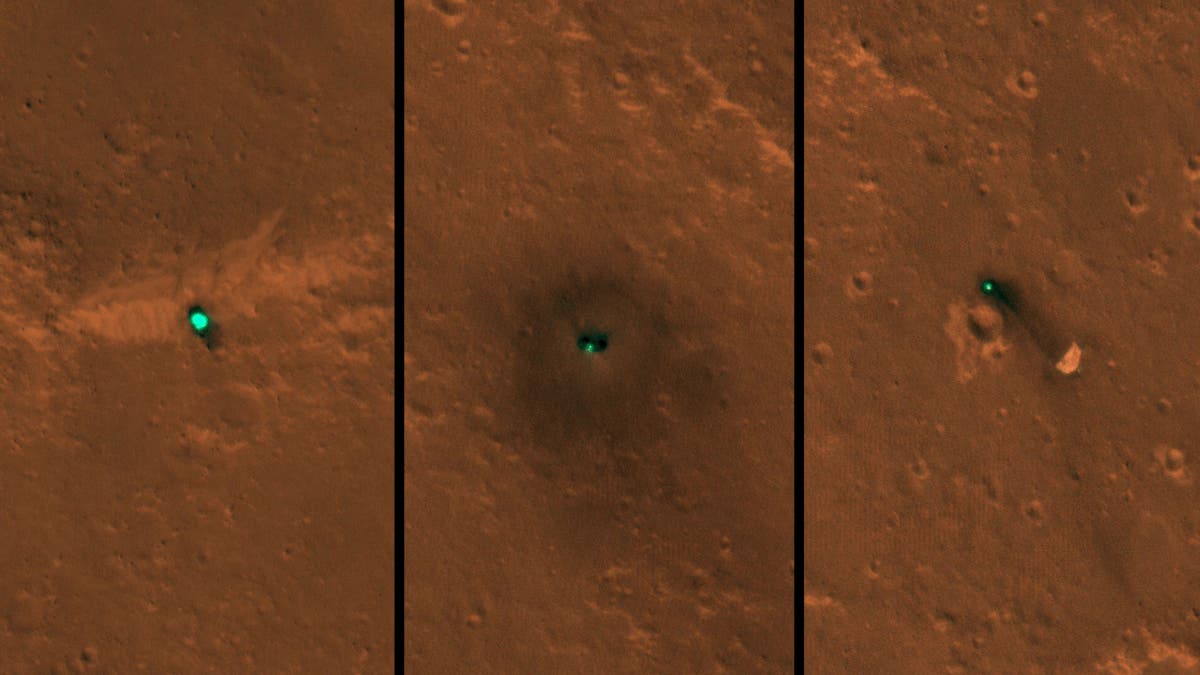
Images courtesy Aerojet Rocketdyne, NASA/JPL-Caltech/University of Arizona
Get more local news delivered straight to your inbox. Sign up for free Patch newsletters and alerts.