Health & Fitness
New WA Coronavirus Report Finds Declining Trends In February
Washington's latest situation report has a lot of good news, but officials say it also underlines the need for continued safety measures.


OLYMPIA, WA — The state Department of Health released a new situation report Friday showing a continued decline in overall coronavirus transmission in Washington in recent weeks, but health officials say it's still too early to breathe a sigh of relief.
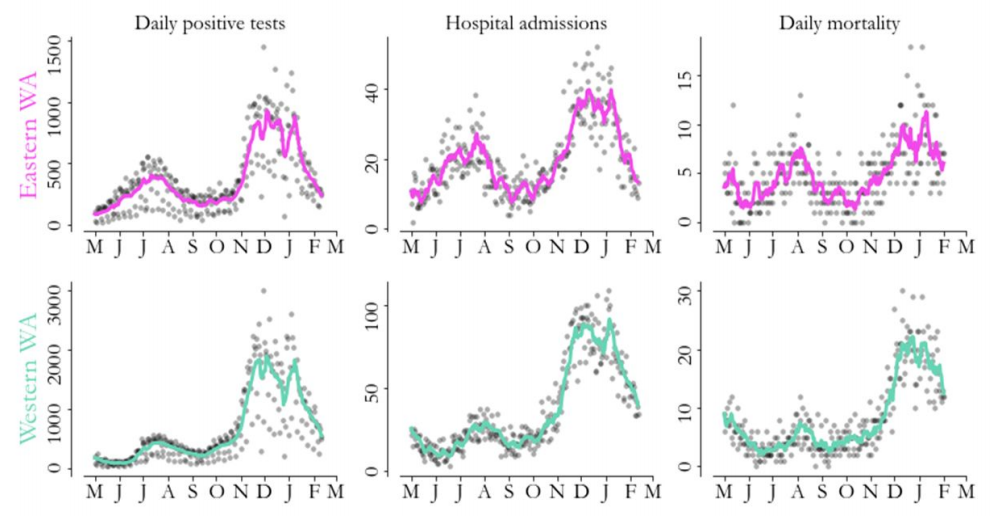
According to the latest data, trends in new cases, hospitalizations and deaths continue to move in the right direction since the third wave, with all but nine counties reporting fewer than 200 new cases per 100,000 people over two weeks by mid-February. However, the percentage of people with active infections is still near the level seen during the first two peaks.
Washington is also seeing a growing number of infections involving variant strains.
Find out what's happening in Rentonfor free with the latest updates from Patch.
"Despite the very positive signs we're seeing in the data, we are still in a risky situation and we must all work to maintain and strengthen our prevention measures; however, I remain cautiously optimistic," said Dr. Scott Lindquist, the acting state health officer. "As we see cases of the B.1.1.7, B1.351, and other variants of concern increase, it's more critical than ever to keep limiting gatherings, wearing masks, watching our distance and washing our hands."
Washington's latest metrics were positive enough for Gov. Jay Inslee to pause rollbacks for all counties Thursday as the state considers more reopenings.
Find out what's happening in Rentonfor free with the latest updates from Patch.
Here are some of the highlights from Washington's statewide situation report from the DOH:
- While trends in cases, hospitalizations and deaths are largely continuing to decline, some concerning signs remain. In particular, the state is detecting increasing numbers of cases of the B.1.1.7 variant that spreads more easily than other strains. As this variant continues to spread through the state and becomes predominant, case numbers and hospitalizations will likely increase and could strain health care resources.
- COVID-19 transmission decreased in January following peaks in late December, but the reproductive number (Re) has remained close to 1 in both eastern and western Washington. The best estimate of the reproductive number (how many new people each COVID-19 patient will infect) on Feb. 5 was 0.71 in western Washington and 0.88 in eastern Washington. The goal is maintaining a reproductive number well below one—meaning COVID-19 transmission is declining—for a substantial amount of time.
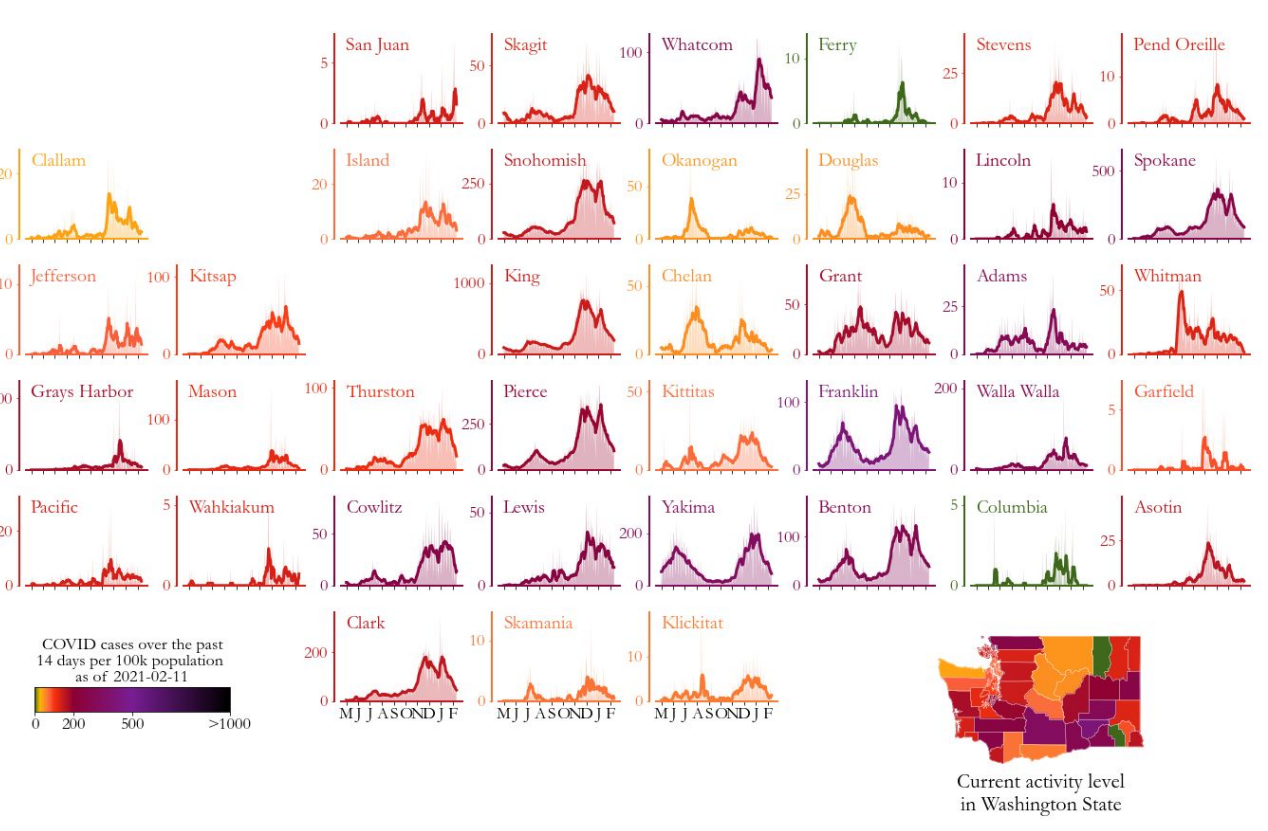
- Case rates have remained high across the state but continue moving in the right direction. Only nine of 39 counties had rates above 200 new cases per 100,000 people over the two-week period ending on Feb. 11. No counties had rates above 500 new cases per 100,000 people.
- The estimated percentage of people with active COVID-19 infections is only slightly lower than the peak estimates during the first two waves of disease in late March and mid-July 2020. The best model-based prevalence estimate as of Feb. 5 was 0.16%. That means we still have a lot of infected people who may need health care and could be spreading the virus to others.
- Total hospital admissions have steadily declined since early January, with a slight flattening beginning in early February. While this trend is going in the right direction, hospital admissions as of early February were still only slightly lower than the highest levels in the first two waves of disease in 2020.
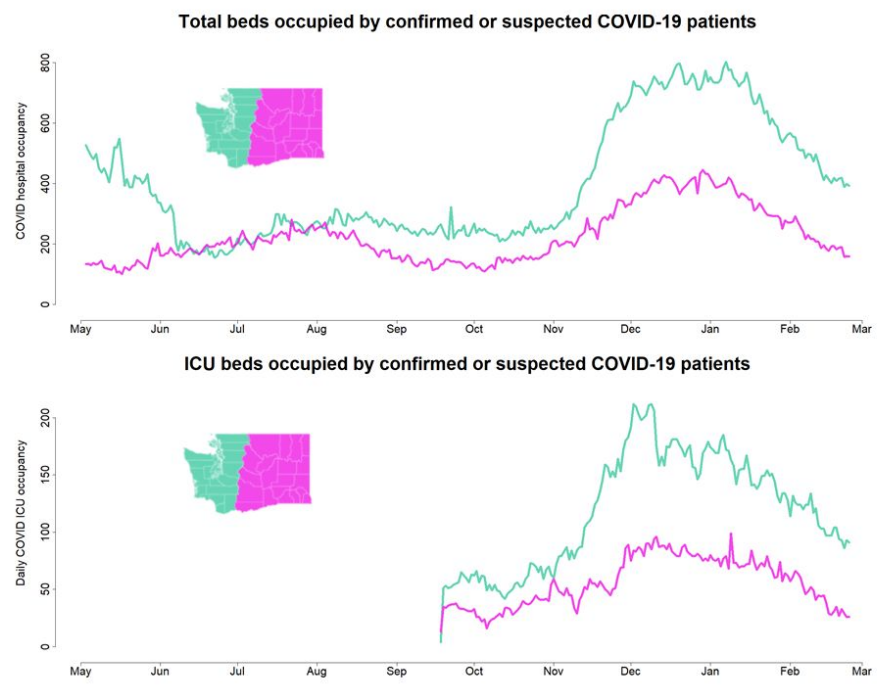
- The number of hospital beds occupied by confirmed or suspected COVID-19 patients was steadily declining across the state as of Feb. 22. This trend follows a late fall spike that flattened in early to mid-January. The number of ICU beds occupied by COVID-19 patients has varied more, but has generally been declining since January.
On the county level, the report noted that Washington's five largest counties have seen COVID-19 case counts fall to levels approaching those recorded in late October and early November. However, the state notes, declines have slowed since mid-January.
Similarly, hospital admission rates have steadily trended downward since early January, with a "slight flattening" seen in early February.
In closing, researchers wrote up a few potential explanations for the declines seen in Washington and across the United States but reiterated that the state's welcome progress should not "induce complacency or reduce vigilance" with proven public health precautions as the variants gain traction.
"The reason for these widespread declines are not well understood, but have been suggested to include more optimal behaviors at the individual level such as reduced indoor gathering and improvements in masking; coronavirus seasonality (which may not be the case as these trends are also observed in the Southern Hemisphere); weather-related reductions in testing (which haven't been observed in WA state); partial immunity in specific locations, particularly high-density populations that were hit hard earlier and were more likely to be exposed to the virus (frontline/essential workers and multigenerational families in dense living conditions), and impact of vaccination (too early to see effects in WA, but evidence from other countries supports this). However these suggested explanations are currently not empirically verifiable due to geographic, climactic, and behavioral differences across regions, and may have partial or limited relevance to Washington state."
Read the full situation report on the Department of Health website.
Get more local news delivered straight to your inbox. Sign up for free Patch newsletters and alerts.