Community Corner
Annual Seismic 'Slow-Slip' Is On, But Not In Puget Sound — Yet
Scientists believe there's an elevated risk of a mega earthquake in Cascadia during the "slow-slip" period. Here's what we know.


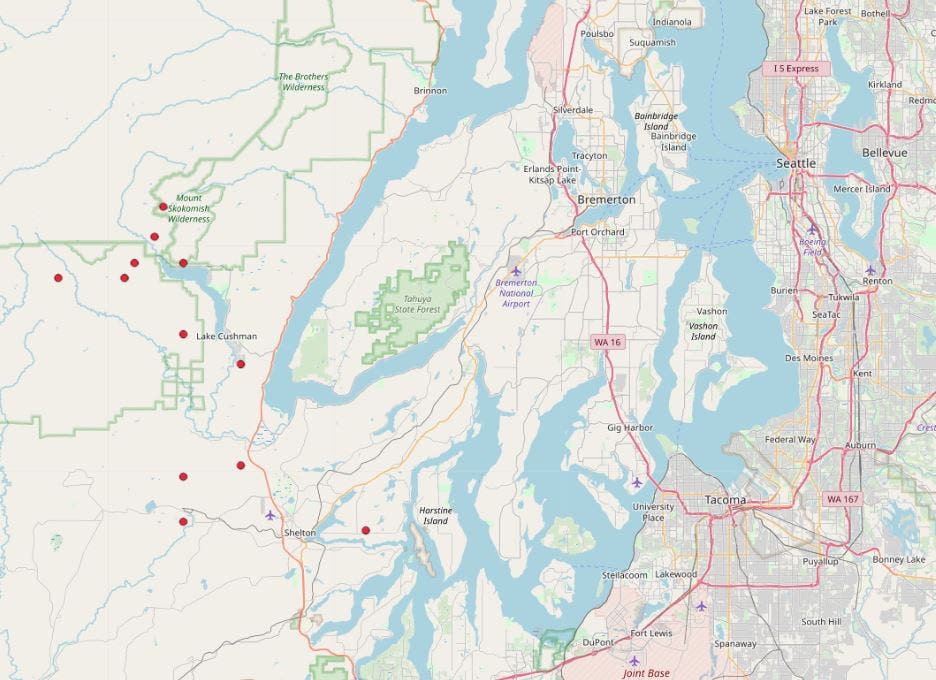
SEATTLE, WA — Every 14 months or so, a series of small tremors migrate north from the Kitsap Peninsula to the southern end of Vancouver Island. To seismologists, that means the regular "slow-slip" event is happening — it also means there's a slightly higher risk of a Cascadia subduction zone earthquake.
But don't fret. Slow-slip — also called an episodic tremor and slip, or ETS — has not started here in Puget Sound. Seismologists have been seeing bursts of tremors from British Columbia through Western Washington in recent months, but those tremors have jumped around, which is not characteristic of slow-slip season.
Pacific Northwest Seismic Network (PNSN) seismologist Steve Malone said that there are several slow-slip events up and down the Cascadia fault zone. The slow-slip in Oregon, which occurs every 22 months, has begun, he said. The Puget Sound slow-slip likely won't begin until June or July.
Find out what's happening in Seattlefor free with the latest updates from Patch.
What's going on underground
The Cascadia subduction zone runs from northern California up to Vancouver Island. Deep underground, the Juan de Fuca plate is sliding eastward underneath (called subducting) the North America plate. The plates are locked together in some spots. At some point, the pressure will be too much and the two plates will spring apart. When that happens, the Pacific Northwest will be rocked by up to a magnitude 9.0 earthquake.
Find out what's happening in Seattlefor free with the latest updates from Patch.
During slow-slip, the Juan de Fuca tectonic plate stalls and moves westward, which puts stress on the Cascadia subduction zone. The small tremors we see in Puget Sound are an indication of that change in plate movement.
There are slow-slip events at different times during the year near Northern California and at the north end of Vancouver Island, in addition to the Oregon and Puget Sound events.
Chance of Cascadia megaquake
Scientists believe there's an elevated risk of a Cascadia subduction zone quake during slow-slip, but there's no real hard evidence to support that idea. It would make sense that a change in plate movement would relieve pressure, increasing the likelihood that the two plates will spring apart, scientists say.
Seismologists haven't been able to do any tests to verify if the theory is true, PNSN's Malone said.
"That's the theory behind it: if you have a little bit of slip, that should increase on the up-dip," Malone said, referring to North America plate springing apart from the Juan de Fuca plate.
On the upside, slow-slip is a good occasion to remind Puget Sound residents to prepare for an eventual megaquake.
See earthquake preparedness tips from the state Department of Emergency Management
A full rip of the Cascadia subduction zone would devastate the Pacific Northwest. In the Seattle area, unreinforced masonry buildings could pancake, gas lines could rupture, and roads and highways may be impassable. The quake could trigger a tsunami that will inundate the Pacific Coast and reverberate up and down Puget Sound. Some estimates say 13,000 would die.
Slow-slip or not, the quake will happen. The latest estimate from the U.S. Geological Survey in February indicated there's a 14 percent chance that a Cascadia megaquake will hit in the next 50 years.
Get more local news delivered straight to your inbox. Sign up for free Patch newsletters and alerts.