Weather
Comet Neowise: When, Where And How To See It In Washington
If conditions are favorable, the comet could remain visible to the naked eye for much of this month.


SEATTLE, WA — After several days of visibility primarily in the pre-dawn hours, the comet Neowise can now be seen starting one or two hours after sunset — if the skies remain clear and its magnitude holds. Neowise is the brightest comet since Hale-Bopp in 1997. If you miss it this time, there's some bad news: this comet won't return to Earth for another 6,800 years or so.
The National Weather Service has posted frequent updates on Neowise from its Seattle office since July 8, sharing several images and time-lapses of the skies over Lake Washington.
I don't know about you, but I could get used to this view. From about 10 minutes ago. #cometNEOWISE #nightsky #wawx pic.twitter.com/W7qyLmYLEY
— NWS Seattle (@NWSSeattle) July 15, 2020
During the first stage of the celestial show, glimpses were limited to the night owls, seen low on the northeast horizon, and mainly between 3:30 a.m. and 4:30 a.m.
Find out what's happening in Seattlefor free with the latest updates from Patch.
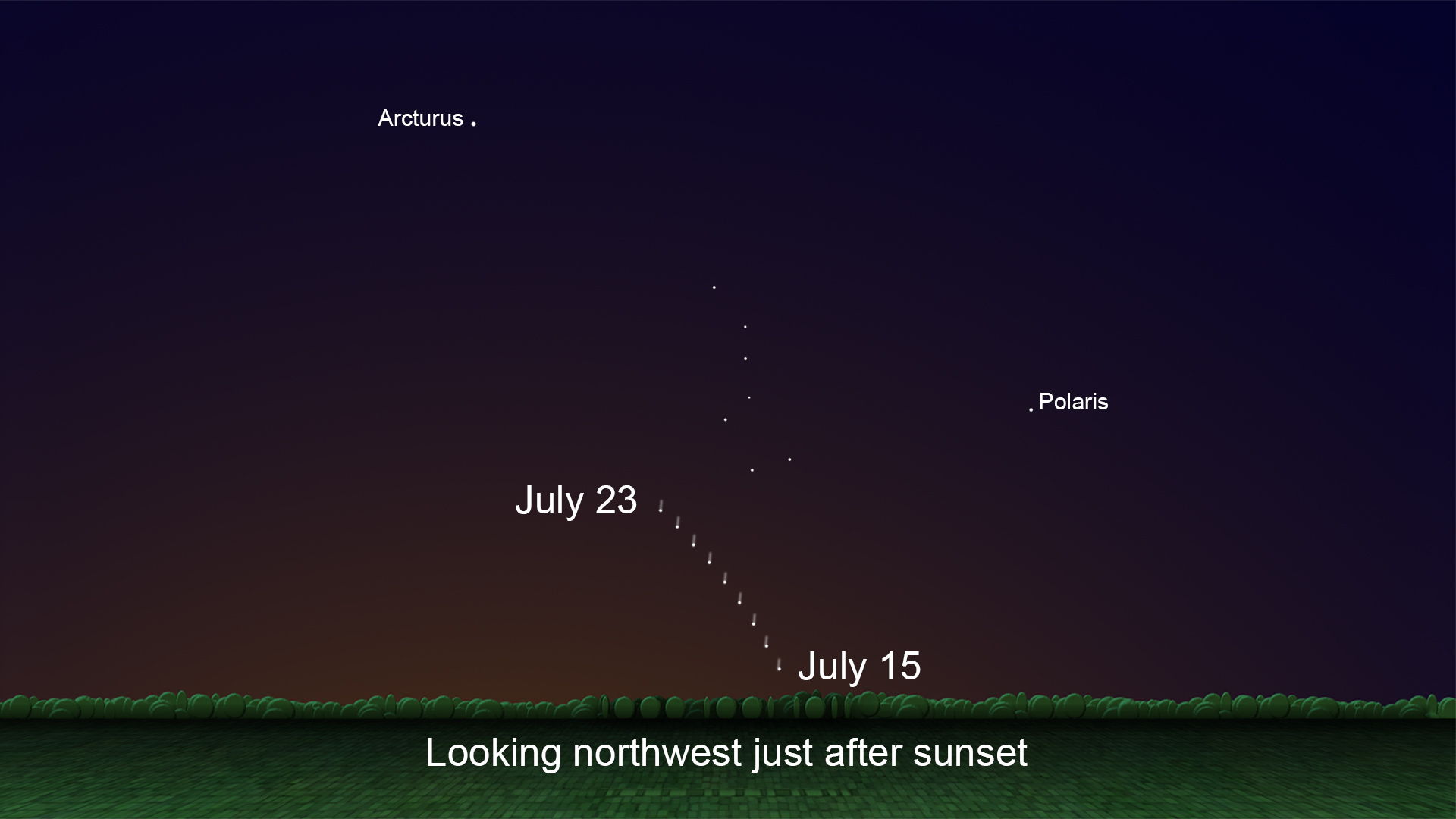
This week, the viewing window shifted to the north-northwest skies, and the comet can be seen beginning around 10:30 p.m. The best chance to spot it exists in areas outside the bright city lights and with a clear view of the horizon.
"As with all comets, its visibility and brightness can change suddenly," Dustin Guy, a meteorologist at NWS Seattle, told Patch last week. "At last check, it was roughly +2 magnitude of brightness, which puts it in the naked eye visible range. Binoculars are always helpful in spotting it, though."
Find out what's happening in Seattlefor free with the latest updates from Patch.
Since its arrival, stargazers across the state have captured dozens of images of Neowise, which will continue to rise higher in the sky until July 22, when it draws closest to earth. The comet's brightness will continue to fade as it travels further from the sun.
More from NASA:
The good news is that right now, the comet is relatively easy to observe with binoculars or a small telescope, provided you have a clear view toward the horizon. (It's no Hale-Bopp, for those who remember the great comet of 1997, but definitely visible.)
As of July 7, the comet was easily seen through binoculars, with some observers able to see it with unaided eyes.
Comets are notoriously unpredictable, so it's impossible to know if this one will remain so easy to spot, but if it does, it should become easier for more people to observe as July goes on.
Through about the middle of the month, the comet is visible around 10 degrees above the northeastern horizon (the width of your outstretched fist) in the hour before dawn. From mid-July on, it's best viewed as an evening object, rising increasingly higher above the northwestern horizon.
The Verge reports scientists discovered the comet on March 27, using its namesake telescope: the Near-Earth Object Wide-field Infrared Survey Explorer. Around July 3, the comet drew within 26.7 million miles of the sun, heating much of its icy material and making its trail widely visible. According to NASA researchers, Neowise is approximately 3 miles across.
July 15 - 23 viewing guide:
Get more local news delivered straight to your inbox. Sign up for free Patch newsletters and alerts.