Health & Fitness
Coronavirus Surging At 'Breakneck Pace' In Washington: DOH
Health officials Wednesday shared some major concerns heading into Thanksgiving, including that hospitalizations have doubled since Nov. 1.


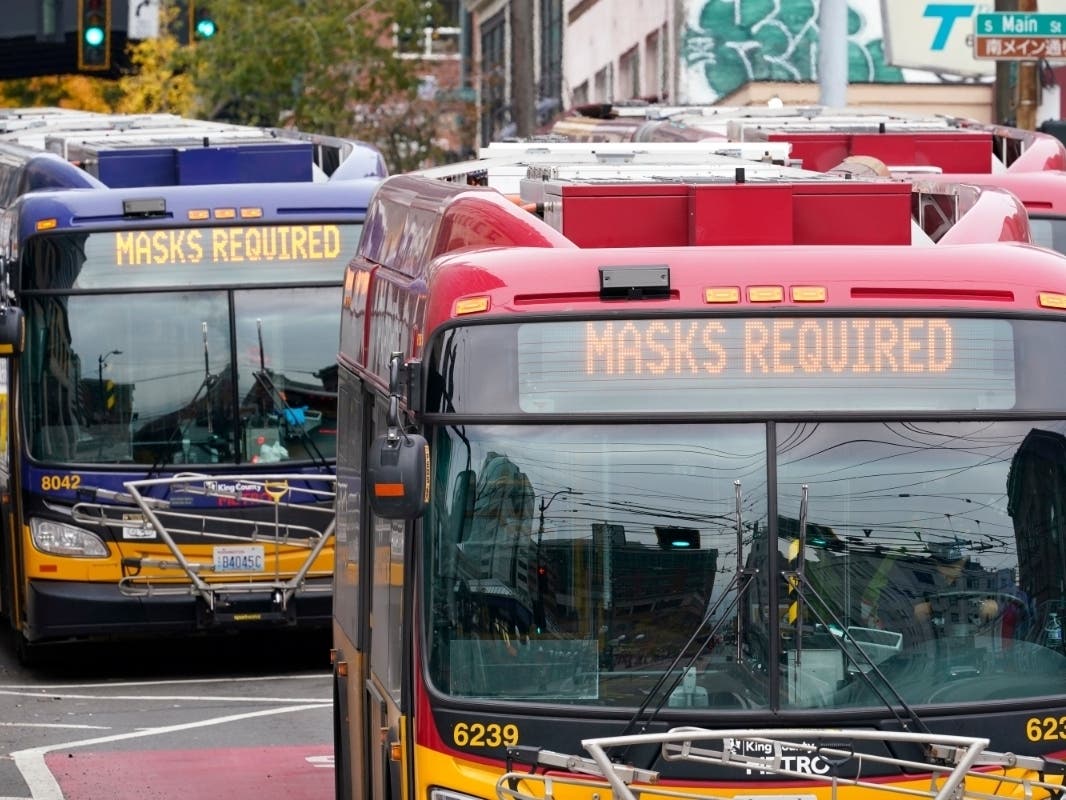
SEATTLE — On the last day before Thanksgiving, Washington's top health officials repeated their pleas for caution over the holidays, citing the "breakneck pace" of COVID-19 transmission and hospitalization figures that have doubled since the beginning of November.
In two news conferences held Wednesday afternoon, state and local health leaders detailed the most recent data reflecting Washington's unsustainable trajectory, including a dire outlook for hospital capacity if transmission rates do not soon change course.
"The situation is incredibly urgent, and there is still time to turn the tide before our hospitals become overwhelmed," said John Wiesman, state Secretary of Health. "I know these are difficult and disappointing times for many, and I am so grateful for everyone who has made the decision to stay at home with their immediate household for Thanksgiving tomorrow."
Here are a few headlines from the latest situation report from the Washington State Department of Health:
- COVID-19 continues to spread rapidly throughout the state. The best estimates of the reproductive number (how many new people each COVID-19 patient will infect) were 1.48 in western Washington and 1.51 in eastern Washington as of November 8. The goal is a number well below one, which would mean COVID-19 transmission is declining.
- Daily case counts have skyrocketed in both eastern and western Washington. The seven-day rolling average case count in eastern Washington was almost four times higher on November 13 than September 13. The acceleration is even more dramatic in western Washington, where the seven-day rolling average case count increased from 202 cases on September 12 to 488 cases in October 3, then to 1283 cases on November 13.
- If disease transmission continues at the same pace observed early this month, by early December the number of daily hospital admissions could be double current numbers. The number of hospital beds occupied by patients with COVID-19 has also risen sharply since November 1, including ICU beds. If this trend does not reverse, hospitals will need to postpone even more non-urgent surgeries and will have reduced ability to care for patients both with and without COVID-19.
- Cases are increasing across all age groups, including older people, who are more likely to become seriously ill, require hospitalization and stay in a hospital for longer. The largest increases are occurring in those ages 25 to 39 and 40 to 59, but rising trends in those over 60 are particularly concerning.
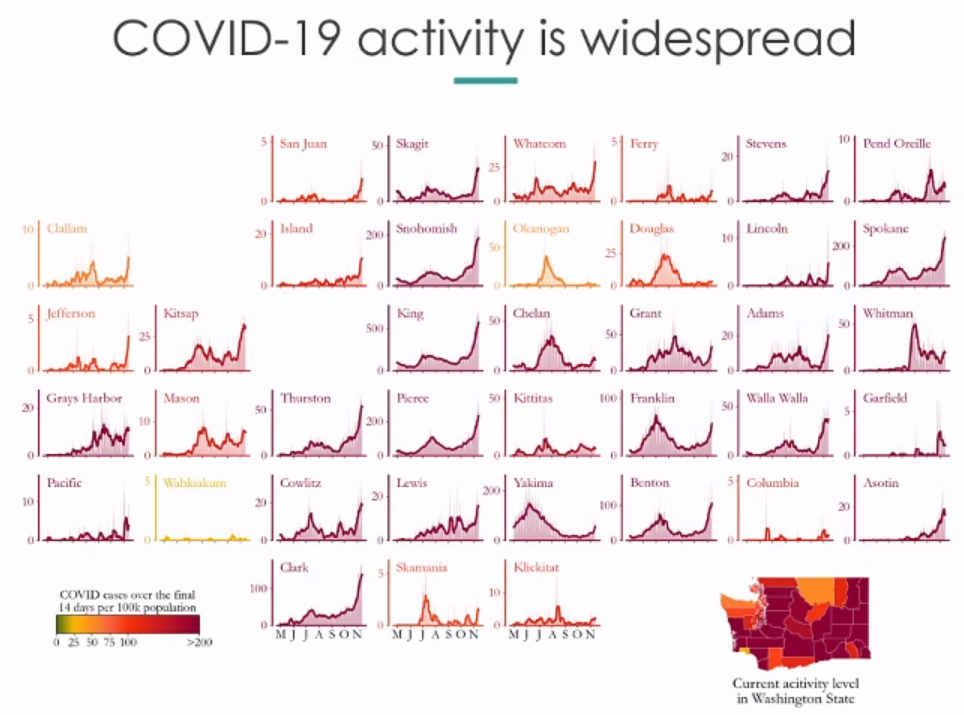
- Growth in cases is widely distributed across the state, with the majority of counties seeing accelerating rates. The five largest counties (Clark, King, Pierce, Snohomish and Spokane) are experiencing steep increases and have some of the highest case rates per capita. Several medium-sized counties (Cowlitz, Franklin, Skagit, Thurston, Whatcom and Yakima) are seeing similar sharp increases. Benton, Kitsap and Walla Walla counties have had steep increases through November 5, then flat trends through November 13.
- Even small counties are affected by the surge. Some (Adams, Asotin, Grant, Lewis, Stevens and Whitman) are experiencing steep increases and relatively high average case counts for their population size. Others (Chelan, Clallam, Garfield, Grays Harbor, Island, Jefferson, Klickitat, Lincoln, Mason, Okanogan, Pacific and San Juan) have low overall case numbers but are still seeing increases.
- The overall percentage of Washington state residents with active COVID-19 infection is higher than the peak in late March. A higher percentage today than mid-March with fewer severe outcomes is likely because the infected population is younger than in mid-March and advances in treatment have improved survival. However, because hospitalizations and deaths generally occur some time after initial infection, these rates will likely continue to increase over time.
Dr. Kathy Lofy, the state health officer, shared several graphs from Wednesday's report, showing case counts increasing in nearly every county, including more than half with case rates above 200 per 100,000 residents over 14 days — eight times the target threshold.
While the state's health care system has yet to reach its limits, health officials worry those days may not be far off without a swift change in behaviors.
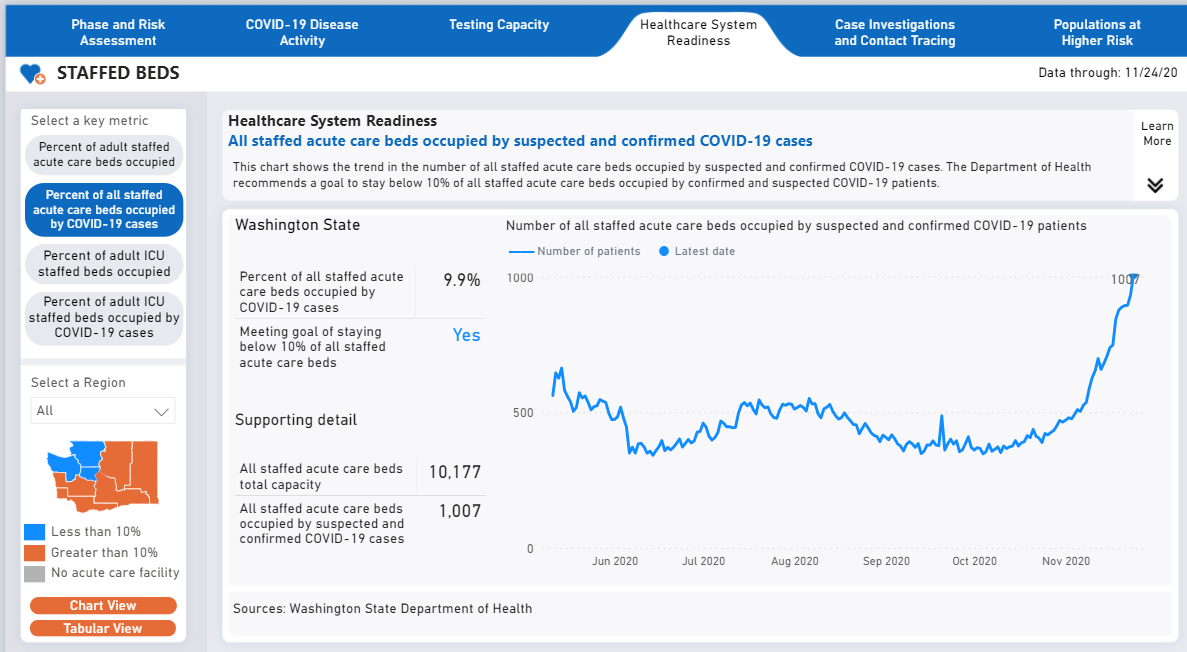
To help illustrate the growing area of concern, the state updated its risk assessment dashboard Wednesday to allow for a live look at the situation in hospitals across Washington. The tab showing current hospitalizations showed more than 1,000 patients with confirmed or suspected COVID-19 illness across the state — more than double the number recorded at the beginning of the month.
Aside from potential capacity strain, another area of concern is staffing, since health care workers are more likely to become infected when community spread is so high, leading to fewer available workers and potential outbreaks.
"We need everyone in Washington state to take action now to stop the spread of COVID-19 before our hospitals and frontline healthcare workers are overwhelmed," Lofy said. "I am extremely concerned about the current exponential growth of COVID-19 cases. We must re-commit to flatten the curve now."
King County shares data on known sources of exposure
Public Health - Seattle & King County released new data Wednesday, showing a few of the most likely sources of exposure, gleaned via contact tracing interviews.
Among the more than 37,000 cases analyzed, diagnosed between Feb. 28 and Nov. 20, researchers were able to identify a most likely source of exposure for 72 percent. While infections were most common in health care facilities and long-term care facilities in the early stage of the pandemic, more recent exposures have generally shifted to households, various community settings and workplaces.
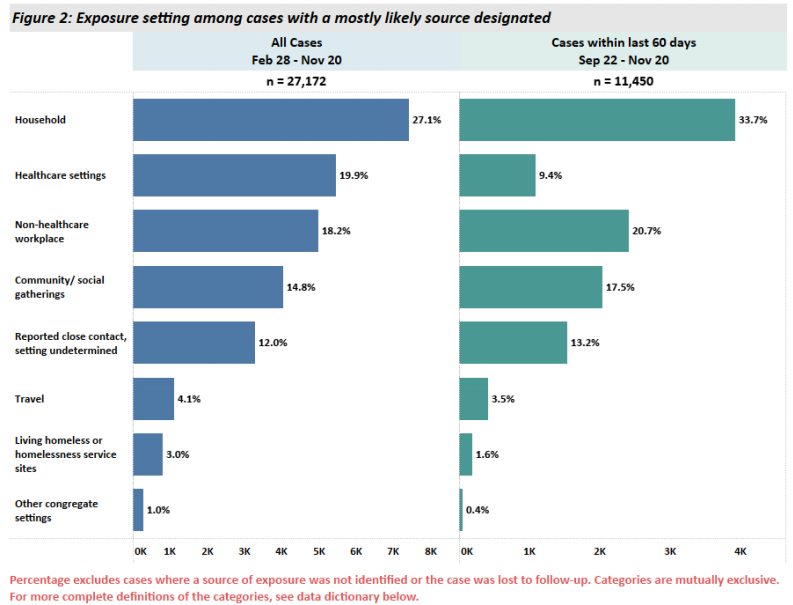
Over the last two months, nearly 40 percent of patients interviewed said they had participated in activities varying from get-togethers with family and friends, celebrations, and weddings or visiting taverns, coffee shops, restaurants, retail businesses and places of worship.
More from the report:
Most recent 60 days
- 41% had a household exposure
- 39% of all cases reported one or more non-healthcare, non-workplace community exposures prior to illness onset. Specifically:
- 24% reported social events with friends or family
- 15% visited food-service establishments
- 4% attended a place of worship
- 38% had a non-healthcare workplace exposure
- 28% reported going to work during their exposure period
- 5% were linked to an outbreak
- 5% reported close contact to a confirmed or suspected case in a non-healthcare workplace
- 25% of all cases are among essential workers. This category includes:
- healthcare workers (32% of essential worker cases, 8% of all cases)
- hospitality or service industry workers (34% of essential worker cases, 9% of all cases)
- other essential workers (24% of essential worker cases, 8% of all cases)
- 15% reported visiting, working, living, or being a patient in a healthcare setting
- 3% of cases were associated with a long-term care facility
- 7% traveled out of state or internationally
"Folks need to realize that this is not only a problem for those who have gatherings," said Dr. Jeff Duchin, health officer for King County. "It's not only a problem for household transmission. It's not only a problem for workplaces. This is a problem for all of us. This is an all-of-community public health emergency. We all need to step up and play our role in protecting one another."
Washingtonians urged to keep Thanksgiving celebrations within the household
Health officials worry the looming holiday, which traditionally centers around travel and large indoor gatherings, could push the state past the breaking point without a broad community effort.
"I am very concerned, maybe even afraid, of what Thanksgiving is going to do to these numbers," Duchin said. "I think there's a potential to see a dramatic increase, even beyond the numbers we're seeing currently, in cases, hospitalizations and subsequently death."
Under Gov. Jay Inslee's orders, in effect until Dec. 14, indoor gatherings are allowed only among those living under the same roof. While small outdoor activities are technically permitted, public health officials have repeatedly said the safest option is to keep celebrations within the household.
"[What] we're asking people to do is limit the way you celebrate Thanksgiving this year, if at all possible, to the people you live with and understand that every additional person that comes into the household, or anyone who travels to attend a Thanksgiving gathering will introduce additional risk to you, your family and your community," Duchin said.
According to a survey of 150,000 people published by the New York Times, Washington is the state with the lowest percentage of people planning to celebrate with people outside their household Thursday. An informal Patch survey netted similar results.
Washington looks to hire 350 contact tracers and case investigators
Dr. Scott Lindquist, the state epidemiologist for communicable diseases, said Wednesday that DOH would hire 350 new contact tracers and case investigators over the next two weeks to assist with the surge in work and improve the quality of the investigations.
The new hires will be assigned as needed, working either at the state level or sent to help local health jurisdictions. Lindquist said each investigator will be equipped with specific questions to identify potential "superspreader" events or problem areas and will provide infected people with some exact steps to take after a positive result.
First shipment of Pfizer vaccines scheduled for December
Washington is on track to receive the first shipments of a coronavirus vaccine developed by Pfizer within weeks, according to the Department of Health. In a news release, state officials said they expected 62,400 doses in the first shipment by mid-December, assuming the vaccine's emergency use authorization is granted by the U.S. Food and Drug Administration.
DOH expects another 200,000 doses by the end of December, with regular deliveries beginning in January. Officials said a special shipping container will also allow the vaccine to be kept in facilities that lack ultra-cold storage spaces.
To date, 54 providers are fully enrolled to help administer the vaccine, with many applications still pending approval. Hospitals, clinics and pharmacies can still apply until Dec. 6.
Get more local news delivered straight to your inbox. Sign up for free Patch newsletters and alerts.