Politics & Government
Highlights From The Seattle Mayoral Primary Debate
The six top candidates in the Seattle mayoral primary on Monday night debated topics ranging from homelessness to traffic.


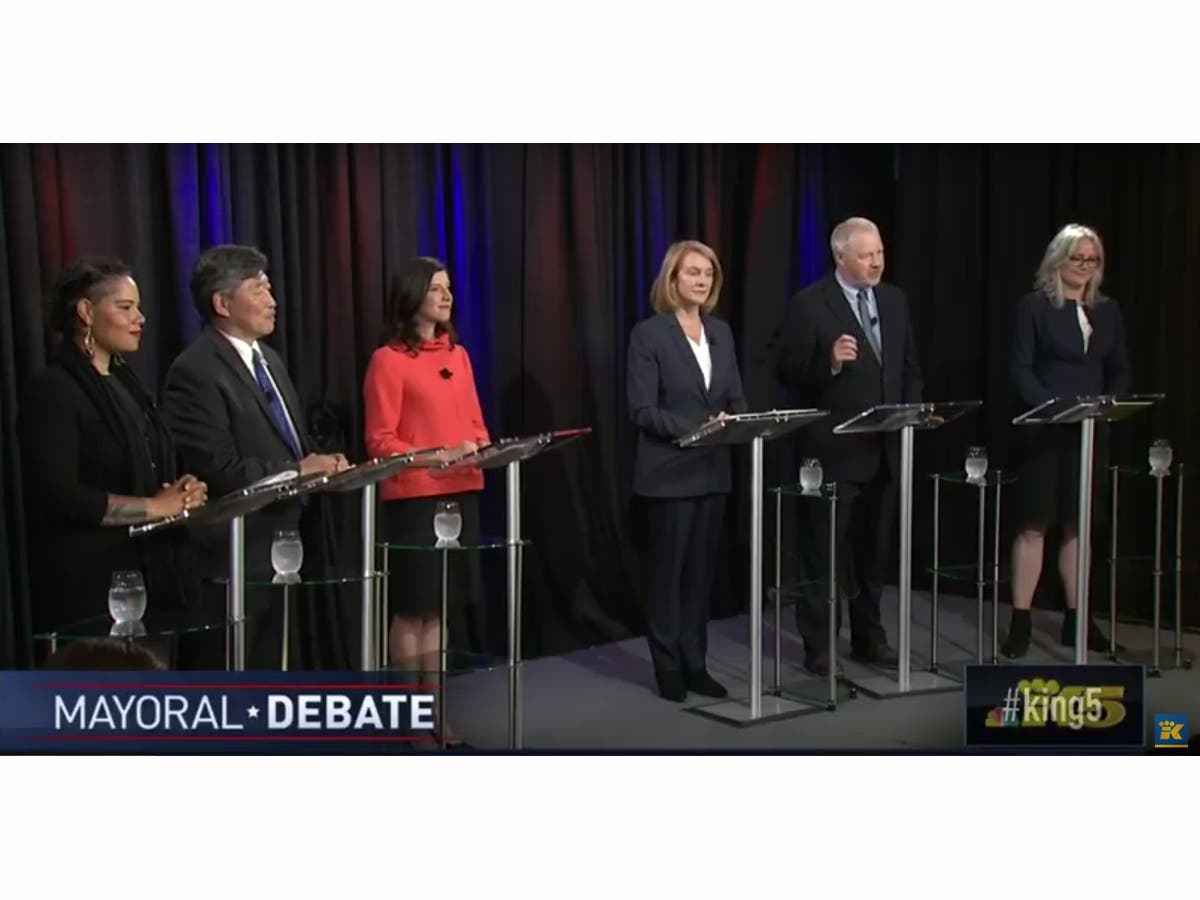
SEATTLE, WA - The six leading candidates in the Seattle mayoral primary met Monday night at the first - and only - mayoral debate before the August primary. During the 90-minute debate, the candidates - Bob Hasegawa, Nikkita Oliver, Jessyn Farrell, Mike McGinn, Cary Moon, and Jenny Durkan - fielded questions on everything from police department reform to traffic problems. You can watch the whole debate in the video at the end of this story, but here are some highlights from the discussion:
Should Mayor Ed Murray resign in light of new sex abuse allegations?
The Seattle Times on Sunday reported that an Oregon state child-welfare worked determined that Murray likely molested his teen foster son in 1984. Murray has said he won't resign - he's already ending his term this year - even though Councilwoman Lorena Gonzalez has suggested he should.
Find out what's happening in Seattlefor free with the latest updates from Patch.
Durkan and Hasegawa don't think Murray should resign, but the other four candidates do.
"I believe its in the best interest of everyone, especially survivors of sexual abuse, for the mayor to step down," Moon said.
Find out what's happening in Seattlefor free with the latest updates from Patch.
"We need to let the process play itself out. There is a process for adjudicating this," Hasegawa said. He drew a comparison to Japanese interment, which he said is an example of a process not being adjudicated properly.
Reducing city spending
The most recent city budget included $1.2 billion in the general fund. The candidates were asked how they might reduce or re-prioritize spending.
Durkan said that she would "go in and scrub the budget," elaborating that she would like to start from $0 and build a budget to more efficiently fund essential city services.
McGinn said that the city budget has grown by $250 million since he left office in 2013. He promised to "hold the line" on property and income taxes. But, he offered that he's open to taxing large corporations based in Seattle - mainly Amazon. "We have taxing mechanisms to tax the big corporations that are having success in our city," he said.
Farrell said she would ask developers and corporations to "pay their fair share."
Spending the new high-earner city income tax
The City Council recently passed an income tax on people earning $250,000 or more. It will likely be on hold when the next mayor takes office due to a legal challenge, but the tax might someday add millions to city coffers.
"I would first look at reducing regressive sales and property taxes," Moon said.
"Public housing," Oliver said.
"Working on making the tax system more fair," Farrell said.
"Our small businesses are struggling," Durkan said, indicating she would use the money to cut the city B&O tax. Durkan also said she didn't think the tax would be upheld in court and that it would be more successful if implemented statewide or regionally.
Safe-injection sites
All six candidates raised their hands when asked if they support safe-consumption sites. Those sites would allow addicts to use drugs in a location where they could access medical and mental health treatment.
"Drug addiction is happening in our community right now," Farrell said, pointing out that an injection site is slated for the Lake City area, which she used to represent in the state Legislature. "We need to provide people with services ... moreover we need robust dialogue with the community and a commitment around safety because it really does matter how we are treating both our neighbors and those suffering among us."
"Safe injection sites are about saving lives," Oliver said.
Unauthorized homeless encampments
After driving around for "four hours" with homeless outreach workers last week, "this showed me the illegal encampments are inhumane, filled with needles, and garbage," Durkan said. "Our priority needs to be moving people into homes."
"We need to provide shelter and we need to do it fast," McGinn said, adding that the money spent on sweeping camps might be better used establishing shelters.
"We have to prioritize low-barrier shelters," Moon said.
Why is the homelessness crisis only getting worse?
"Income inequality; it's growing as we speak," Hasegawa said. "It's all exacerbated by breakdowns in workers' ability to organize."
"We have not scaled up our response" to meet the needs of larger numbers of homeless in Seattle, McGinn said.
"When I talk to folks at the Union Gospel Mission, they think close to 70 to 80 percent of people still on the streets still have an addiction; we really have to fix that," Durkan said.
What are your priorities for reducing traffic?
"We need to give an Orca card to everyone under 18," Oliver said. She also suggested increasing east-west bus service, and charging development impact fees.
"Our immediate strategy has to be to get people out of single-occupancy vehicles and into buses and transit," Durkan said.
Moon suggested focusing on pedestrian and bike infrastructure improvements, which would maximize available space on city streets.
Civilian oversight of Seattle police
All the candidates agreed that civilian oversight should be expanded, especially due to the killing of Charleena Lyles. McGinn said he would give the civilian oversight board a budget and authority to conduct investigations, and possibly dole out punishments.
"We need it baked in hard," Durkan said, referencing the city's federal consent-decree to reduce use-of-force in the department.
Oliver said that the low-income communities and communities of color need to be more involved in police oversight because those communities have been more affected by negative interactions with police.
Watch the whole debate here:
Image via YouTube.com
Get more local news delivered straight to your inbox. Sign up for free Patch newsletters and alerts.