Neighbor News
Hot vs. Cold Tumors
Learn more about the differences and how scientists are making cold tumors more receptive to immunotherapies.

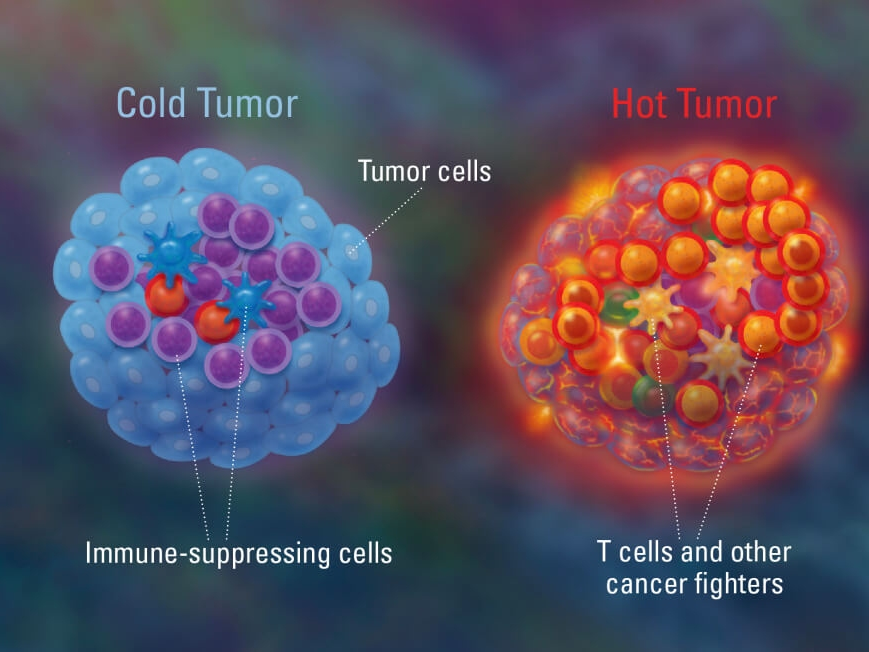
You may have heard of hot tumors or cold tumors, but did you know that one type is more receptive to immunotherapy treatments than others?
Hot Tumors
Hot tumors are described as such because of their inflammation, which is a sign that the immune response has sent T cells to the site of the tumor to help fight it. This is a great sign that indicates the immune system is working, but may need some help.
Find out what's happening in Seattlefor free with the latest updates from Patch.
Immunotherapy treatments have been developed to enhance the immune response using checkpoint inhibitors, which use antibodies to mobilize the T cell response.
So what types of cancers are typically considered to be hot? Unfortunately, not many. Melanoma, bladder, kidney, head and neck, and non-small cell lung cancer are among the few.
Find out what's happening in Seattlefor free with the latest updates from Patch.
Cold Tumors
Tumors are described as cold if they have not been infiltrated by T cells, which is a sign that the immune system is not responding to fight the tumor. Without the initial T cell response, it's hard for immunotherapies to work in coordination with the immune system to fight the tumor. Thus, cold tumors are not good candidates for immunotherapies.
Cancers that are typically cold include breast, ovarian, prostate, pancreatic, and glioblastomas and are usually best treated with traditional therapies.
What's Being Done
Scientists are actively investigating ways to flip the switch on cold tumors to turn them hot and thus make them more receptive to immunotherapies. For in-depth reading on this topic, we recommend the following articles:
- https://www.frontiersin.org/articles/10.3389/fimmu.2019.00168/full
- https://www.aacr.org/Funding/Pages/Stand%20Up%20To%20Cancer/john-t-wilson.aspx
- https://www.ascopost.com/issues/february-10-2019/turning-cold-tumors-into-hot-ones/
- https://blog.dana-farber.org/insight/2018/06/enhancing-immunotherapy-race-make-cold-tumors-hot/
- https://www.nature.com/articles/s41586-019-1325-x
Tumor-specific and other antigen-specific T cell lines are helping researchers who are making advances in this space.
This post originally appeared on the Astarte Biologics blog and has been modified for patch.