Politics & Government
It's Complex: Durkan Says City Spends $300M On Affordable Rentals
After repealing the Seattle head tax, Durkan said the city will spend $300 million to build affordable housing. Here's what that means.


SEATTLE, WA - Seattle's now-dead head tax was, in part, supposed to fund the construction of affordable housing - sorely needed due to Seattle's insane housing costs. So when Mayor Jenny Durkan signed legislation repealing the head tax this week, she wanted to highlight that the city is still building a lot of affordable housing.
"In December, we announced $300 million of new affordable housing and the city of Seattle expects 2,500 new city-funded affordable rental homes and more than 1,900 new MFTE affordable homes to come online by the end of 2021," Durkan said in a press release.
In essence, Durkan was saying that even without the head tax, the city is spending a lot to address the critical lack of affordable housing in Seattle.
Find out what's happening in Seattlefor free with the latest updates from Patch.
That $300 million number might sound big, but affordable housing development in Seattle is pretty complicated. Here's what that $300 million means (based on interviews and Office of Housing reports):
What Durkan is talking about
Find out what's happening in Seattlefor free with the latest updates from Patch.
At the end of each year, the city's Office of Housing announces all the affordable housing projects have been approved, something that has been done since the mid-1980s. The announcement for projects approved in 2017 was made on Dec. 18.
Initially, the total cost of all projects approved in 2017 was about $260 million. That figure has increased to $300 million for a few reasons: the Office of Housing added one new project, some state revenue came through, and the cost of some projects went up.
The city is not spending $300 million on new affordable housing
Here's where things get scratchy: the city of Seattle will only invest about $72 million to actually build affordable units. The bulk of the remaining $230 million-ish comes from federal tax credits.
The federal Low Income Housing Tax Credit (LIHTC) is the primary way affordable housing projects are funded in the U.S., according Office of Housing Deputy Director Miriam Roskin. The city combines its own money with private money offset by the LIHTC - that's how 100 percent affordable buildings get built.
Another large piece of that $230 million comes from private financing. An institution (like a pension fund, for example) will agree to invest in a project that contains affordable housing, and that institution will in return get a tax credit.
See the full list of projects approved for funding here.
These apartments don't exist yet
None of the apartments announced for funding in 2017 exist. They are all in a pre-planning stage, and will on average take about 3 years to complete.
The total number of units that will be funded by Seattle - that $72 million the city is spending in 2017 - is about 944. The homes are for people of all different stripes. Some are specifically for people who were recently released from a psychiatric program. The biggest development (245 units) is 6600 Roosevelt, which will be built at the site of the new light rail station in the Roosevelt neighborhood (estimated to open in 2021). 6600 Roosevelt will be affordable for "families and individuals up to 30 percent, 50 percent and 60 percent area median income, with over 100 2- and 3-bedroom apartments."
Older projects do exist. Twenty-nine came online in 2017, providing several hundred affordable units. The way the system is set up, there's a constant rolling flow of affordable units coming online. A project that was approved in 2015, for example, might be opening this month.
How the head tax factors in
The head tax is dead, so maybe it doesn't matter, but the revenue would've significantly boosted Seattle's affordable housing spending.
According to the Office of Housing, every $1 the city spends to build affordable units is multiplied by $3.18 in non-public dollars. That's why Durkan claims the city is spending $300 million on new affordable units - officials count all that private development supported by federal tax credits as part of the total spending, not just the literal $72 million the city is spending.
The head tax was supposed to generate $47 million per year. Durkan never approved a spending plan for the money, but a majority was supposed to go toward building affordable units. If the city used, say, $30 million from the head tax to building affordable housing, that means there would be an additional $95 million to spend ($30 million times $3.18).
So, with the head tax revenue, Seattle would be close to the recommended $400 million in annual spending outlined in the notorious McKinsey report.
Seattle is either directly or indirectly spending lots of money to build affordable housing, but killing the head tax eliminated money that could've helped the city multiply its efforts.
Correction: An earlier version of this story misstated the role that Multifamily Tax Exemption (MFTE) tax credits play in Seattle's affordable housing landscape. MFTE projects are not part of the $300 million in funding announced in December.
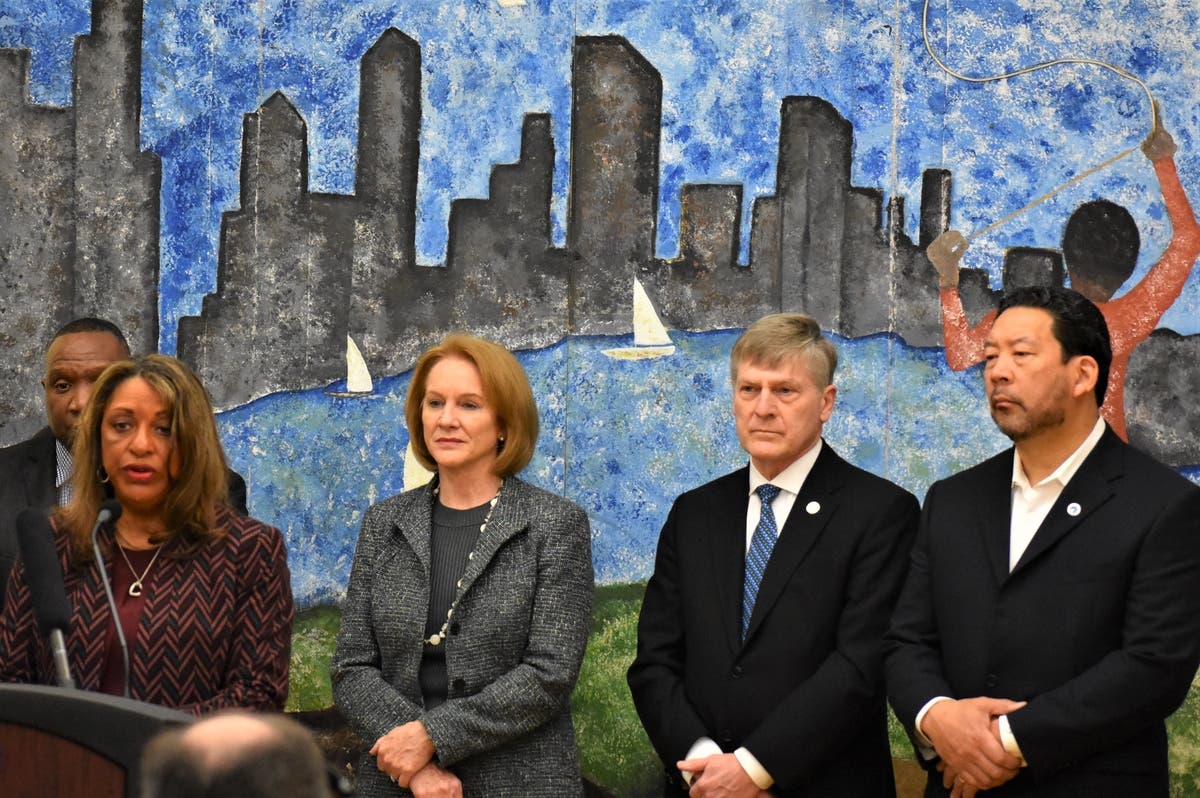
Caption: City Council President Bruce Harrell (r), City Attorney Pete Holmes, and Mayor Jenny Durkan. Durkan and Harrell supported the repeal of the head tax.
File photo by Neal McNamara/Patch
Get more local news delivered straight to your inbox. Sign up for free Patch newsletters and alerts.