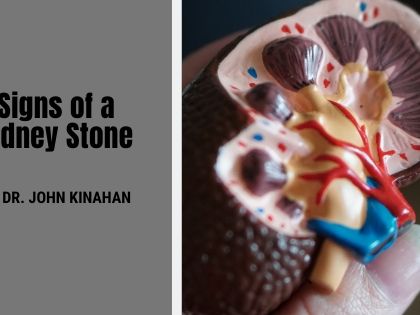
Kidney stones, although rare, are an excruciatingly painful condition requiring immediate medical treatment. At first, those suffering from kidney stones may not take the symptoms seriously and shrug the pain off as a cramp. However, unlike a cramp, the pain of kidney stones usually doesn’t resolve on its own. It can become increasingly severe in the ribs, groin or sides.
Continue reading to learn the signs of a kidney stone.
What Are Kidney Stones?
Before getting into the signs, it’s vital to have a general understanding of what kidney stones are. Kidney stones aren’t exactly stones. They’re hard and durable like one; however, they are the crystallized form of minerals and salts. The size of a kidney stone does vary from person to person. Some people may have a tiny stone, which passes with minimal issues, while other people can develop kidney stones as big as the kidney itself.
There Is Blood In The Urine
The signs of a kidney stone are very subtle at first. As time goes on, the symptoms will start to get progressively worse. One symptom that may occur is blood-tinged urine. Having blood in the urine is known as hematuria. In some cases, the blood may not even be its natural color of red. It might be a pinkish or brownish color.
Urine is Foul-Smelling and Cloudy
Even healthy urine has an odor. However, if you notice that your urine isn’t as clear as it used to be and is foul-smelling, a kidney stone may be the cause. When urine becomes cloudy with a strong smell, this is typically a sign that there is an infection within the urinary tract or kidneys. Urine is filled with minerals, but if there’s too much, it can become cloudy.
Find out what's happening in Seattlefor free with the latest updates from Patch.
Nausea
This sign may come off as odd to some people because kidney stones themselves do not affect the stomach. However, the nerve connections between the GI tract and kidneys are a different story. Having a kidney stone can aggravate the GI tract nerves, which can cause an upset stomach. Feeling nauseous is also a way the body responds to immense feelings of pain.
Any urologic pain warrants immediate investigation. If symptoms don’t resolve, or if they continue to worsen and become unrelenting, seek medical treatment in the nearest emergency room.
Find out what's happening in Seattlefor free with the latest updates from Patch.
For more by John Kinahan, please visit http://johnkinahan.net