Politics & Government
King County Pitches $1.25B Levy For Mental Health Services
The newly proposed levy would fund five new crisis care centers across the region and preserve hundreds of treatment beds.


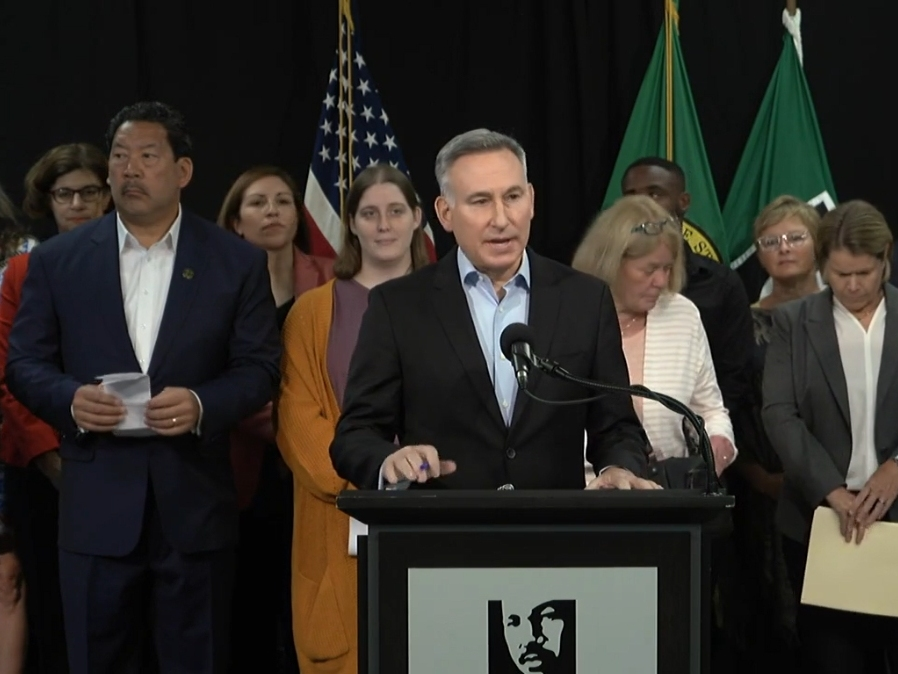
SEATTLE — Seattle and King County leaders on Monday unveiled a funding plan to improve the region's behavioral health network by building new care centers, preserving existing beds and boosting recruitment efforts to attract and retain a robust workforce.
King County Executive Dow Constantine and Seattle Mayor Bruce Harrell outlined the $1.25 billion proposal backed by a coalition of regional leaders, which would be paid for by a nine-year property tax levy.
Discussing the plan Monday, officials noted King County has no walk-in facilities for urgent behavioral health care, with just one 46-bed facility operating to serve the entire region. Treatment at the Seattle facility requires a referral from first responders, hospitals, or a crisis worker, due to very limited capacity.
Find out what's happening in Seattlefor free with the latest updates from Patch.
"The behavioral health system in this state has long been underfunded and underappreciated. The pandemic added further stress, and need is increasing even as we lose both treatment beds and qualified workers," Constantine said Monday. "Now, we can chart a path forward as a region – to create places where people can receive the effective care they need and begin their journey to recovery. This is an opportunity to make the generational investment our region needs."
Constantine's office developed the plan with input from local governments, behavioral health providers, first responders and businesses. Officials estimate the levy would increase annual property tax bills by $121 for a median-value home, starting in 2024 and continuing through 2032.
Find out what's happening in Seattlefor free with the latest updates from Patch.
That money would fund five crisis care centers across King County, preserve and restore existing beds and fund new ways to attract staff to keep support systems running.
Here are four main goals of the plan, per the executive's office:
- Create five new regional crisis care centers: Distributed geographically across the county, the centers will provide walk-in access and the potential for short-term stays to help people stabilize, depending on needs, with one center specifically serving youth.
- Preserve and restore the dramatic loss of residential treatment beds: In 2018, 355 beds providing community-based residential care for people with mental health residential needs existed in King County. Today, only 244 of these beds are available.
- Grow the behavioral health workforce pipeline: The proposal will create career pathways through apprenticeship programming and access to higher education, credentialing, training, and wrap-around supports. It will also invest in equitable wages for the workforce at crisis care centers.
- Provide immediate services while centers are being constructed: The proposal will also use initial proceeds to quickly create mobile or site-based crisis behavioral health services that can operate until the first crisis care centers open. This bridge strategy will complement recent state and federally-funded mobile crisis teams.
Right now, Constantine's office said case managers seeking supportive housing or psychiatric treatment for patients find providers at capacity by the middle of each month, with an average wait of 44 days before a bed opens up.
King County Sheriff Patti Cole-Tindall voiced support for the plan Monday as a step in the right direction toward improving public safety.
"For many years now, law enforcement has been the primary responder for people in behavioral health crisis," Cole-Tindall said. "I’m excited that the proposed behavioral health levy will bring urgently needed resources to work alongside first responders. "A well-resourced and well-functioning behavioral health system is a vital component of an effective public safety system."
The levy proposal will head to the Metropolitan King County Council, where members are expected to hold a vote in February. If approved, voters will have the final say on their April ballots.
Watch Monday's full news conference below:
Get more local news delivered straight to your inbox. Sign up for free Patch newsletters and alerts.