Politics & Government
Seattle Police Chief Carmen Best Announces Retirement
One day after a council vote to make some cuts to her department, the chief has formally announced her decision to retire in September.


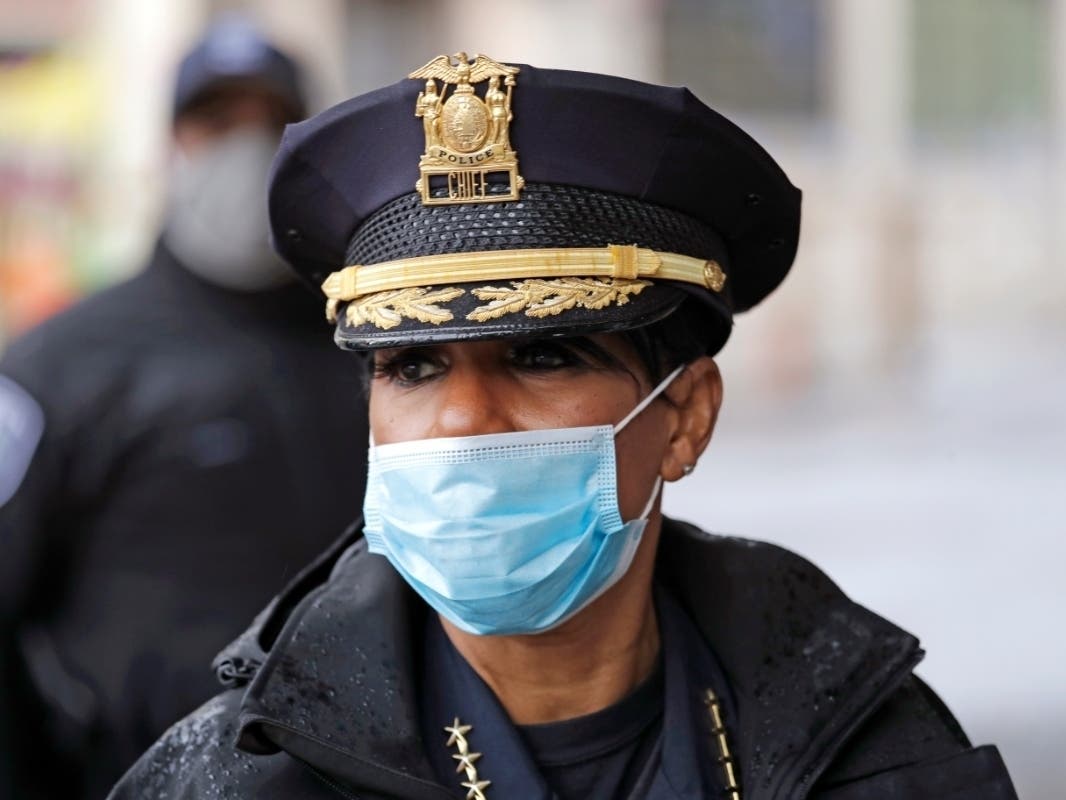
SEATTLE, WA — Seattle Police Chief Carmen Best will retire in September, leaving her post after 28 years on the force and two at the helm of the department. Best, the city's first Black police chief, was unanimously confirmed for the top job in 2018, propelled by an outpouring of internal and community support. Her announcement comes one day after the City Council voted to approve initial cuts on her department this year, including some officer layoffs.
News of the chief's planned departure broke Monday night, shortly before Best informed her employees that she would retire on Sept. 2. She will be replaced in the interim by Deputy Chief Adrian Diaz.
Best joined her command staff and Seattle Mayor Jenny Durkan for a formal announcement at City Hall on Tuesday morning.
Find out what's happening in Seattlefor free with the latest updates from Patch.
"This is a decision I wrestled with, but it was time," Best said. "I will always be a police officer, it's who I am. But, ultimately, as I learned from a former boss when you know it's time to go, you know it's time to go."
Related: Seattle City Council Approves Initial Round Of Police Cuts
Find out what's happening in Seattlefor free with the latest updates from Patch.
In her prepared remarks Tuesday, Best mostly avoided disclosing specific reasoning for her decision to retire. She revealed more details during a question and answer session with reporters.
Best bristled at rumors that her departure was primarily linked to recent votes to cut pay for her and other top brass, saying instead that several factors made it clear it was time to move on.
"There's a lot of things, it's a combination of things," Best said. "I think it's been intimated that somehow it had something to do with the salary, but nobody joins the police department to get rich."
A budget amendment that would have capped pay among the police department's executive leadership was altered Monday to reduce the impact on Best, after some council members noted she would have been among the least-paid department heads in the city. Under the version passed at full council, Best's salary would be adjusted by a much smaller margin, landing at roughly $275,000 annually — a decrease of about $10,000.
The legislation does not affect officer pay, which is negotiated through labor contracts. The Seattle Times reported Monday that nearly 400 police department employees earned more than $200,000 last year, with a median gross pay of $153,000 — not including benefits — among 2,000 employees.
Best said she felt directly targeted by the council's approved cuts to the department, and the resulting effects on her leadership team, including executive compensation.
"At some point, every leader has to recognize when you've hit the point where you're maybe not able to move the needle forward for the men and women of the organization," Best said. "I really don't want the animus that has been directed toward me to affect the people who work for me. Targeting my command staff and their pay, you know, it just felt very vindictive and very punitive."
The mayor agreed, saying the council failed to consult with the chief on a path forward and targeted Best and her team by voting to cut their salaries.
"They targeted the team she has assembled, and they did it despite the fact that they know it's not enforceable, it's not legal and — spoiler alert — the charter requires me to honor the contracts and agreements that Chief Best made, and I plan to do so," Durkan said. "It's not about money, that was a final straw. It's about respect."
The mayor also criticized what she called a "breakdown of collaboration and civil dialog" and said the council has plowed ahead without a plan.
Under the budget package approved Monday, the police department is facing a less than $4 million cut to the $170 million remaining for the year, including a reduction to the police force of up to 100 officers, accomplished through layoffs and attrition. The council's cuts add to $20 million in budgett reductions previously announced by the mayor's office, largely in response to an estimated $378 million shortfall in the city budget resulting from the coronavirus crisis.
Enacting the officer layoffs, Best said, was something she could not bring herself to do.
"The council gave us $1.6 million to make sure that we hired the best and the brightest and the most diverse and brought them on, and less than a year later we're gonna just turn them all away," Best said. "It feels very duplicitous and honestly I just...I have my convictions. I cannot do that."
While some council members have previously called on Mayor Durkan to resign, none have publicly sought Best's departure. Councilmembers Andrew Lewis and Alex Pedersen and Lisa Herbold released statements Tuesday expressing dismay at the chief's decision.
"I am deeply and sincerely sorry that the Chief feels Council's actions have been disrespectful toward individual officers and that our journey to reimagine community safety has been personally directed at her," Herbold wrote.
Decriminalize Seattle, one of the Black-led coalitions advocating for a 50 percent defunding of police, reacted to Best's resignation Tuesday afternoon.
It reads in part:
Chief Best’s public resignation comes soon after the Seattle City Council’s first votes towards divesting from SPD and investing in a new paradigm that values all Black lives. Our goal has never been to oust Chief Best. Rather, we have organized to draw attention to the limits and false promises of individualized reforms for ending police violence. We know that only deep structural change - not the resignation and replacement of any single person - will protect Black lives and stop racist policing. This fight is about rethinking how we achieve public safety in this city for Black communities, and acknowledging that continuing to pour money into policing will not get us there.
On Sept. 2, Best will be replaced by current Deputy Chief Adrian Diaz, a 23-year veteran of the department.
"Our department has had rough times during my career," Diaz said. "But I believe this is the most challenging time in our history. Reenvisioning public safety, defunding the police and discussion of the role race plays in all of our governmental systems — these are at the forefront of our current challenges."
Durkan said she had no plans to undertake a search process for a permanent chief this year, citing uncertainty over the outcome of the next round of budget negotiations, which begin in late September.
"I think we have to make it through the budget season," Durkan said. "We have to see what the Council is willing to do for this department in the long run. Because, right now, nobody would know what job they are applying for."
Council members approved a resolution Monday affirming their intent to seek deeper cuts to SPD's 2021 budget, while shifting more responsibilities outside the police department.
Community groups, activists and protesters have repeatedly called for cutting the police department's $409 million budget in half, redirecting funds toward community-led services and public safety solutions. — an end goal a majority of the council has publicly supported.
The council also approved $3 million to establish up a participatory budget process, which seeks to consult directly with the community as the city looks ahead to 2021.
Council members launched a budget inquest on police department spending in early June, amid ongoing protests over police brutality. Since demonstrations began in late-May, SPD has faced renewed scrutiny over its practices and spending, along with public outcry over the widespread use of "crowd control weapons" on large groups of protesters.
An ordinance barring most devices, including flash-bangs and blast balls, was passed unanimously by the City Council, but remains on hold by a federal judge. A separate court order limits use of such weapons to certain circumstances.
The Office of Police Accountability is probing nearly three dozen separate allegations of police misconduct linked to recent demonstrations.
Related: Seattle Agrees To Order Limiting Some Crowd Control Practices
Get more local news delivered straight to your inbox. Sign up for free Patch newsletters and alerts.